
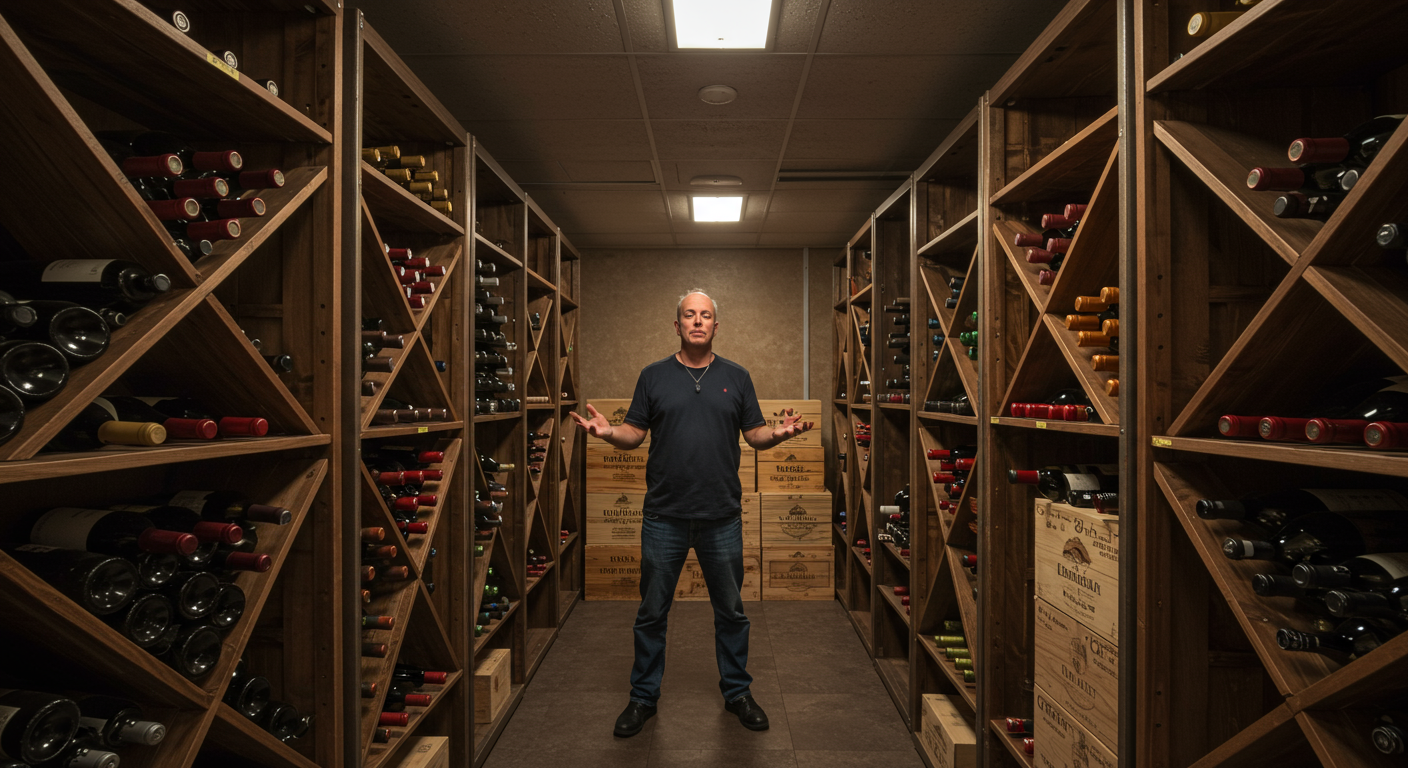
The Humidity Paradox: Why Orono Wine Cellars Are Susceptible to Mold
For collectors in Orono and around the Lake Minnetonka area, a wine cellar is more than a storage room; it is a precision-engineered environment designed to protect a significant financial and personal asset. However, the very conditions required to age a premier Bordeaux or Napa Cabernet—specifically a temperature of 55–58°F and a relative humidity (RH) of 55–65%—create a biological sweet spot for fungal growth. When basement wine cellar humidity drifts just slightly above these parameters, or when a vapor barrier fails, the environment transitions from a preservation chamber to a petri dish. Addressing orono wine cellar mold requires a specialized approach that balances rigorous IICRC S520 remediation standards with the extreme delicacy required when handling high-value bottles.
In many Orono estates, wine cellars are built into lower levels where the natural cool of the earth assists in temperature regulation. While this is efficient, it also places the cellar in direct proximity to the high water tables common in the SW metro. If the cellar was not constructed with a high-performance vapor barrier on the “warm side” of the insulation, the temperature differential between the chilled cellar and the ambient basement air leads to interstitial condensation. This moisture often goes unnoticed behind custom mahogany racking or stone veneers until the “musty” smell becomes undeniable. At this stage, wine collection mold has likely already begun to colonize porous materials like cardboard shipping cases, wood shelving, and even the outer surface of corks.
Identifying and Assessing Wine Collection Mold Risks
Mold in a wine cellar environment typically manifests in three distinct ways: surface colonization on racking, “case mold” on organic packaging, and the most concerning, cork contamination. While many collectors initially dismiss light fuzzy growth on racks as a sign of “authentic cellar character,” it is actually a red flag for a failing climate control system or an localized moisture intrusion. Orono wine cellar mold often hides in the shadows behind the bottles where airflow is restricted, making regular inspections a necessity for any high-value collection.
- Cardboard Degradation: Original wooden cases (OWCs) and cardboard shipping boxes are highly hygroscopic. They pull moisture out of the air, and once they reach a moisture content of 15% or higher, they become a primary food source for mold.
- Label Damage: Mold growth on labels can drastically reduce the resale value of a collection. In a professional high value mold remediation scenario, the goal is to stabilize the environment before the mold consumes the adhesive and paper fibers of the labels.
- Cork Integrity: While a compressed cork is generally resistant to penetration, surface mold on the top of the cork can lead to “cork taint” or off-flavors if the fungus produces TCA (2,4,6-Trichloroanisole) or similar compounds that migrate through the pores.
Partners Construction Services often sees wine cellar issues that stem from a lack of airflow. When bottles are stacked tightly without adequate space for the cooling unit to circulate air, “micro-climates” form. A corner of the room might be at 75% RH while the hygrometer near the door reads 60%. These stagnant pockets are where wine collection mold gains its first foothold. When our team performs an initial assessment, we use thermal imaging and moisture meters to map these variations before a single bottle is moved.
Precision Protocols for Orono Mold Removal in Cellars
Remediating a wine cellar is fundamentally different from cleaning a standard utility room. The presence of sensitive, fragile assets means that traditional “tear-out” methods must be modified. We adhere to IICRC S520 standards, which dictate the professional removal of mold through physical source removal rather than just “killing” it with chemicals. In an orono mold removal project involving wine, the chemicals used must be non-volatile and odor-neutral, as wine is notoriously sensitive to ambient scents that can permeate through the cork over time.
Protecting the Inventory During Remediation
The first step in any wine cellar mold remediation is the safe relocation of the inventory. This is often the most stressful part for the homeowner. Partners COS manages this by setting up a temporary, climate-controlled staging area. Bottles are moved in small batches, maintaining their horizontal orientation to keep the corks moist. Once the cellar is empty, we establish HEPA-filtered negative air pressure. This ensures that as we clean the racking or remove affected drywall, no mold spores can escape the cellar and contaminate the rest of the Orono home.
Cleaning custom racking involves a tedious, manual process. If the mold is on the surface of hardwood like redwood or mahogany, we use HEPA vacuuming followed by a “damp-wipe” technique using an IICRC-approved antimicrobial that leaves no residual odor. If the wood has been deeply penetrated, it may require localized sanding or, in extreme cases, replacement. This is where the hybrid nature of Partners Construction Services provides a distinct advantage: we don’t just remediate; we are master builders who can replicate and replace custom millwork to match the original design perfectly.
Engineering Out the Risk: Climate Control and Vapor Barriers
If you experience orono wine cellar mold, simply cleaning it is a temporary fix. You must address the root cause, which is almost always a failure of the “envelope.” In the SW metro, our humid summers and dry winters create massive vapor pressure shifts. A cellar must be a sealed box. We frequently find that cellar doors in Wayzata or Orono estates are aesthetic masterpieces but functional failures, lacking the proper weatherstripping to maintain a seal.
During the restoration phase, Partners COS evaluates the existing cooling unit and vapor barrier. A standard “through-the-wall” unit may not be sufficient for a larger room, leading to constant cycling and uneven humidity. We often recommend upgrading to a split system or a ducted cooling system with integrated humidification and dehumidification. This allows for precise control over the basement wine cellar humidity, keeping it at a steady 60% regardless of the Minnesota weather outside. Furthermore, we verify that the insulation is closed-cell spray foam, which acts as both an insulator and a vapor barrier, providing the most robust defense against future mold growth.
Insurance Reality and Asset Protection in Orono
High-value wine collections are often covered by separate inland marine policies or specialized riders. When high value mold remediation is required, the documentation provided by a professional firm is critical for insurance claims. Partners COS provides detailed photo documentation, moisture readings, and a certificate of completion that proves the environment has been returned to a “Condition 1” (normal) status. This documentation is vital for maintaining the insured value of the collection.
In Orono, where properties often sit on or near Lake Minnetonka, the hydrostatic pressure against foundation walls can be significant. If a wine cellar is on an exterior wall, we also look for signs of seepage or “weeping” that could be contributing to the humidity load. Effective orono mold removal might involve exterior grading improvements or the installation of a more robust interior drainage system to ensure the basement remains bone-dry before the cellar is rebuilt.
Frequently Asked Questions About Wine Cellar Mold
Can I just wipe the mold off the bottles myself?
While you can wipe the glass, you risk cross-contaminating other areas of your home. If mold is on the cork or labels, DIY cleaning can often cause more damage. Professional remediation uses HEPA filtration to capture spores that you cannot see.
How much does wine cellar mold remediation cost in Orono?
Costs vary significantly based on the size of the cellar and the volume of the collection. A localized cleaning may start around $3,500, while a full rebuild of a large custom cellar with inventory management can exceed $20,000.
Is the mold in my cellar dangerous to my health?
Most wine cellar molds are Aspergillus or Penicillium species. While not always “toxic,” they can cause significant allergic reactions and respiratory issues, especially when concentrated in a confined space.
Will remediation ruin my wine labels?
Our goal is preservation. We use dry-cleaning sponges and low-moisture techniques specifically designed for paper assets. However, if mold has already “pitted” the paper, some staining may remain, though the growth will be halted.
Talk to Partners COS About Your Wine Cellar Project
Managing a high-value wine collection requires a partnership with professionals who understand the intersection of luxury construction and technical restoration. If you have noticed a musty odor, visible growth on your racking, or labels that feel damp to the touch, it is time for a professional assessment. Partners Construction Services provides the specialized orono wine cellar mold solutions needed to protect your investment. Whether you need surgical remediation or a complete cellar redesign to improve climate performance, our team has the expertise to handle your project with the midwestern restraint and technical depth your home deserves. Contact Partners COS today to schedule a consultation at your Orono or SW metro property.
Leave A Comment