
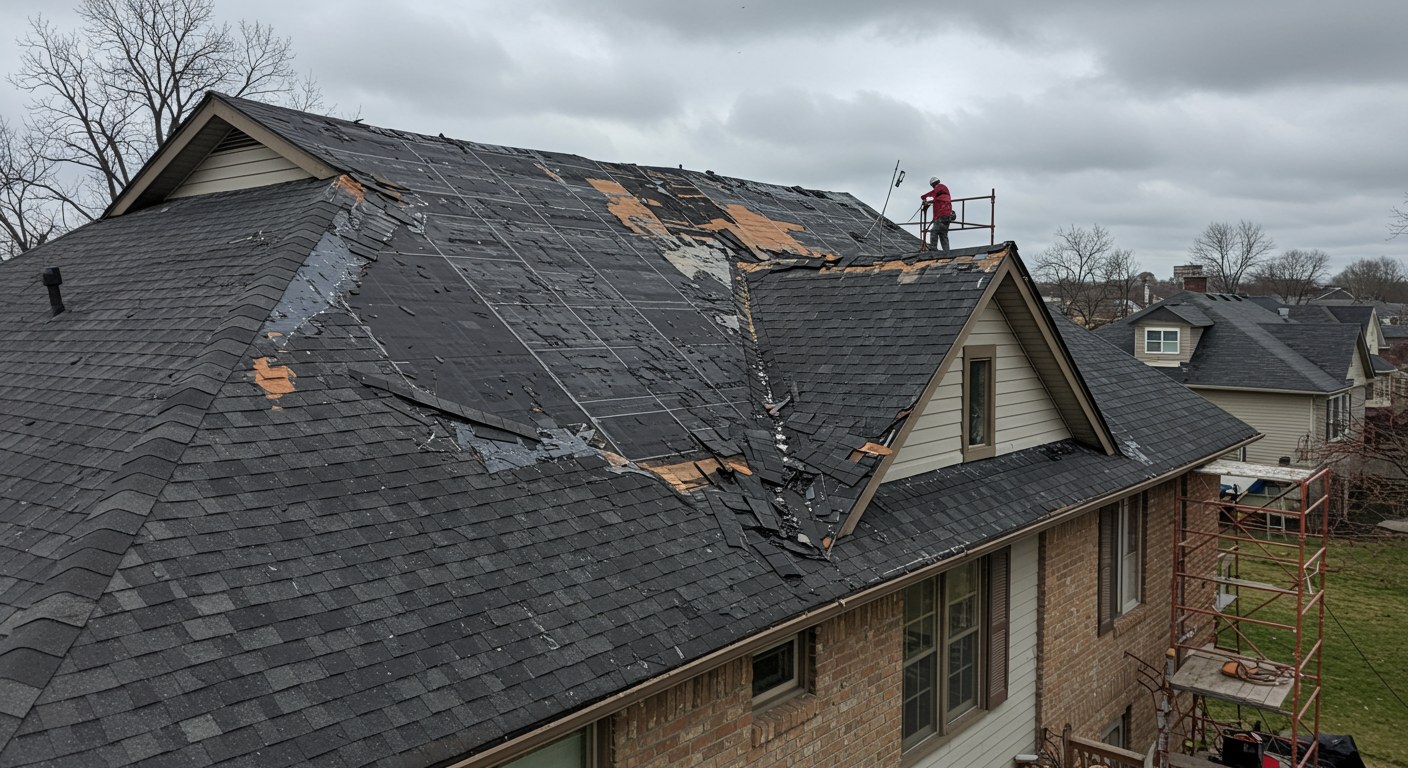
Storm damage restoration is the process of assessing, stabilizing, and repairing property damaged by weather events — including hail, high winds, ice storms, and severe precipitation. In Minnesota, storm restoration encompasses a specific set of damage types driven by the state’s climate: hail damage to roofing and siding, ice dam formation and infiltration, wind damage to roofing components and trees, and flooding from rapid snowmelt or severe convective events.
Partners Restoration serves the western Minneapolis metro for storm damage assessment, emergency stabilization, insurance claim coordination, and full reconstruction. Based in Medina, we serve Wayzata, Orono, Minnetonka, Plymouth, Eden Prairie, Edina, Deephaven, Excelsior, Shorewood, and surrounding lake communities — responding within 60 minutes for emergency calls.
Minnesota Storm Damage: What the Western Suburbs Face
Hennepin County and the western Minneapolis metro face a specific storm damage profile driven by geography and climate. Understanding what you’re dealing with helps you respond faster and document your claim correctly.
Hail damage
Minnesota’s hail season runs May through September. The Twin Cities metro averages 2–3 significant hail events per year, with the western suburbs — particularly the Lake Minnetonka corridor — in a historically active hail belt. Hail damage to asphalt shingles creates granule loss and underlying fiberglass mat bruising that accelerates UV degradation and reduces the effective life of the roof by years. Hail also damages gutters, downspouts, siding, window screens, and HVAC equipment.
Hail damage is a covered loss under virtually all standard homeowner policies in Minnesota. The claim window — the period during which you can file — varies by carrier, but most policies require prompt reporting. Having a professional inspection documented before filing a claim protects your right to full replacement value.
Ice dam damage
Ice dams form when heat escaping through the roof deck melts snow, which runs down to the cold eave and refreezes. The resulting ice dam blocks drainage and forces meltwater back under shingles into the roof assembly and wall cavities. Ice dam water infiltration is one of the most damaging and most commonly mishandled insurance claims in Minnesota.
Most homeowners discover ice dam damage weeks or months after the event — stained ceilings, bubbling paint, or mold growth are common first symptoms. At that point, the damage has spread through wall cavities and insulation that were never dried. Professional assessment, documentation, and structural drying are required to prevent secondary mold damage and to support an insurance claim for the full scope of the loss.
Wind damage
Severe thunderstorms in the Twin Cities metro regularly produce wind gusts of 60–80 mph. High winds damage roofing by lifting and breaking shingles, dislodging flashing, and depositing tree debris that punctures or abrades roofing materials. Wind-driven rain through compromised roof areas or blown-in windows can cause significant interior water damage before the weather event is even over.
Tornado and straight-line wind events
The Minneapolis metro experiences several tornado warnings each year, and straight-line wind events — derechos — have caused significant structural damage in western suburbs communities in recent years. Structural damage from tornado or severe wind events typically requires engineering assessment before reconstruction to confirm the integrity of the remaining structure.
Emergency Storm Response: What Happens First
Emergency tarping and board-up
Any breach in the building envelope — missing shingles over exposed deck, broken windows, displaced wall cladding — must be temporarily protected within hours of the damage event to prevent weather intrusion from compounding the loss. Partners deploys emergency crews 24/7 for tarping and board-up. The cost of emergency stabilization is almost always covered by your homeowner policy as part of the storm damage claim.
Documentation before cleanup
Before any debris is removed or temporary repairs made, document all damage thoroughly with photographs and video — exterior and interior, every affected surface. This documentation is your evidence for the insurance claim. Partners provides professional damage documentation as part of our assessment, but your own photographs taken immediately after the event are valuable supporting material.
Roof Damage Assessment and Repair
A proper hail damage assessment distinguishes between functional damage — impacts that affect the roof’s ability to shed water and will shorten its life — and cosmetic damage. Insurance carriers are required by Minnesota statute to pay for functional damage replacement. Cosmetic-only damage may be subject to a cosmetic damage exclusion in some policies; review your declarations page.
Partners performs roof assessments on all storm damage projects. We document impact marks, granule loss patterns, and any penetration or bruising of the fiberglass mat using the Haag Engineering protocol — the method Minnesota carriers recognize for hail damage documentation. If your carrier’s adjuster has denied your claim or undervalued the scope, a public adjuster or the Minnesota Department of Commerce can assist with the dispute process.
Storm Damage and Home Reconstruction
Severe storm events — structural damage from fallen trees, tornado impact, or catastrophic hail — may require partial or full reconstruction of affected building elements. Partners handles full reconstruction in-house, from structural framing through finish work. For high-value homes with custom exterior materials — copper gutters, cedar shakes, custom entry doors, specialty siding — we source replacement materials to match pre-loss specifications.
Large loss events — claims exceeding $100,000 in scope — require coordination between the homeowner, the insurance carrier, and a knowledgeable restoration contractor who understands both construction and the claims process. Partners has managed large loss storm claims across the western suburbs and maintains the trade capacity to execute complex projects on schedule.
Storm Damage Insurance Claims in Minnesota
Minnesota has some of the strongest homeowner insurance laws in the country regarding storm damage claims. Key provisions that protect policyholders:
- Replacement cost value (RCV): Most Minnesota homeowner policies provide replacement cost value coverage — meaning depreciation is recoverable upon completion of repairs. Do not accept an ACV (actual cash value) settlement without understanding your policy’s RCV provisions.
- Right to choose your contractor: Your insurance carrier cannot require you to use a specific contractor or preferred vendor list. You have the right to select a licensed Minnesota contractor of your choosing.
- Supplemental claims: If the scope of work increases after the initial claim settlement — hidden damage discovered during demolition, code upgrade requirements — a supplemental claim can be filed. Partners documents all supplemental scope and files on your behalf.
- Code upgrades: Minnesota building code may require upgrades beyond like-for-like replacement when significant damage triggers permit requirements. These code upgrade costs are covered under most policies’ law and ordinance provision.
Frequently Asked Questions
How do I know if I have hail damage?
Visible indicators of hail damage include dented gutters and downspouts, pock marks on soft metal surfaces (flashing, vents, AC condenser fins), and granule deposits in gutters and at downspout outlets. Shingle damage requires a roof-level inspection — functional hail damage to asphalt shingles is not reliably visible from the ground. After any hail event with reported stone size of 1 inch or larger, a professional roof inspection is warranted regardless of visible ground-level indicators.
How long after a storm can I file an insurance claim?
Minnesota insurance policies typically require that claims be filed “promptly” or within a specified period — commonly 1 year from the date of loss, though policy terms vary. The Minnesota Department of Commerce recommends filing as soon as damage is discovered. Delayed filing can complicate claims because carriers may argue that damage occurred from a different weather event or from maintenance neglect rather than the storm you’re claiming.
What is an ice dam and is it covered by insurance?
An ice dam is a ridge of ice that forms at the eave of a roof when heat escaping through the roof melts snow, which refreezes at the cold edge. Water backed up behind the dam infiltrates the roof assembly. Ice dam damage is covered by most standard homeowner policies as a sudden and accidental event. The ice dam removal itself is sometimes covered; the interior and structural damage from infiltration is almost always covered.
Can a tree that fell on my house be covered?
Structural damage caused by a fallen tree is covered under most homeowner policies regardless of whether the tree was on your property or a neighbor’s — coverage follows the damage to your structure, not the origin of the tree. Debris removal of the tree itself is typically covered up to a sublimit (often $500–$1,000 per tree). Damage to the tree or to property in an open area without structural damage is usually not covered.
Do I need a permit for storm damage repairs?
In Minnesota, a permit is required for full roof replacement (not patch repair), structural repairs, and window replacement in most municipalities. Permits ensure that work meets current building code, which may require upgrades beyond like-for-like replacement. Partners pulls all required permits as part of our project scope — never agree to permit-less storm repairs from door-to-door contractors who appear after a major storm event.
Leave A Comment