
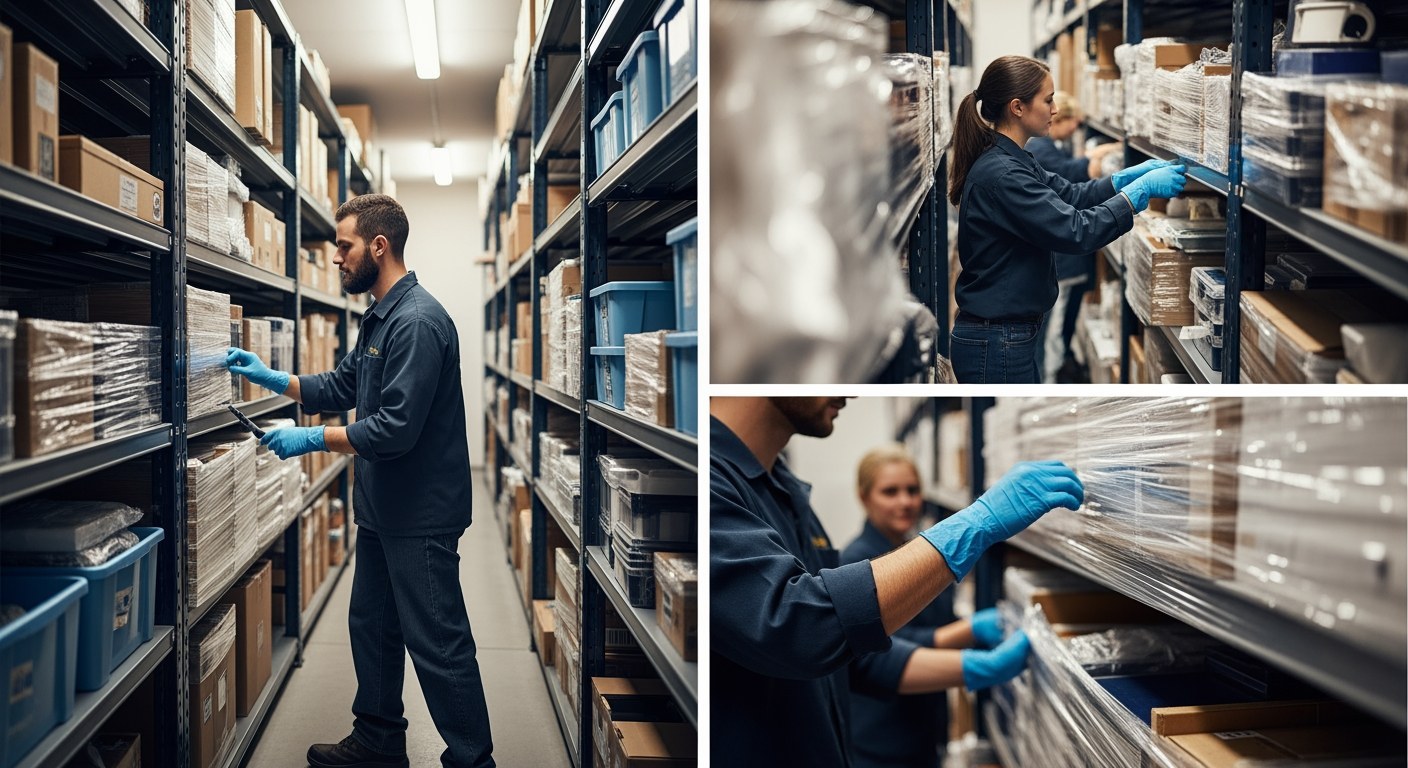
Contents pack-out restoration is the process of inventorying, removing, cleaning, treating, and storing a homeowner’s personal property following a fire, water, or smoke damage event. Professional pack-out removes salvageable contents from the loss environment — preventing further damage from smoke exposure, suppression water, and ongoing restoration activity — and transports them to a climate-controlled facility where specialized restoration techniques can be applied.
Partners Restoration performs contents pack-out and restoration for fire and major water losses across the Minneapolis western suburbs as part of our comprehensive fire damage restoration Minneapolis service. Our contents facility provides climate-controlled storage and professional restoration services for personal property while your home is being restored.
What Contents Pack-Out Involves
Inventory and documentation
Before a single item is moved, our team creates a detailed photographic and written inventory of all affected personal property — room by room, item by item. This inventory is the foundation of your contents insurance claim and documents the pre-restoration condition of every item. For high-value collections — art, wine, jewelry, antiques, electronics — additional documentation including manufacturer information, approximate value, and condition notes is recorded. This inventory is provided to your insurance adjuster as part of the contents claim.
Category sorting on-site
Items are sorted into three categories during pack-out: clearly non-salvageable (items with direct fire or char damage, or items so contaminated with smoke that restoration is economically impractical), potentially restorable (items requiring professional cleaning and treatment), and undamaged or minimally affected (items requiring only protective packaging for storage). This preliminary triage allows the contents restoration estimate to begin before items leave the property.
Specialized packaging
Fragile items — art, sculpture, antiques, china, crystal — are professionally packed by trained contents technicians using museum-standard packing materials. Electronics are inventoried by model and serial number. Clothing is categorized by type. Furniture is wrapped and padded for transport. The goal is to prevent secondary damage during the move from the loss environment to the restoration facility.
Contents Restoration Techniques
Ultrasonic cleaning
Ultrasonic cleaning uses high-frequency sound waves transmitted through a cleaning solution to create microscopic cavitation bubbles that scrub surfaces at the molecular level — including crevices and surface textures inaccessible to hand cleaning. Ultrasonic cleaning is effective for hard-surface items including china, crystal, silverware, collectibles, small electronics components, and decorative objects. It removes smoke residue, soot, and odor compounds from surfaces without abrasive contact.
Ozone treatment for contents
Clothing, bedding, books, and soft goods with smoke odor are treated in an ozone chamber at the contents facility. High-concentration ozone neutralizes odor compounds in porous materials more effectively than any surface cleaning method. Multiple treatment cycles may be required for heavily contaminated items. Items that retain detectable odor after multiple ozone treatment cycles are documented as non-restorable for the insurance claim.
Document and electronics restoration
Water-damaged documents — from suppression water — can sometimes be freeze-dried to arrest deterioration and then restored. Smoke-affected photographs can be cleaned and copied to archival media. Electronics with smoke or water damage are assessed by electronics restoration specialists; circuit boards and components can often be cleaned and restored when the exposure was primarily smoke rather than water immersion.
Contents Storage During Restoration
Restored and undamaged contents are stored in our climate-controlled facility — temperature and humidity maintained within a range appropriate for mixed residential contents — until the home is ready to receive them. Storage under these conditions prevents secondary damage from temperature extremes, humidity fluctuation, and pest exposure. Contents are returned in the same inventory sequence in which they were removed, allowing efficient placement in the restored home.
For high-value items requiring specialized storage conditions — wine collections requiring specific temperature and humidity, art requiring controlled lighting environments, musical instruments requiring stable humidity — we coordinate with specialized storage facilities as part of the claims process.
Frequently Asked Questions
Who pays for contents pack-out and storage?
Contents pack-out, restoration, and storage are covered under your homeowner insurance policy as part of a fire damage claim. The cost is documented and submitted to your carrier as part of the total claim. Contents coverage limits apply — if your total contents value exceeds your policy’s contents limit, out-of-pocket exposure may exist for high-value households.
How long are contents stored during home restoration?
Contents are stored until your home restoration is complete and the space is ready to receive them. For significant fire losses with major reconstruction, this may be 3–6 months or longer. Storage costs are covered under your ALE (Additional Living Expense) provision or contents coverage depending on policy terms. We maintain a detailed chain of custody for all stored items throughout the storage period.
What items cannot be restored after a fire?
Items that are physically charred or melted cannot be restored. Porous items — upholstered furniture, mattresses, pillows, open-cell foam — that absorbed smoke odor deeply are typically non-restorable from an economic standpoint. Food and medications contaminated by smoke or suppression chemicals are non-restorable regardless of condition. Smoke-contaminated medications in particular should never be consumed — replace them through your pharmacy and document with the insurance adjuster.
Leave A Comment