
Poor acoustics is the number one workplace complaint across virtually every survey of office employees taken in the last three years. It beats temperature, it beats lighting, it beats commute. In an era when a significant portion of the workday involves video calls — where background noise is not just annoying but professionally disruptive — the acoustic quality of a commercial space has become a business performance issue rather than a comfort preference.
Minneapolis commercial designers and firms like Gensler have been building acoustic consideration into office projects with increasing intentionality. What used to be an afterthought — a few acoustic tiles, a soft-close door — is now a primary design brief.
What good acoustic design actually involves
The 2026 approach to office acoustics is not about making a space quieter. It’s about making a space controllable — zones where collaboration is acoustically supported, zones where focused work is acoustically protected, and video call environments where sound is managed enough that the person on the other end of the call can hear clearly without the background of the open floor plan bleeding through.

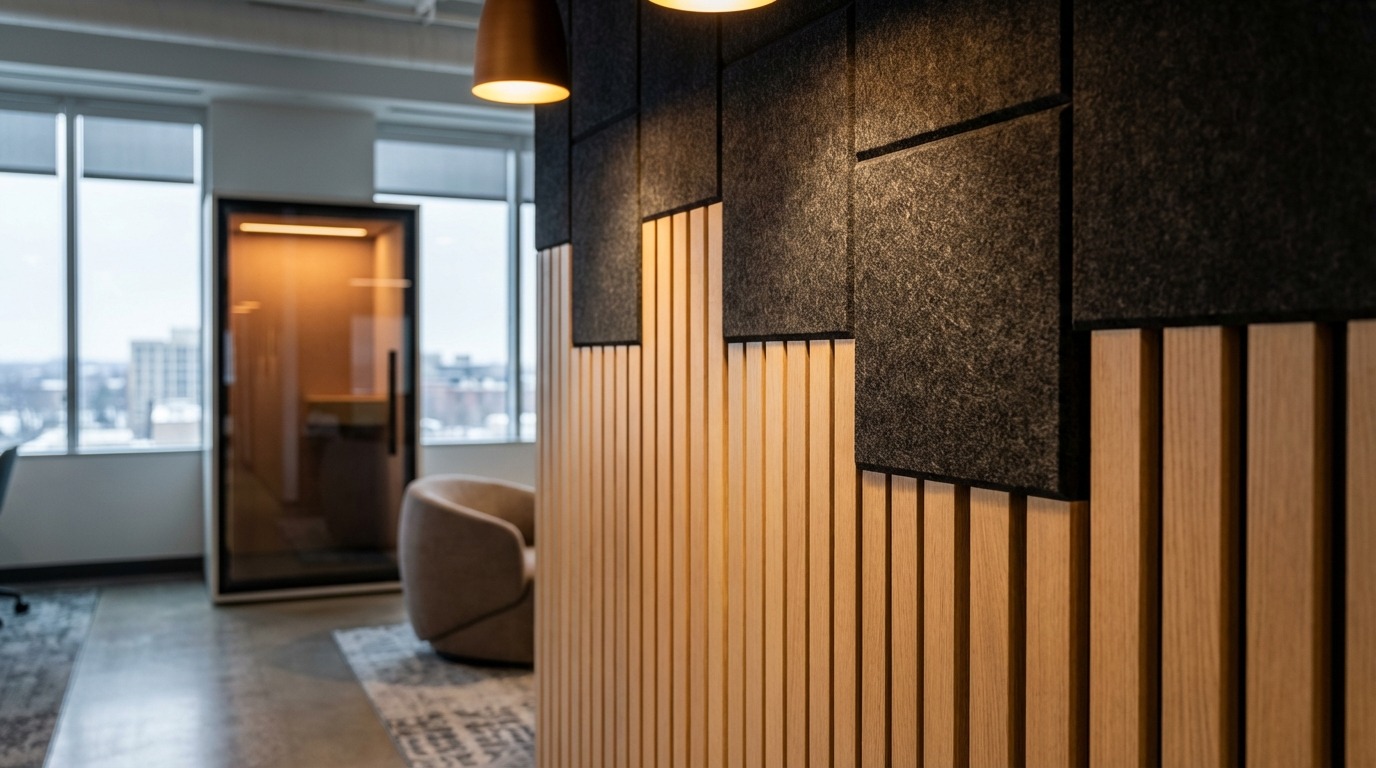
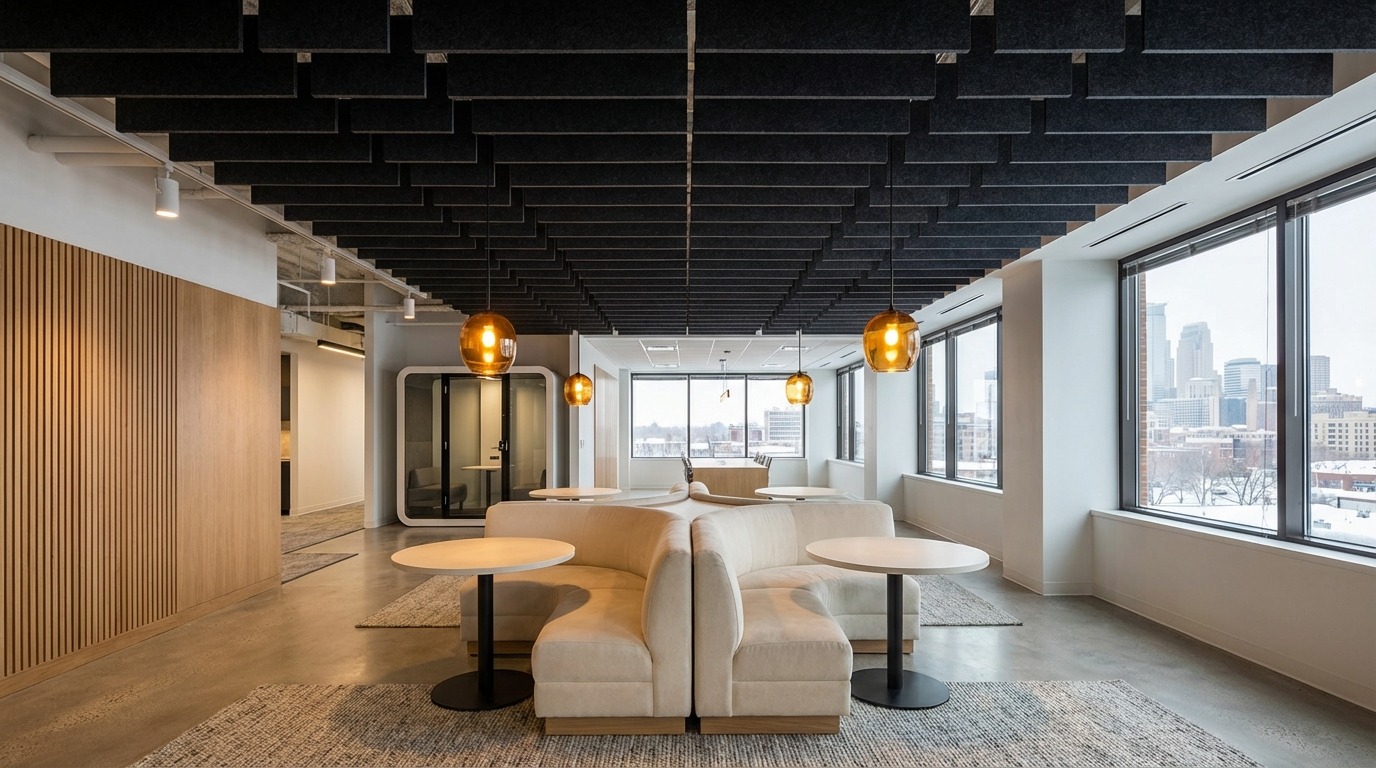
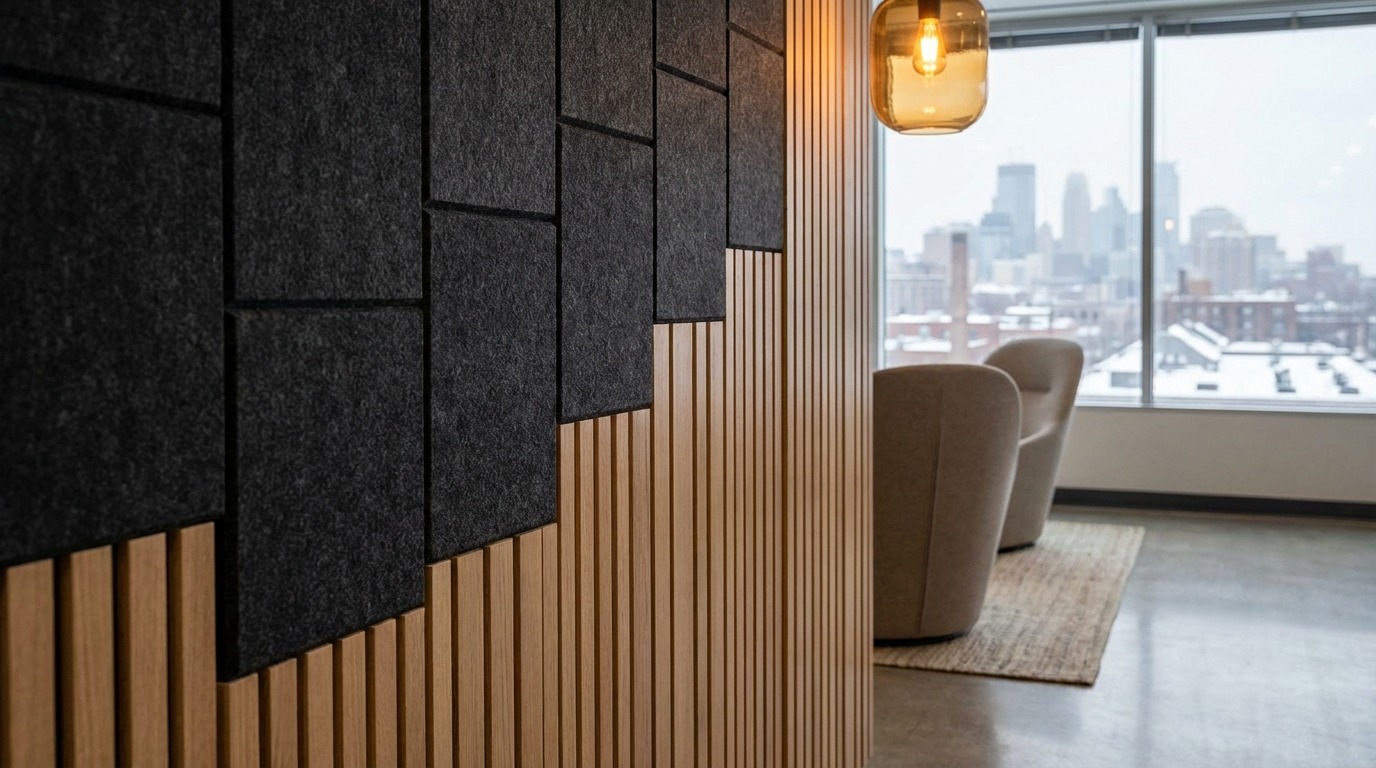
The design tools have become more sophisticated and — usefully — more visually interesting. Stepped charcoal acoustic felt ceiling panels that perform acoustically while reading as deliberate architecture. White oak slat wall panels that break up sound reflections while adding warmth. Glass-front phone booth pods for video call isolation that look like furniture rather than phone booths. Curved lounge seating that absorbs in a collaboration zone without requiring acoustic treatment on every surface. The acoustic design is doing real work, and the space looks better because of it rather than despite it.
Acoustic design is felt before it’s heard
The best acoustic spaces share a quality that’s difficult to articulate until you experience it: the room feels right before you can identify why. You sit down and the ambient noise recedes. The conversation across the table is clear without effort. The video call doesn’t require you to ask people to repeat themselves. You leave the room less fatigued than you entered. None of this is magic — it’s material selection and placement applied to the problem of how sound behaves in a built space.
The Twin Cities context in 2026
Minneapolis commercial tenants are in an interesting position in 2026. Office demand is stabilizing at lower overall levels, which means landlords are competing on building quality and tenant amenity more aggressively than at any point in recent history. The gap between a well-designed office and a standard one has widened — and acoustic quality is one of the clearest markers of that gap for employees who experience both. The Dayton’s Project in downtown Minneapolis is the most prominent local example of historic commercial space rebuilt to modern acoustic and design standards. What it demonstrates is that the acoustic upgrade does not require a new building. It requires the right reconstruction decisions made at the right moment.
When damage creates the opportunity
A water event, fire, or storm that damages a commercial office space puts the ceiling and walls back into play. The acoustic treatment that wasn’t there before is now available to be specified — because the ceiling is being rebuilt anyway. The slat wall that would have required tearing out existing finishes is now a straightforward addition because the surfaces are open. Partners Restoration works with commercial property owners and tenants through exactly this window — the period between damage event and reconstruction completion — to ensure that what goes back in performs better than what came out.
Talk to Partners Restoration about commercial property restoration →
Leave A Comment