
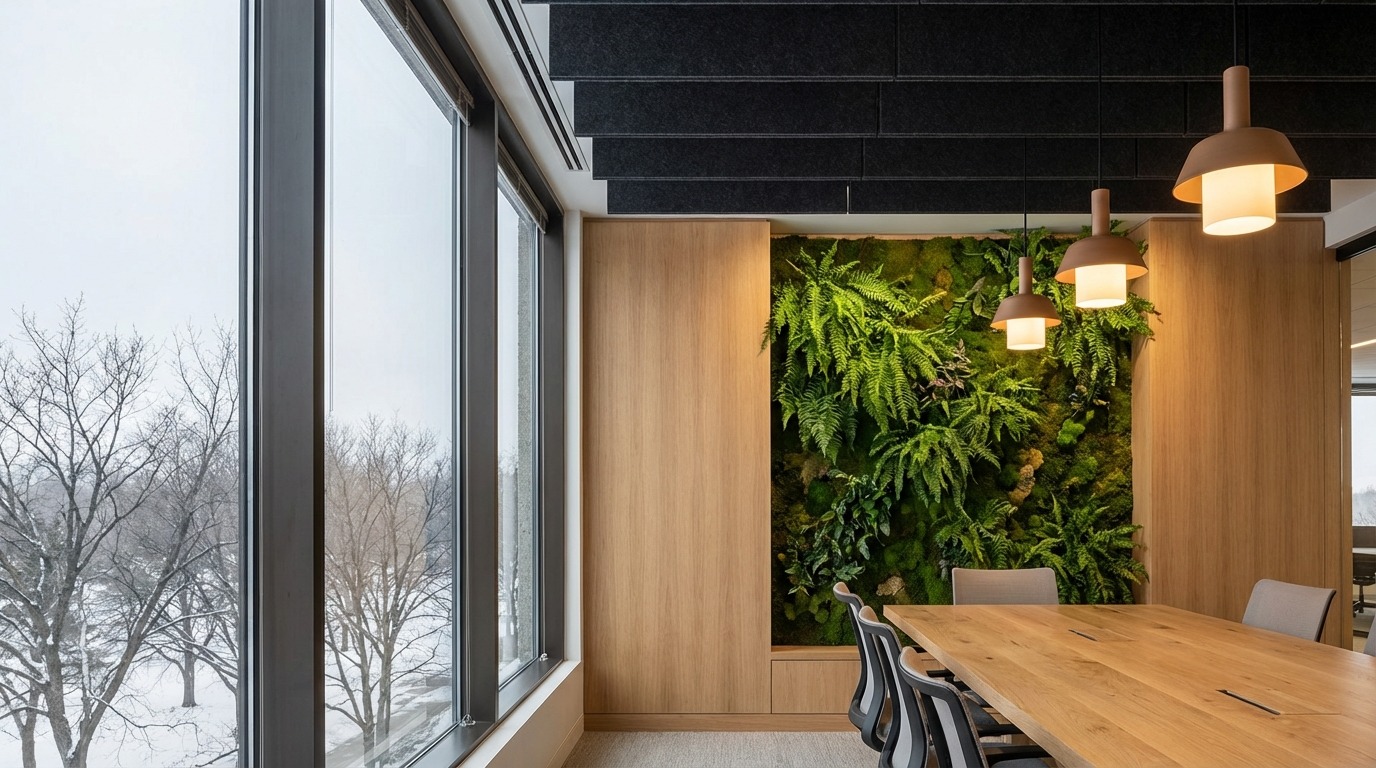
Biophilic design — the integration of natural materials, living plants, natural light patterns, and organic forms into built environments — has been listed as a commercial interior design priority in virtually every industry report published in the last three years. In most markets, it’s treated primarily as an employee wellness play. In Minnesota, it’s something more specific than that: a response to a climate that puts people indoors for six months and systematically removes them from the natural environment that human beings are wired to need.
The Minnesota case is different
In Los Angeles or Miami, a living plant wall in an office is a design choice. In Minneapolis, it’s closer to a physiological argument. Seasonal affective disorder affects a disproportionate share of the population in cold-weather markets. The research on biophilic design’s impact on stress, focus, and mood is substantial and consistent. But the Minnesota workplace doesn’t need research to make the case — it needs a window showing bare trees and snow outside, and a living plant wall on the opposite wall, and the contrast between the two tells the entire story.
What it looks like in practice in Twin Cities offices
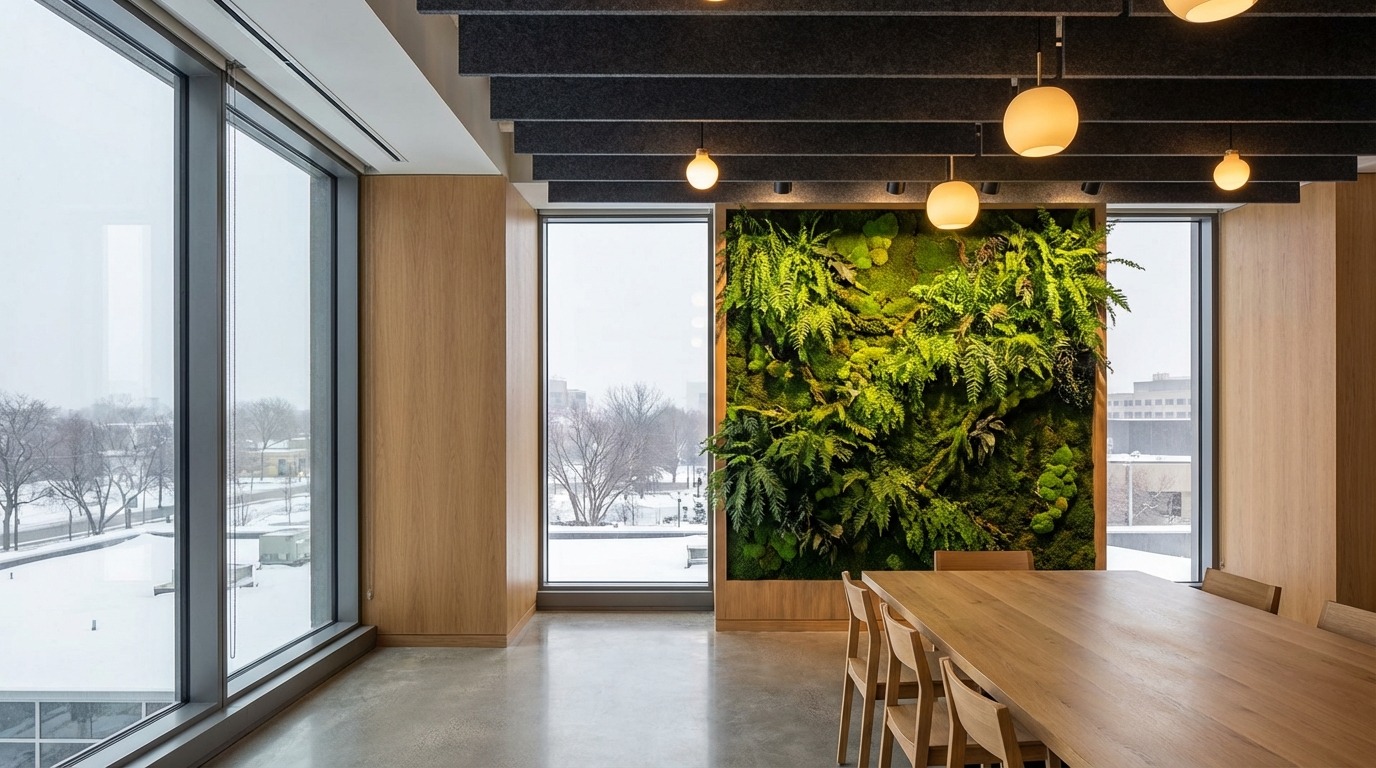
Gensler’s Minneapolis office has been among the firms tracking this shift most closely in the Twin Cities market. Their commercial workplace projects in the metro increasingly incorporate natural wood paneling, abundant plant integration, nature-inspired patterns, and lighting systems calibrated to support circadian rhythm. The Loffler Companies’ office in St. Louis Park and the Gardner Builders headquarters in the North Loop are among the most-cited local examples — both share a design language that makes the office feel inhabited rather than occupied.
The specific elements that appear most consistently in well-executed Twin Cities commercial spaces: natural white oak or walnut paneling on at least one wall — not faux wood, actual material; a living plant wall rather than token desktop plants; lighting systems with warm pendant fixtures that read as hospitality rather than institutional; acoustic ceiling treatment that uses natural fiber materials; and floor-to-ceiling glass preserved or created rather than blocked.
Biophilic design is a material decision
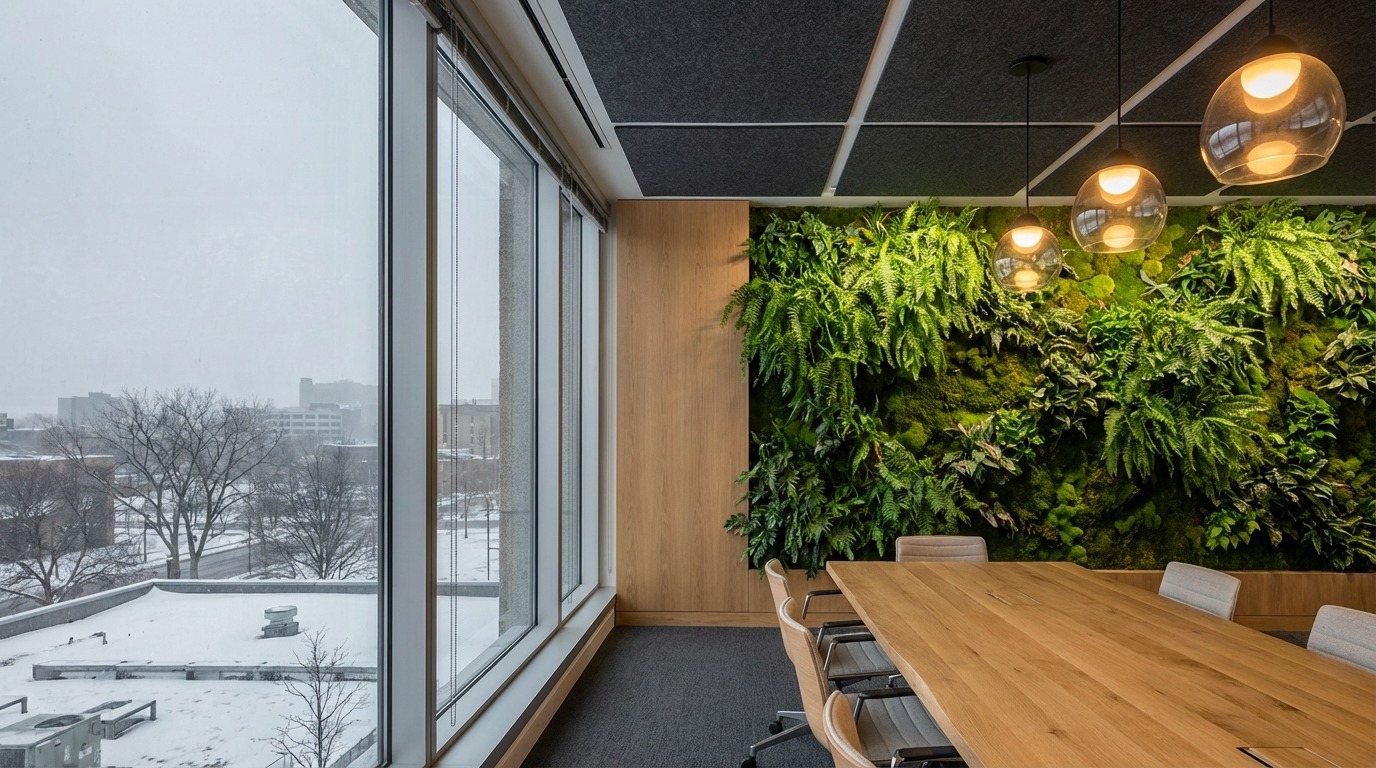
The mistake companies make is treating biophilic design as a mood board — a few plants here, some wood-look laminate there, a nature photo in the conference room. What the best examples actually share is a commitment to material honesty at a scale that registers physically rather than visually. You can touch the oak grain. The ferns actually move when someone walks past. The acoustic felt on the ceiling absorbs sound in a way that changes how the room feels before you consciously notice it. The design works because the materials are doing real work, not performing the appearance of doing work.
The commercial rebuild opportunity
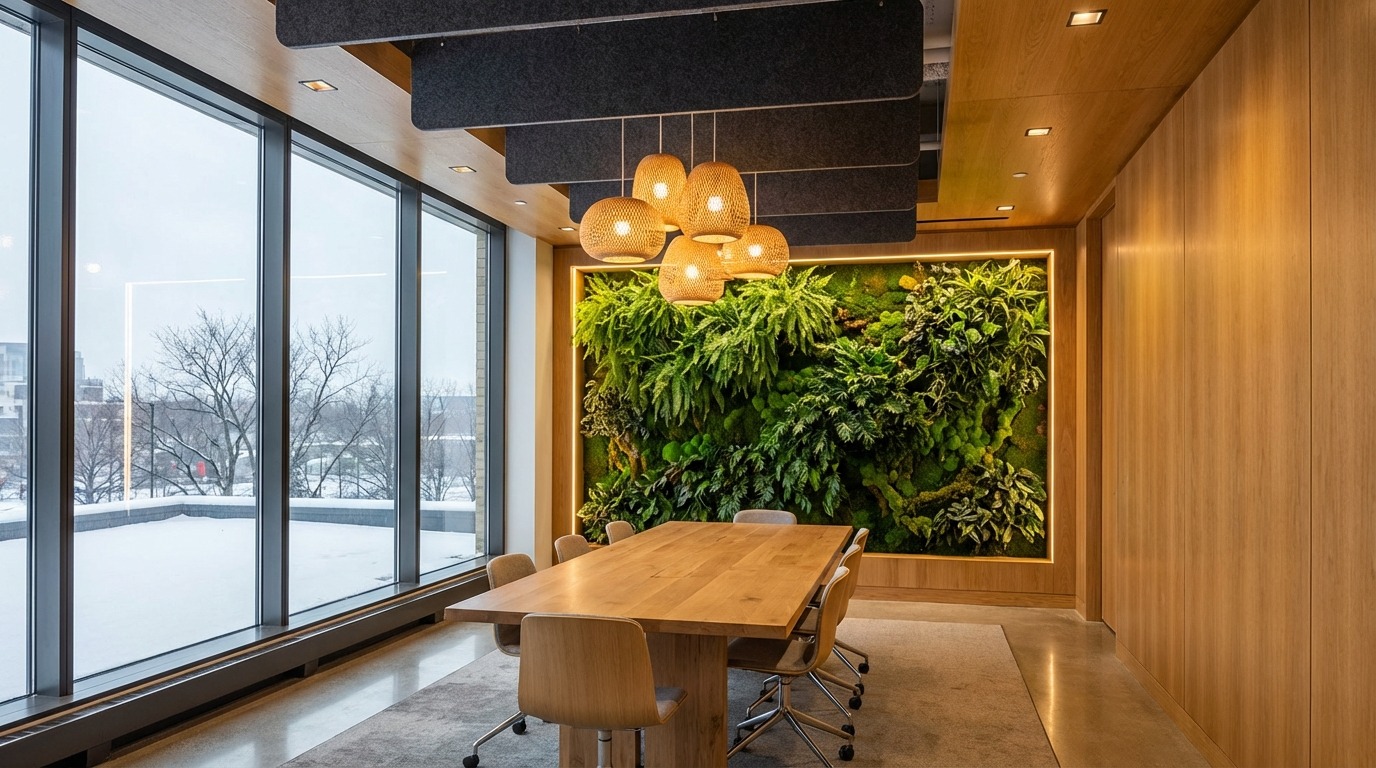
Water damage, fire damage, or storm events in a commercial office space create the same reconstruction opportunity they create in a residential setting — the space is being rebuilt regardless, and the finish decisions are being made from scratch. A commercial tenant or property owner working through an insurance claim on a damaged office suite is making exactly the kinds of decisions that biophilic design touches: wall treatments, ceiling finishes, lighting systems, flooring material. The conversation about what kind of workplace you want to end up with costs nothing when it happens before the drywall goes back in.
Partners Restoration works with commercial property owners and tenants across the western metro — Minnetonka, Plymouth, Eden Prairie, and the Minneapolis corridor — coordinating reconstruction scope with insurance adjusters and design intent simultaneously.
Talk to Partners Restoration about commercial property restoration →
Leave A Comment