
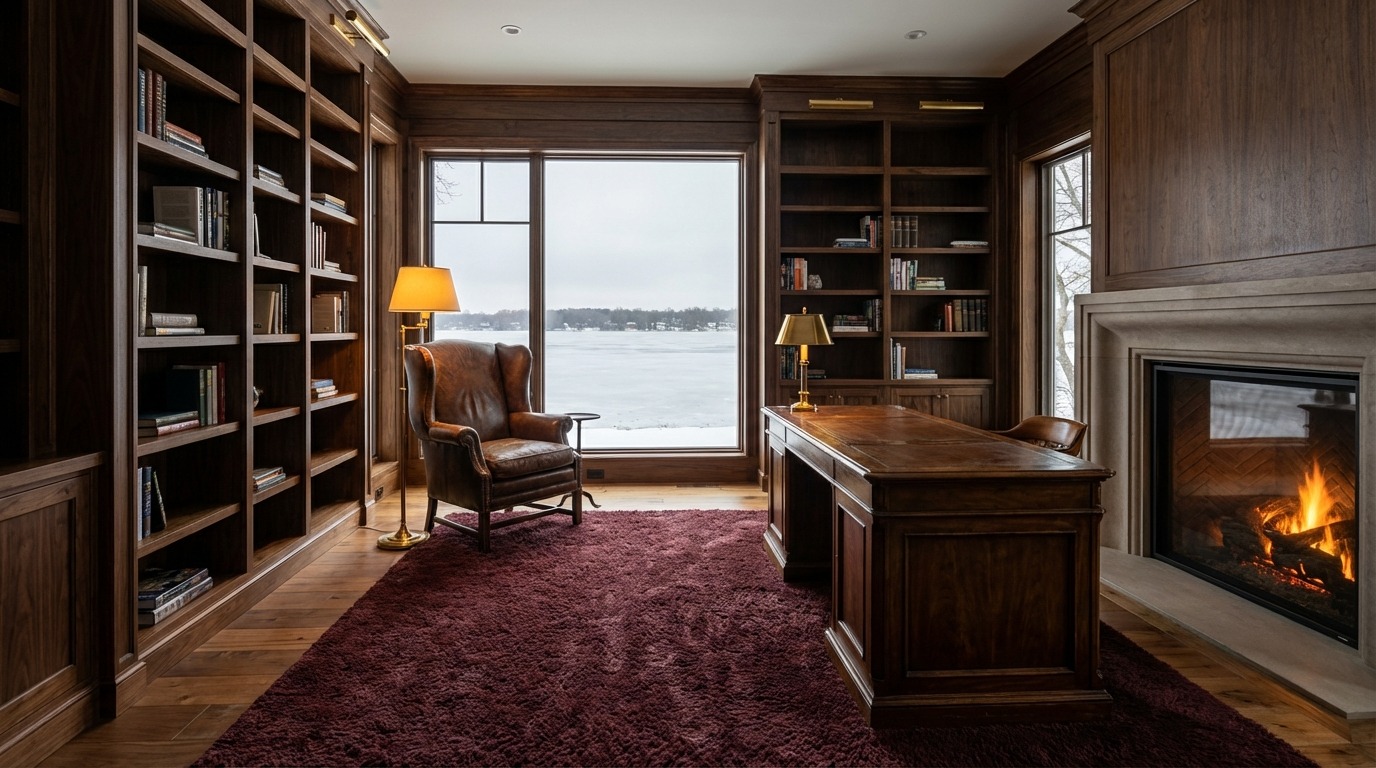
One of the more unexpected trends being tracked by design experts heading into 2026 is the demand for what Hans Lorei, a Brooklyn-based designer, calls the analog space — dens, libraries, listening rooms, studies. Rooms specifically designed to step away from screens. “It’s all about tech-free rooms,” he told Dwell. “Everybody wants one right now.”
For Minnesota homeowners, particularly those in the larger homes on the Lake Minnetonka corridor, this is less of a trend to adopt and more of a tradition to reclaim.
What an analog space actually is
The analog room is not a room without technology by accident — it’s a room without technology by design. The distinction matters. It’s a library with floor-to-ceiling built-in shelving and a reading chair positioned at the window. It’s a study with a proper writing desk, a brass lamp, a fireplace, and no television. The point is intentional retreat from the constant ambient noise of connected life.
What makes this trend interesting from a design standpoint is that the analog space demands the most considered material choices of any room in the house. There’s no screen to look at. The room itself has to earn the attention of whoever’s in it. Which means the millwork has to be right, the lighting has to be layered, the textiles have to be worth touching, and the proportions have to create a sense of enclosure that feels chosen rather than accidental.
Why Minnesota homes are already configured for this
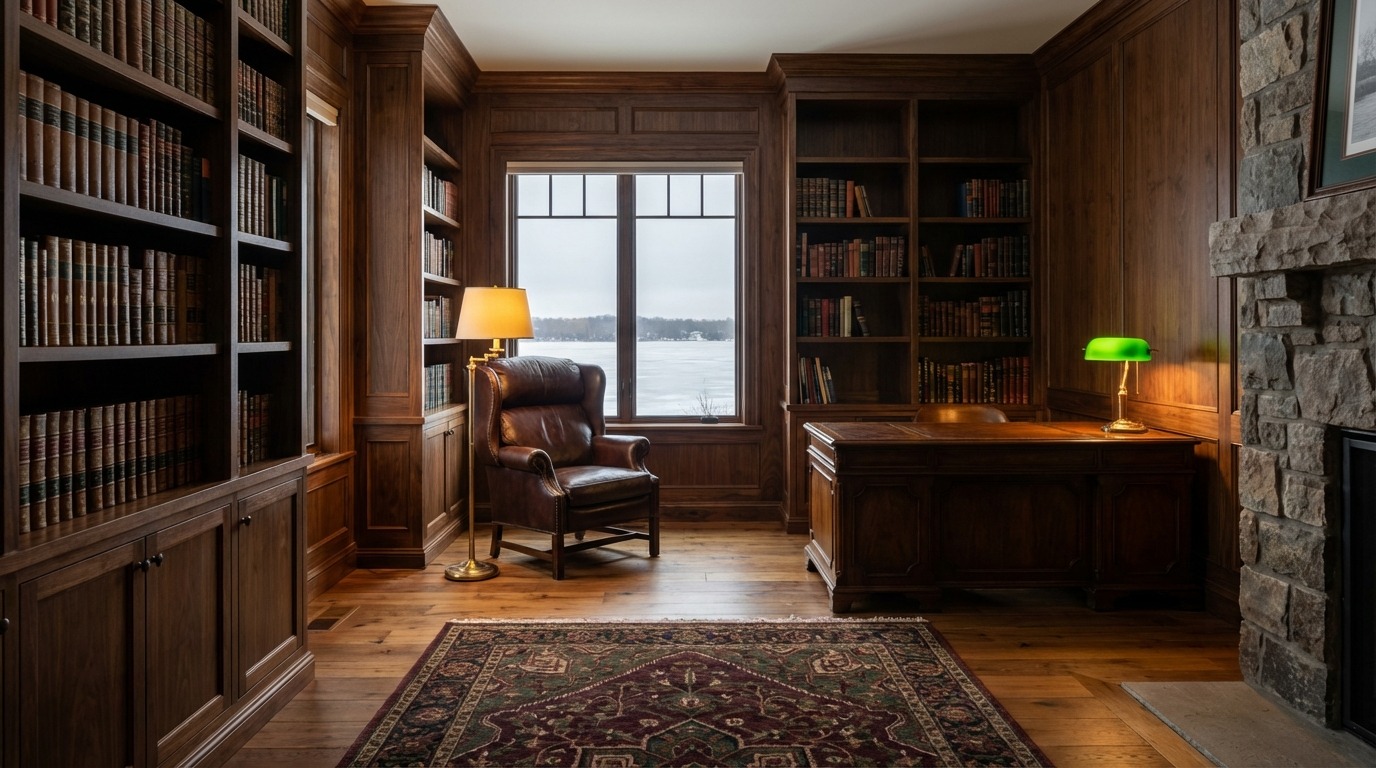
The larger homes in Wayzata, Orono, Plymouth, and Edina typically include a room that was originally designed as a formal study, a home office, or a fourth bedroom that never quite became what the floor plan suggested. These rooms are analog spaces waiting to be finished correctly. The footprint is already there. The question is whether the finishes and the intention match the potential.
The specific configuration that works best in a Minnesota lakeside home: dark walnut built-in bookshelves floor to ceiling on two facing walls, creating the bilateral symmetry that gives a library its authority. A leather wingback chair positioned at the window — not angled toward a television wall, but positioned to face the lake. The frozen Minnesota lake in January is not a neutral view. It’s flat, gray, and vast. It is the exact counterpart to a warm, specific, enclosed room of books and brass lamps. The contrast between the two is the entire point of the room.
What it looks like when it’s done well
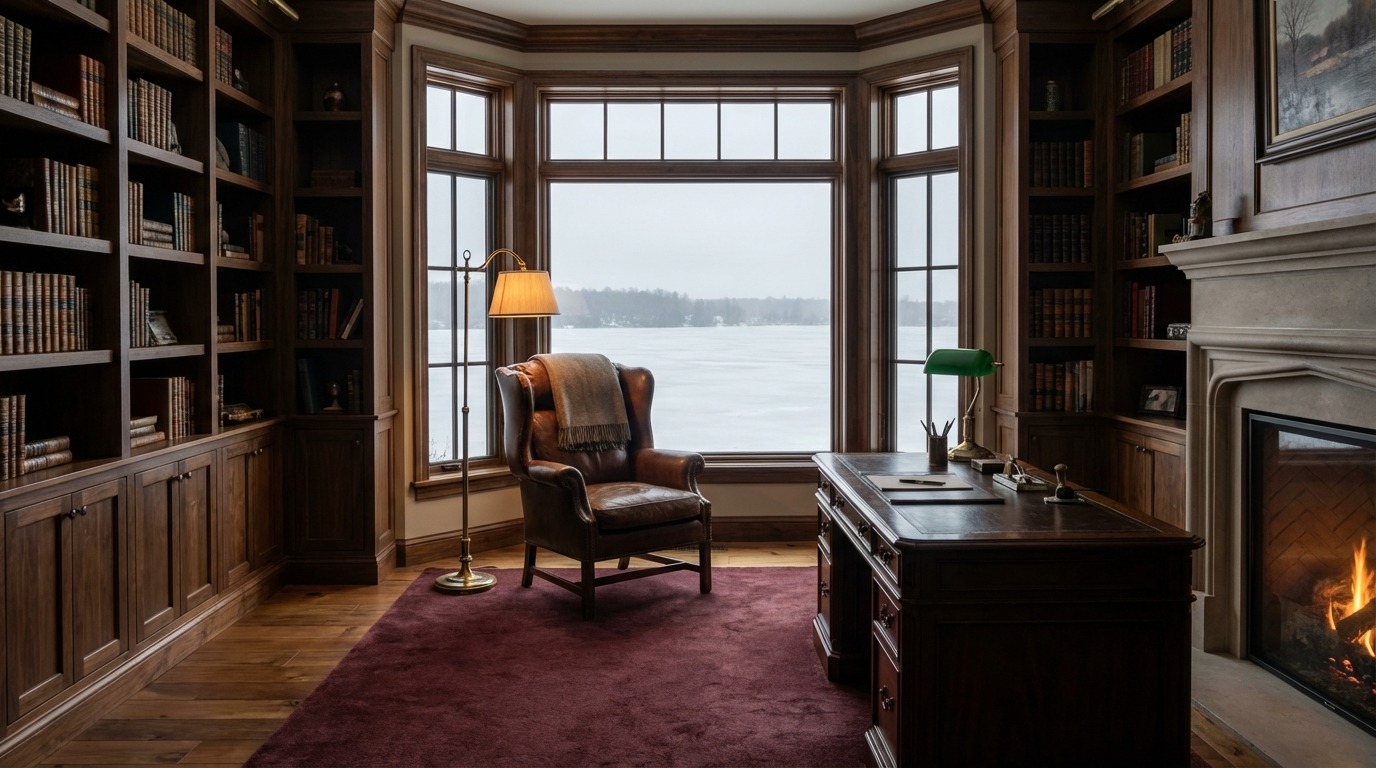
The best analog spaces in the western metro share a few qualities. The lighting is entirely ambient — no overhead fixtures, but a combination of recessed cove lighting, table lamps, and sconces that create the feel of a room lit by intention rather than utility. The millwork is custom rather than off-the-shelf — built-in bookcases that go floor to ceiling and feel like they’ve been in the room forever. A writing desk with a single brass or banker’s lamp, positioned to face a window rather than a wall. A fireplace, ideally a stone or plaster surround, that justifies the furniture arrangement around it.
The floor matters more than people expect. A herringbone hardwood pattern in a dark walnut stain adds the visual complexity that a straight-laid plank doesn’t — it reads as intentional at a level that anchors the room rather than leaving it feeling assembled. A wool area rug in a deep burgundy or forest green grounds the seating area and separates it from the desk zone without using walls.
The rebuild opportunity
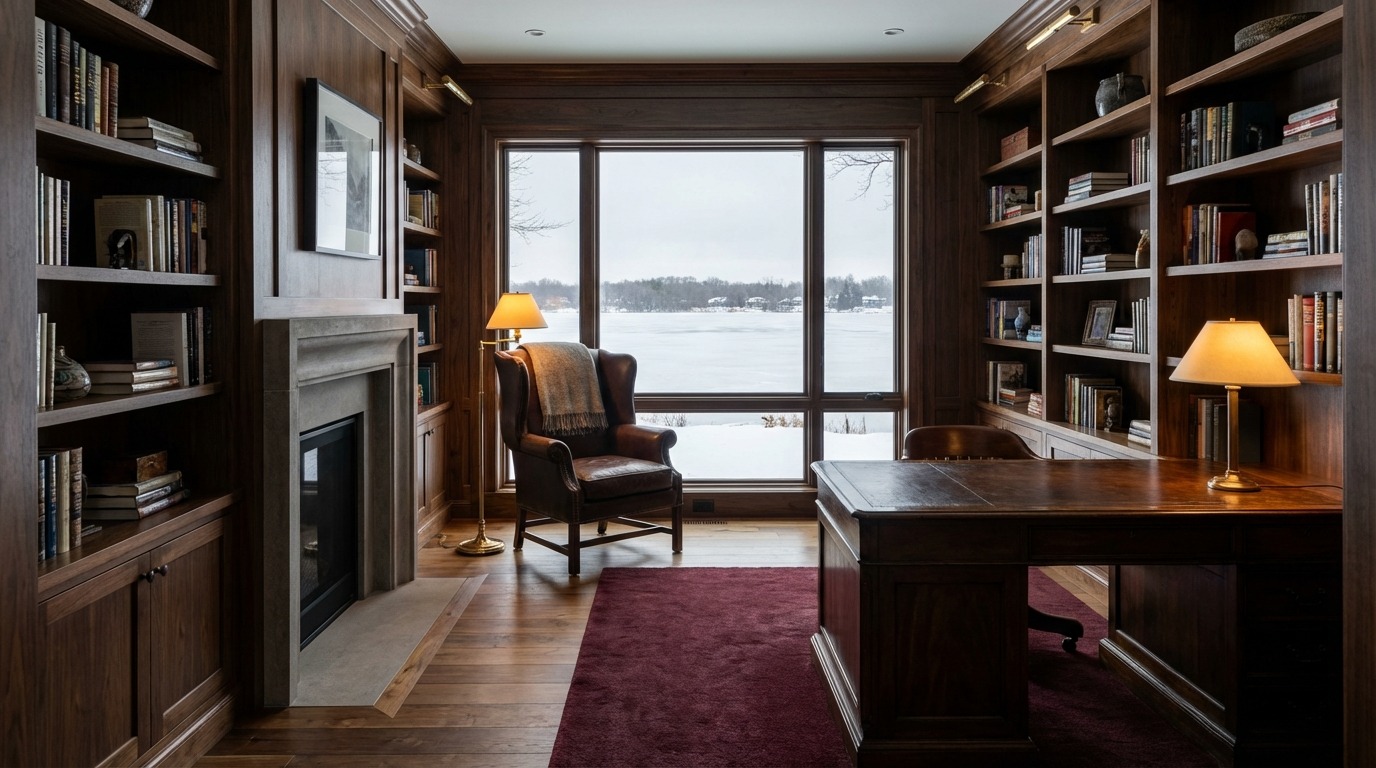
A rebuilt basement level — after flooding or a finished lower-level remediation — is a prime analog space opportunity in a Minnesota home. Below-grade rooms have a natural acoustic quality and a sense of separation from the rest of the house that above-grade rooms simply don’t. A library or study in a Minnetonka lower level, with custom walnut millwork, acoustic consideration built into the ceiling, and a dedicated reading area, is a room that serves a function no other room in the house serves.
Partners Restoration coordinates reconstruction finishes at the level of detail that a room like this requires. The conversation about what kind of room you want to end up with happens before the drywall goes back — which is the only time it can happen without additional cost.
See how a flooded Minnetonka basement became a custom lower level with built-in millwork and media lounge: Before & After — Basement Flood in Minnetonka.
Leave A Comment