
Direct answer: When a pipe bursts in your Minnesota home: shut the main water supply valve immediately (clockwise until closed), cut power to any affected areas, open all faucets to drain pressure, then call a restoration contractor and plumber. A 3/4-inch supply line releases 4–8 gallons per minute — every minute matters.
A burst pipe is one of the fastest-moving property damage events a Minnesota homeowner can face. The difference between a $4,000 mitigation job and a $25,000 multi-room restoration is often measured in minutes. This guide gives you the exact sequence.
Minute-by-Minute: The First Hour After a Burst Pipe
| Time | Action | Why It Matters |
|---|---|---|
| 0:00 | Locate and shut the main water supply valve | Stops water discharge immediately — every minute = 4–8 gallons |
| 0:02 | Cut power to affected areas at the breaker | Water near electrical is a life-safety hazard |
| 0:05 | Open all faucets — hot and cold | Drains remaining pressure and water from the system |
| 0:10 | Quick video walkthrough of all affected areas | Documents original state before any cleanup — critical for insurance |
| 0:15 | Call restoration contractor AND plumber | Contractor starts moisture documentation; plumber fixes the break |
| 0:20 | Move valuables out of water’s path | Protect electronics, documents, furniture — but don’t discard anything yet |
| 0:30 | Call insurance company, file claim | Start the clock on adjuster assignment; ask about ALE coverage |
| 1:00 | Contractor arrives, begins moisture mapping | Thermal imaging identifies hidden saturation before it spreads further |
Know Your Shutoff Before You Need It
The worst time to search for your main water shutoff is when a pipe is actively discharging. Do this now, before any emergency:
- Most Minneapolis-area homes (with basements): Shutoff is in the basement near where the water line enters the foundation wall — usually the wall facing the street
- Homes without basements: Near the water heater, under the kitchen sink, or in a utility closet
- If you can’t find it: Your water meter has a curb stop — call your city’s public works emergency line for after-hours shutoff assistance
- Tag it now: Put a piece of bright tape on the valve and make sure every adult in the household knows where it is
Why Minnesota Pipes Burst (And When)
The most dangerous moment for Minnesota pipes isn’t the coldest night of winter — it’s the warming trend that follows. Here’s what happens:
- During a cold snap (below 20°F), water in a vulnerable pipe section freezes
- The ice plug doesn’t burst the pipe — it creates pressure between the plug and any closed downstream valve
- When temperatures rise (a warm afternoon, the furnace cycling on), the ice thaws rapidly
- The pressurized water between the thawing plug and the closed fixture has nowhere to go
- The pipe fails at its weakest point — often a fitting, a corroded section, or a spot where the pipe was slightly damaged
This is why so many Minnesota burst pipe events happen overnight in January or February, during warming trends after a prolonged cold snap. The pipe was already compromised — it just waited for the pressure to build.
Highest-Risk Pipe Locations in Minnesota Homes
| Location | Risk Level | What to Do Now |
|---|---|---|
| Pipes in exterior walls (especially north-facing) | Very High | Add insulation; open cabinet doors during cold snaps |
| Pipes in unheated garage (especially with living space above) | Very High | Insulate or reroute; keep garage above 32°F |
| Pipes in unconditioned crawl space | High | Insulate and seal crawl space vents in winter |
| Pipes in attic (rare but catastrophic) | High | Verify no supply lines run through attic; add heat tape if they do |
| Hose bibs / exterior spigots | Moderate — very common | Disconnect hoses and shut interior valve every fall |
What Happens After: The Restoration Timeline
Once the plumber fixes the break, the restoration work begins. A typical burst pipe event in a Minnesota home follows this arc:
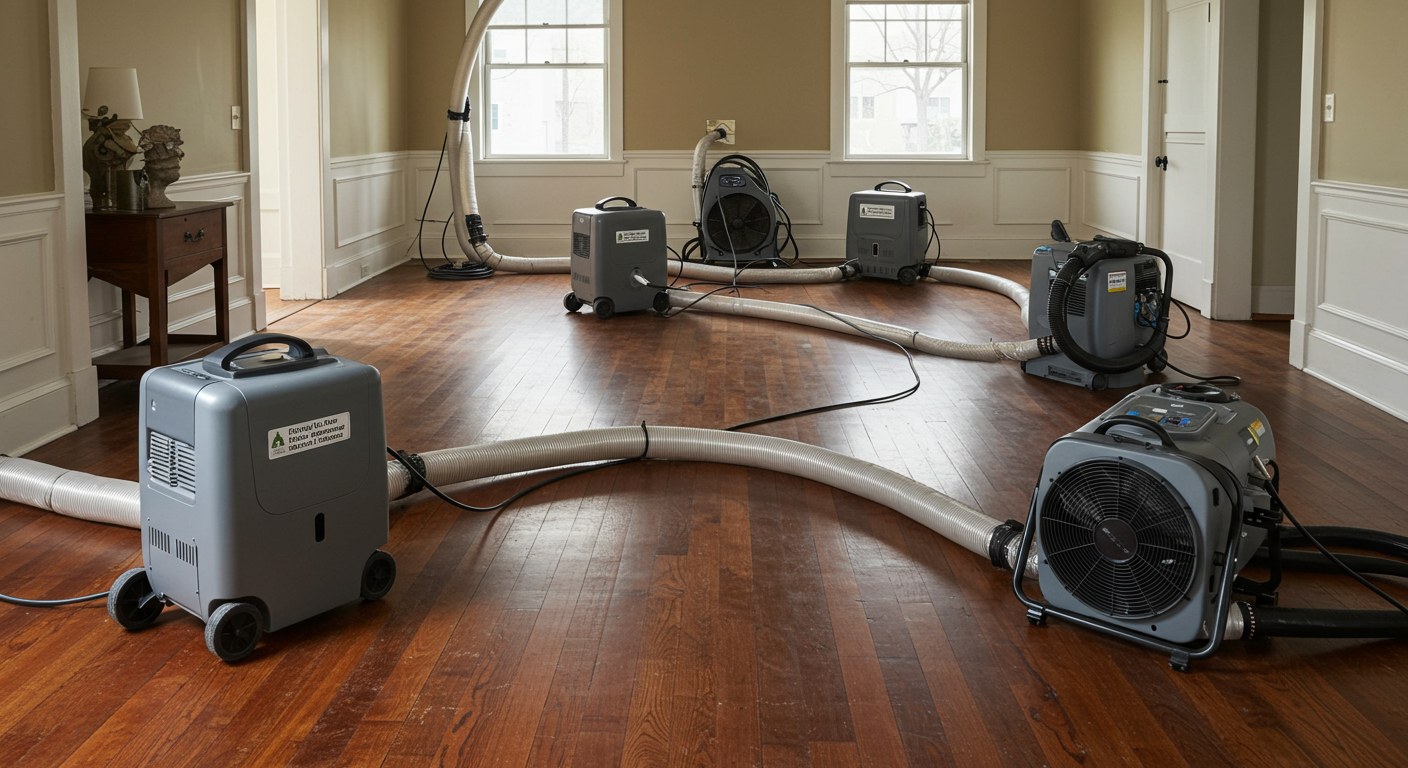
- Day 1: Water extraction, moisture mapping, drying equipment deployed (dehumidifiers + air movers)
- Days 2–5: Structural drying with daily moisture monitoring — target is within 2% of unaffected materials
- Days 3–7 (if needed): Demolition of wet drywall, insulation, flooring that won’t meet dry standard
- Week 2–4: Reconstruction — drywall, insulation, paint, flooring, trim
- Throughout: Insurance coordination — adjuster inspection, scope approval, supplemental claims for hidden damage
Partners Restoration responds to burst pipe emergencies across the Minneapolis west metro within 60 minutes. We bring moisture documentation from the first hour and work directly with your insurer to get the full scope covered. Serving Edina, Plymouth, Minnetonka, Chanhassen, Hopkins, Golden Valley, and surrounding communities.
Related Resources
- Water Damage Restoration — Minneapolis & Western Suburbs
- Mold Remediation — Minneapolis & Western Suburbs
- Fire & Smoke Damage Restoration
- Storm Damage Restoration
- All Service Areas
Related: The Complete Guide to Property Damage Restoration in Minneapolis and the SW Metro
Leave A Comment