
Direct answer: Smoke damage cleanup in Minnesota costs $500–$3,000 for minor surface cleaning and $3,000–$20,000+ for moderate to severe spread. The hardest and most expensive smoke events are kitchen protein fires — nearly invisible soot that bonds to every surface and requires specialized cleaning chemistry. Standard household cleaners make it worse.
Smoke damage is more complex than most homeowners expect. The visible soot is the easy part. The odor, the invisible residue, and the penetration into HVAC and wall cavities are what make smoke events expensive and easy to under-treat. Here’s what cleanup actually involves and what it costs in the Minneapolis area.
The Three Types of Smoke — And Why They Cost Different Amounts to Clean
Restoration contractors categorize smoke residue by the material that burned. The type determines the cleaning chemistry, equipment, and labor required.
| Smoke Type | Source | Appearance | Difficulty | Cost Modifier |
|---|---|---|---|---|
| Dry/powder soot | Wood, paper, natural fibers | Gray/black powder | Moderate — dry chemical sponge first | Standard |
| Wet/oily soot | Plastics, synthetics, electrical | Black, smearing | High — bonds aggressively, smears if mishandled | +20–40% |
| Protein residue | Kitchen grease, food, meat | Nearly invisible yellow-tan film | Very high — invisible, penetrates everything, intense odor | +30–50% |
Why Protein Fires Are the Hidden Nightmare
A grease fire on a Minnesota kitchen stove that’s extinguished in under a minute looks like nothing happened. No visible smoke staining, maybe a slight discoloration on the ceiling. Two days later, the entire kitchen smells like burnt cooking oil — and so does the living room, the hallway, and the HVAC system.
Protein residue is a near-invisible film that covers every surface in the kitchen and adjacent rooms. It is not removable with standard household cleaners — dish soap and all-purpose spray will actually spread it and make the smell worse. It requires enzyme-based protein cleaners, applied surface by surface, then thermal fogging to reach the odor compounds that penetrated porous surfaces. Kitchen protein fire cleanup routinely costs $3,000–$8,000 for a job that looks minor to an untrained eye.
The Odor Problem: Why It Comes Back
Smoke odor returns after “cleaning” for one reason: the cleaning addressed the surface but not the penetration. Smoke molecules are extremely small and penetrate porous materials — drywall, wood, insulation, upholstery, carpet — at a molecular level. Surface wiping removes visible soot. It does not extract embedded odor compounds.
Professional odor elimination uses three methods in combination:
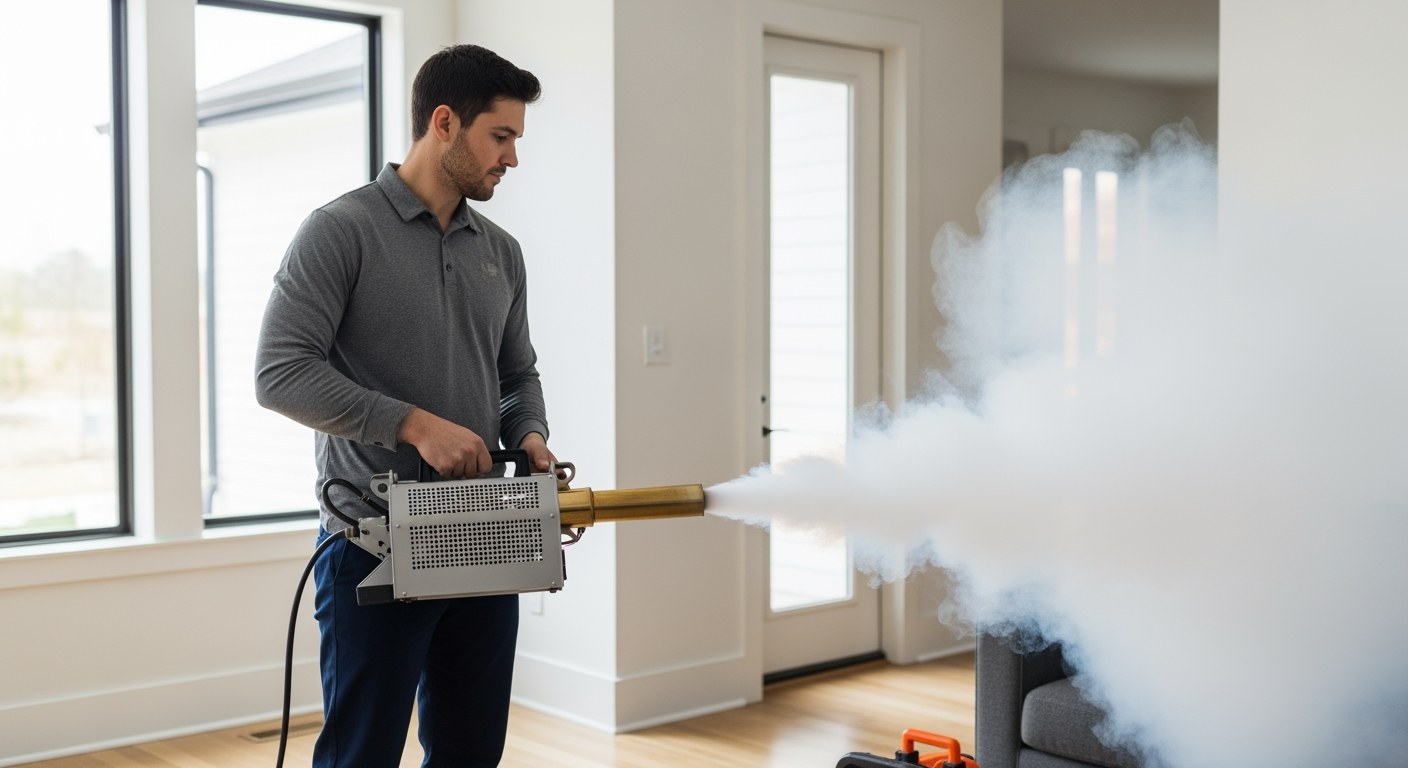
- Thermal fogging: Heated deodorizing chemical distributed as a fog that penetrates the same pathways smoke traveled — into wall cavities, behind cabinets, under flooring. Requires vacating the home for 4–8 hours.
- Ozone generation: Ozone (O3) molecules oxidize odor compounds at the molecular level. Highly effective for residual odor after cleaning. Requires full home evacuation (ozone is a lung irritant at treatment concentrations).
- Hydroxyl generation: Safer alternative to ozone — can run with occupants present in other areas. Slower than ozone but effective for ongoing odor control during reconstruction.
HVAC Smoke Contamination: The Problem Everyone Forgets
Your HVAC system ran during or after the fire. It circulated smoke-contaminated air through every duct and deposited residue on every interior duct surface, on the blower wheel, on the evaporator coil, and in the air handler. Even after the visible smoke is cleaned, the HVAC system will recontaminate every room every time the system runs.
HVAC cleaning after a smoke event runs $1,000–$3,000 depending on system size and contamination level. It is not optional — it’s the final step before any smoke-affected home is considered fully restored. Many homeowners skip it to save money and wonder why the smell keeps returning.
Smoke Damage Cleanup Cost Summary (Twin Cities 2025)
| Scope | Cost Range | Timeline |
|---|---|---|
| Single room, dry soot, surface only | $500–$1,500 | 1–2 days |
| 2–3 rooms, moderate smoke spread | $2,000–$5,000 | 3–5 days |
| Full home surface + odor treatment | $5,000–$12,000 | 1–2 weeks |
| Full home + HVAC + contents cleaning | $8,000–$20,000+ | 2–3 weeks |
| Protein fire (any scope) | Add 30–50% to above | Add 2–4 days |
Partners Restoration handles fire and smoke damage from the first call through final reconstruction across the Minneapolis west metro. We identify smoke type correctly, use the right chemistry, and document everything for your insurance claim. Serving Edina, Minnetonka, Plymouth, St. Louis Park, Hopkins, Golden Valley, and surrounding communities.
Leave A Comment