Direct answer: Fire damage restoration in Minnesota costs $3,000–$10,000 for small fires, $10,000–$40,000 for moderate fires, and $40,000–$100,000+ for large structural fires. The number that surprises most homeowners: water damage from firefighting typically adds $2,000–$6,000 on top of fire and smoke restoration costs.
A house fire is the most disruptive property damage event a Minnesota homeowner can face. The costs are significant, the process is long, and the insurance claim is complex. Here’s exactly what the restoration costs, what drives the number up, and what you need to know about your insurance coverage.
Fire Damage Restoration Cost by Scope (Twin Cities 2025)
| Fire Scope | Cost Range | Typical Timeline |
|---|---|---|
| Small kitchen fire, contained smoke | $3,000–$8,000 | 1–3 weeks |
| Moderate: 1–2 rooms, significant smoke spread | $10,000–$25,000 | 3–6 weeks |
| Large: multiple rooms, structural damage | $25,000–$75,000 | 6–12 weeks |
| Major: partial or full structural loss | $75,000–$200,000+ | 3–6 months+ |
The Cost Components Most Homeowners Don’t Anticipate
Water Damage From Firefighting
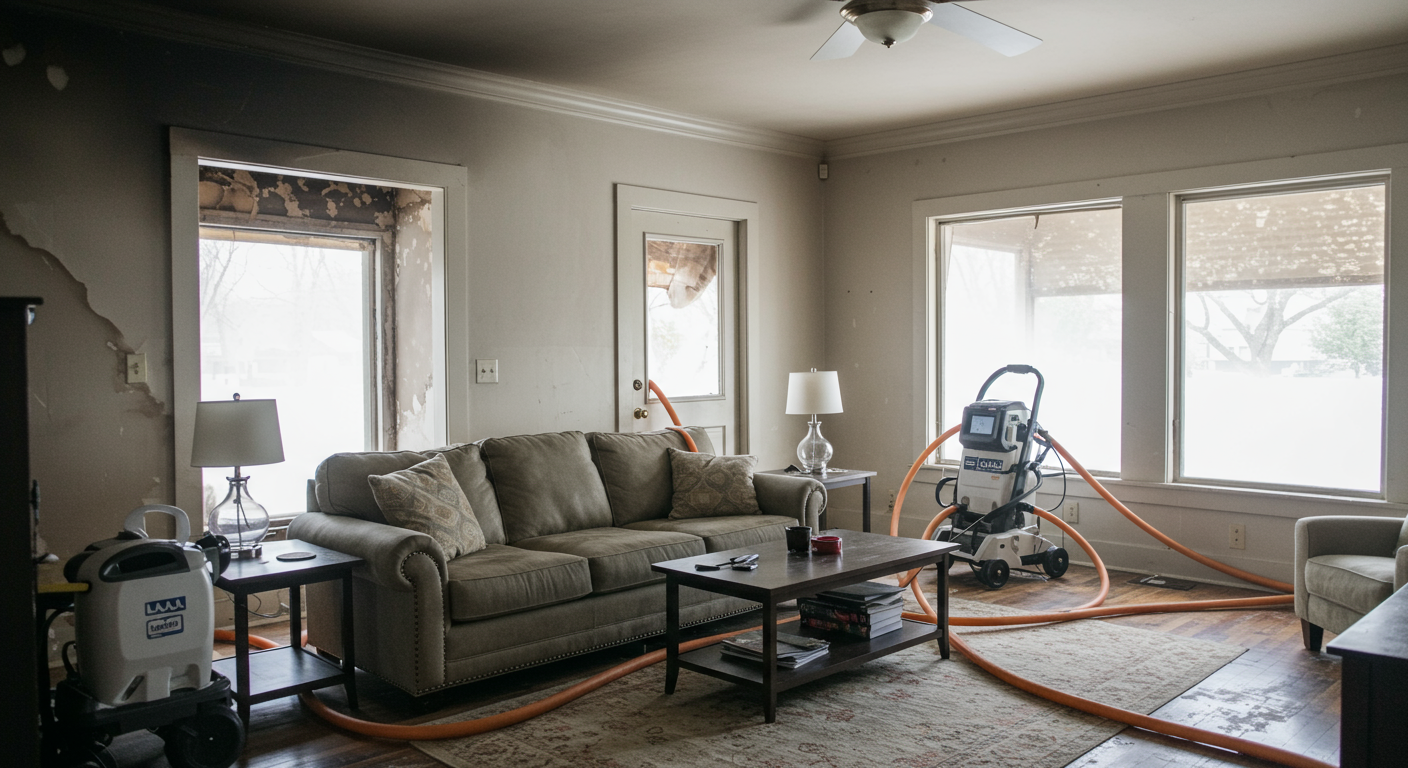
A fire truck can discharge 500–1,000 gallons of water per minute. Even a small residential fire suppressed in 15–20 minutes introduces thousands of gallons into a structure. That water saturates flooring, walls, and ceilings — often in rooms far from the fire origin. Water damage mitigation from firefighting adds $2,000–$6,000 to virtually every fire restoration project and must begin within hours to prevent mold.
Smoke Travels Everywhere
Smoke doesn’t stay in the room where the fire occurred. It travels through HVAC systems, under doors, through electrical penetrations, and into wall cavities. A kitchen fire in a 1,200 sq ft Edina rambler can deposit soot in every room within minutes. Smoke odor particularly bonds to porous materials — insulation, upholstered furniture, clothing, carpet. Professional odor elimination (ozone treatment, thermal fogging, hydroxyl generators) runs $500–$3,000 on top of surface cleaning costs.
Contents Pack-Out and Cleaning
Most restoration contractors offer contents pack-out: removing, inventorying, cleaning, and storing your belongings while the structure is repaired. This is often covered under your personal property coverage. The cost — $2,000–$10,000 depending on home size — is frequently underestimated by homeowners who assume their belongings are a total loss. Soot-damaged electronics, furniture, clothing, and documents can often be restored at a fraction of replacement cost.
Fire Classes and What They Mean for Cost
| Fire Class | Materials | Cleanup Complexity | Cost Modifier |
|---|---|---|---|
| Class A (dry combustibles: wood, paper, fabric) | Leaves dry, powdery soot | Moderate | Standard |
| Class B/C (synthetic materials, plastics, electrical) | Leaves oily, smearing soot | High — bonds to surfaces, harder to remove | +20–40% |
| Protein fire (kitchen grease, food) | Nearly invisible film, intense odor | Very high — penetrates everywhere | +30–50% |
Minnesota kitchen fires are often protein fires. A grease fire that flashes over the stove and is extinguished quickly looks minor — almost no visible soot — but deposits a thin protein film on every surface in the kitchen and adjacent rooms. That film is extremely difficult to remove and bonds odor permanently if not addressed within the first 24–48 hours with the right cleaning agents. Many homeowners try to clean it themselves and make it worse.
Navigating the Insurance Claim
Fire claims are among the most complex insurance claims a homeowner will file. Key things to know:
- ACV vs. Replacement Cost: Your policy pays either Actual Cash Value (depreciated) or Replacement Cost Value for damaged contents. Know which you have before you sign any claim settlement.
- Smoke damage scope disputes: Insurers often try to limit smoke remediation to the room of fire origin. A contractor with thermal imaging documentation showing soot migration throughout the home can substantiate a broader scope.
- Supplemental claims: Hidden damage discovered during demolition — charred framing behind walls, smoke in HVAC — is submitted as a supplemental claim. Do not close the claim until all demolition is complete.
- ALE coverage: Additional Living Expenses covers your temporary housing, meals, and storage while the home is uninhabitable. Invoke this immediately and keep all receipts.
Partners Restoration handles fire and smoke damage restoration across the Minneapolis west metro — from emergency board-up through final reconstruction. We document everything from the first hour and work directly with insurance adjusters. Serving Edina, Plymouth, Minnetonka, Chanhassen, St. Louis Park, Hopkins, and surrounding communities.
Leave A Comment