
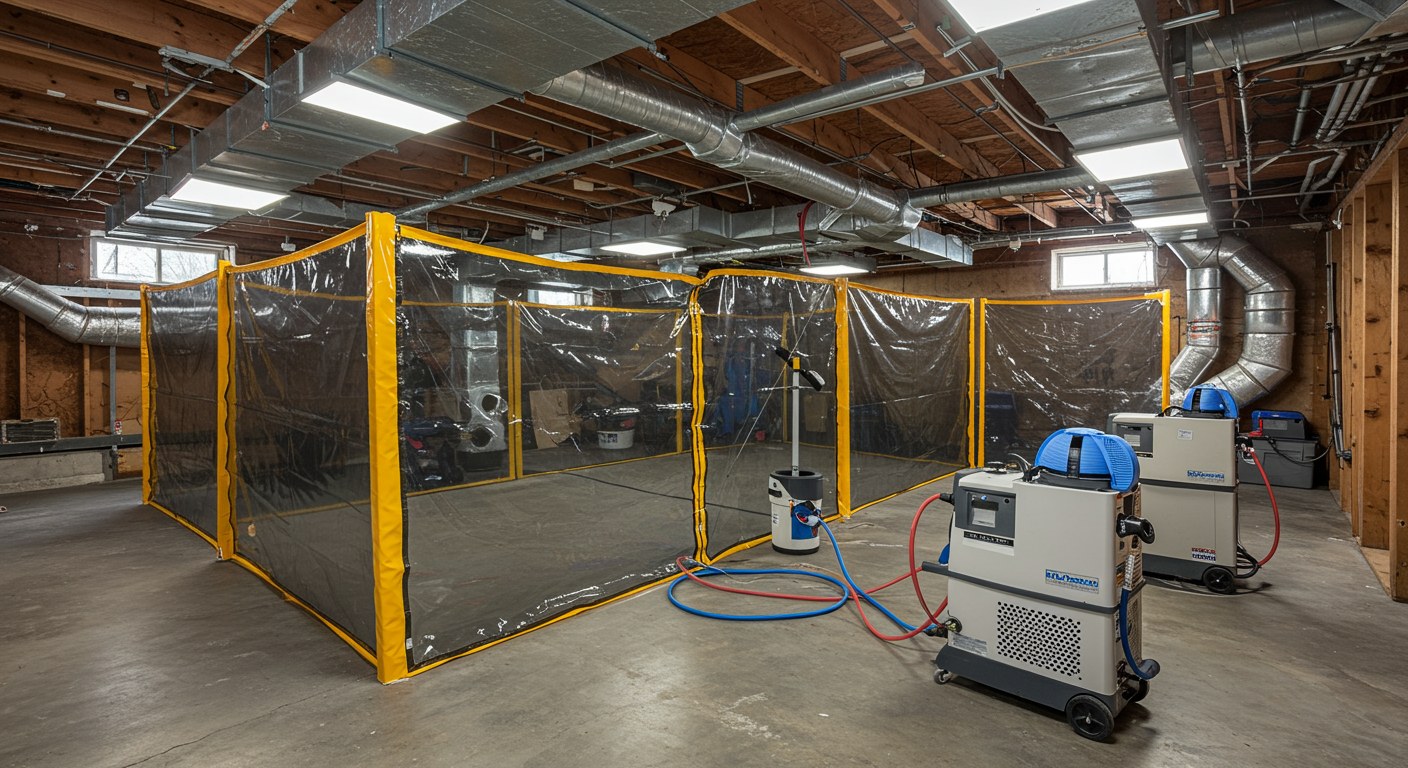
Direct answer: Mold remediation in Minnesota takes 3 to 7 days for most residential jobs. Single-room projects: 2–3 days. Basement or multi-room: 5–10 days. Attic mold: 2–4 days plus drying. HVAC mold: 1–3 additional days. You can return home 24–48 hours after remediation is complete, once air scrubbers have cleared the space.
The timeline for mold remediation in Minnesota depends on where the mold is, how much there is, and whether the moisture source has been corrected. This guide gives you the actual breakdown by project type — not the optimistic version designed to get you to sign.
Mold Remediation Timeline by Project Type
| Project Type | Timeline | What It Involves |
|---|---|---|
| Bathroom/small surface mold (<10 sq ft) | 1–2 days | HEPA cleaning, antifungal treatment, source correction |
| Single bedroom or living area | 2–3 days | Containment, HEPA air scrubbers, surface treatment, clearance |
| Basement — partial (one wall/section) | 3–5 days | Containment, material removal, framing treatment, drying |
| Basement — full (structural involvement) | 5–10 days | Full demo of affected materials, antimicrobial treatment, drying |
| Attic mold (very common in MN) | 3–6 days | Treatment/encapsulation or full sheathing replacement; drying |
| HVAC/ductwork mold | 2–4 days | Duct cleaning, coil treatment, antimicrobial coating, system restart |
| Crawl space mold | 2–5 days | Material removal, antimicrobial treatment, vapor barrier replacement |
What Each Phase Actually Takes
Day 1: Assessment and Containment Setup
Before any mold is removed, the affected area is contained using 6-mil poly barriers and negative air pressure machines (air scrubbers exhausting to the exterior). This prevents spores disturbed during remediation from spreading to unaffected areas. Setup alone takes 2–4 hours. Industrial HEPA air scrubbers run throughout the project — typically for the full remediation period plus 24 hours after.
Days 1–3: Active Remediation
Contaminated materials are removed (drywall, insulation, carpet, wood trim as needed), HEPA-vacuumed, and bagged for disposal. Remaining structural materials are treated with EPA-registered antimicrobial agents. Wire brushing or sanding of affected framing is common for deep colonization. This phase generates the most disruption and is why affected rooms must be vacated.
Days 3–5: Drying and Air Quality Restoration
After materials are removed and treated, the space needs to dry and air spore counts need to return to baseline before containment comes down. Air scrubbers continue running. In Minnesota winters, low outdoor humidity can accelerate this phase. In summer, high ambient humidity can extend it by 1–2 days.
Post-Remediation Verification: The Step That Protects You
A separate industrial hygienist (not the remediation contractor) takes air and surface samples after the space is cleared. Lab results take 24–48 hours. The clearance report documents that mold levels are at or below background — this is what your insurance company needs before approving reconstruction, and what protects you if mold issues arise after you sell the home.
The #1 Reason Minnesota Mold Remediation Takes Longer Than Expected: Attic Mold
Attic mold is epidemic in Minnesota homes built between 1975 and 2000. The cause is almost always bathroom exhaust fans venting into the attic rather than to the exterior — a code violation in Minnesota since the 1980s that’s still present in millions of homes. Warm, humid exhaust air hits cold attic sheathing and condenses. Mold colonizes the OSB or plywood sheathing within one winter season.
Attic mold remediation options:
- Chemical treatment and encapsulation: 2–3 days, $1,500–$3,500. Appropriate for early-stage colonization on solid sheathing. Must fix the moisture source (re-route exhaust fans) or it recurs.
- Sheathing replacement: 4–7 days, $4,000–$12,000. Required when mold has penetrated the sheathing layer or when encapsulation is not appropriate for the insurer. More complete but more disruptive.
Partners Restoration handles mold remediation from assessment through post-remediation clearance coordination across the Minneapolis west metro. We work directly with your insurance adjuster and independent hygienist to keep the project on schedule. Serving Edina, Plymouth, Minnetonka, Wayzata, Chaska, Deephaven, and surrounding communities.
Leave A Comment