
Direct answer: Mold remediation in Minnesota costs $900 to $3,265 for typical residential jobs, with an average around $2,072. Small single-room projects can be as low as $410. Basement or whole-house remediation with structural work runs $7,000 to $30,000. Black mold costs 20–50% more than standard mold due to stricter containment requirements.
Minnesota’s climate — cold winters, humid summers, clay soils, and a high density of homes built between 1955 and 1995 — creates ideal conditions for mold. If you’ve discovered mold in your home, here’s exactly what it will cost to fix it and what drives that number up or down.
Mold Remediation Cost by Scope (Twin Cities 2025)
| Scope | Area | Cost Range |
|---|---|---|
| Minor surface mold (bathroom tile, small wall patch) | Under 10 sq ft | $410–$900 |
| Single room (bedroom, bathroom) | 10–50 sq ft | $900–$2,500 |
| Basement (partial) | 50–150 sq ft | $2,500–$6,000 |
| Basement (full) or crawl space | 150–500 sq ft | $6,000–$15,000 |
| Multi-room or whole house | 500+ sq ft | $15,000–$30,000+ |
| HVAC/ductwork mold | Per system | $3,000–$10,000 |
What Drives the Price Up in Minnesota
1. Type of Mold
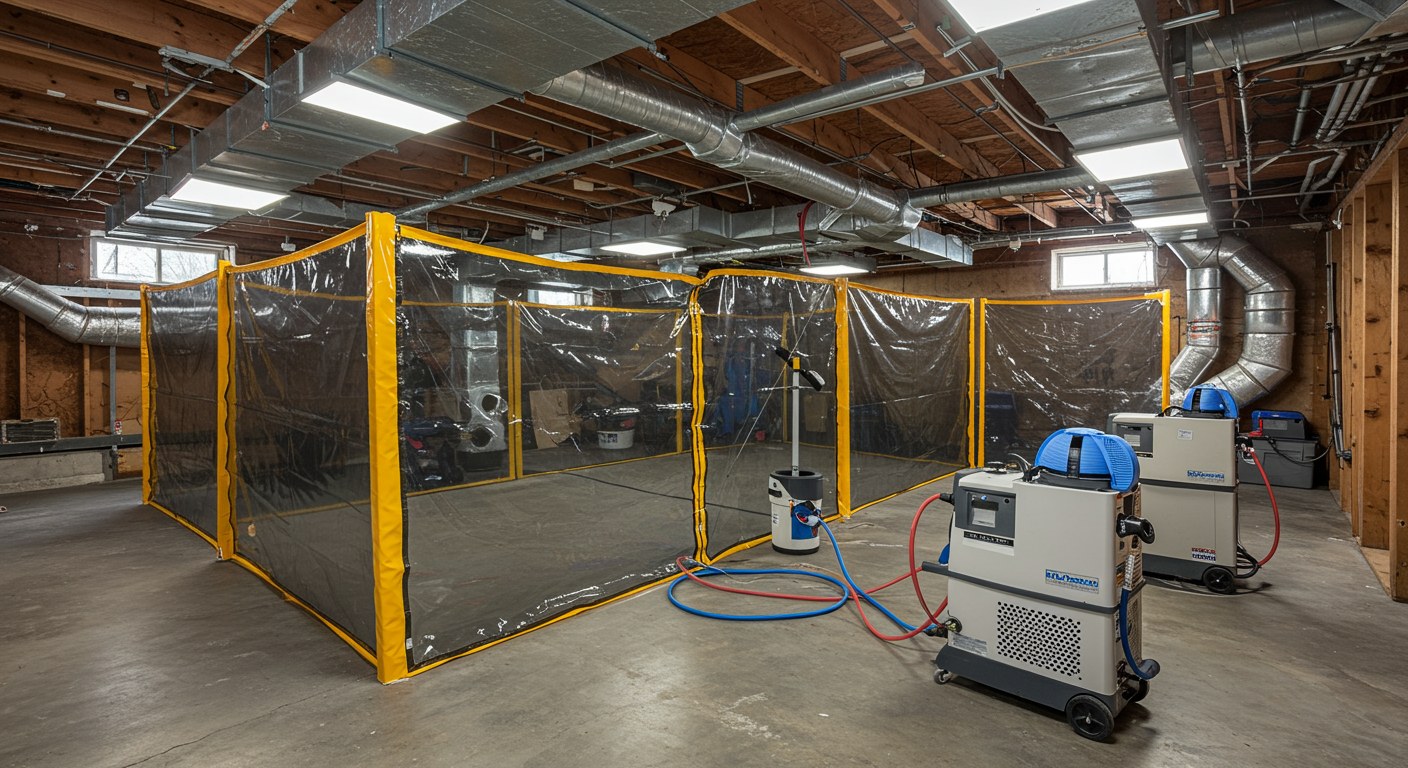
Not all mold costs the same to remove. Standard mold (Cladosporium, Penicillium, Aspergillus) is common and follows standard IICRC S520 remediation protocols. Black mold (Stachybotrys chartarum) requires Level 3 containment — full enclosure with negative air pressure, full PPE, and more aggressive decontamination. Budget 20–50% more for confirmed black mold.
2. Location in the Home
Accessible surface mold (bathroom tile, drywall) costs least. Mold inside walls, under flooring, in crawl spaces, or in HVAC ductwork costs significantly more because accessing it requires demolition and specialized equipment. Minnesota crawl spaces are a particularly common problem — cold ground, vapor drive, and inadequate ventilation create persistent moisture even in homes that have never flooded.
3. Structural Material Involvement
If mold has colonized structural framing — floor joists, wall studs, rim joists — the remediation moves from surface cleaning to partial demolition and replacement. This is common in Minnesota basements where wood framing sits close to slab level and moisture migration from the ground is ongoing. Structural mold remediation easily reaches $10,000–$20,000 for a single basement.
4. Post-Remediation Verification
A clearance test by an independent industrial hygienist costs $300–$600 in the Twin Cities market and is required by most insurance companies before reconstruction begins. Do not skip this step: if mold recurs after reconstruction, the clearance report is your documentation that the remediation was complete at the time walls were closed.
What Insurance Covers (and What It Doesn’t)
This is where most Minnesota homeowners get surprised. Homeowners insurance covers mold remediation only when the mold results directly from a covered peril that was addressed promptly. Here’s the breakdown:
| Mold Cause | Covered? | Notes |
|---|---|---|
| Burst pipe → mold within 48–72 hours | ✅ Usually yes | Must document the water event and act immediately |
| Ice dam water intrusion → mold | ✅ Usually yes | Ice dam damage is covered in most MN policies; mold follows |
| Slow leak under sink → mold | ❌ Usually no | Gradual leaks classified as maintenance failure |
| Basement humidity → mold | ❌ No | Not a sudden/accidental event |
| Flood (rising water) → mold | ❌ No | Requires separate flood insurance (NFIP or private) |
Pro tip: If your adjuster denies a mold claim citing “gradual damage,” push back with your contractor’s moisture documentation. Thermal imaging and moisture logs showing an acute moisture pattern — not chronic — can reverse a denial.
Minnesota-Specific Mold Risks by Home Age
Pre-1970 homes (Edina, St. Louis Park, Hopkins): Limestone or brick foundations with no vapor barrier. Perpetual ground moisture migration. Mold in rim joists and basement framing is endemic. Budget for ongoing prevention, not one-time remediation.
1970–1990 homes (Plymouth, Minnetonka, Maple Grove): Poured concrete with fiberglass insulation. Vapor barriers often inadequate or degraded. First-generation waterproofing membranes failing at 35–50 years. High crawl space mold rates.
Post-1990 homes (Chanhassen, Eden Prairie, Chaska): Better building envelope, but spray foam and tight construction can trap moisture if HVAC is undersized or improperly balanced. Attic mold from bathroom exhaust fans venting into attic space — extremely common in this era.
How to Choose a Mold Remediation Contractor in Minnesota
- IICRC AMRT (Applied Microbial Remediation Technician) certification — the industry standard
- Minnesota residential contractor license (required for any structural work)
- Independent post-remediation verification — not the same company doing the cleanup
- Written scope of work before signing, not a verbal estimate
- References from at least 3 local jobs in the past 12 months
Partners Restoration serves Edina, Minnetonka, Plymouth, Wayzata, Chaska, Chanhassen, Deephaven, Shorewood, and the entire Minneapolis west metro. We provide written scopes, document everything for insurance, and coordinate independent clearance testing. Call us for a same-day assessment.
Leave A Comment