
The short answer: Water damage restoration in Minnesota typically takes 3 to 5 days for the drying phase and an additional 1 to 4 weeks for structural repairs, depending on the severity. However, Minnesota-specific factors — frozen ground, clay soils, aging 1970s–1990s infrastructure, and insurance approval delays — routinely extend that timeline. Most homeowners in the Minneapolis west metro are back to normal in 2 to 6 weeks total.
If you just discovered water damage in your home — a burst pipe, a failed sump pump, a dishwasher leak, an ice dam — the first question you’re going to ask is: how long is this going to take?
The national averages you’ll find online don’t account for what makes Minnesota different. This guide does.
The Complete Minnesota Water Damage Restoration Timeline
Phase 1: Emergency Response (Hours 0–4)
The clock starts the moment water enters your home. A licensed restoration contractor should be on-site within 1–2 hours of your call for an active emergency. What happens in this window determines whether your restoration takes 2 weeks or 2 months.
- Water source identified and stopped
- Standing water extracted (commercial truck-mount extractors remove 200+ gallons per hour)
- Moisture mapping completed with thermal imaging cameras
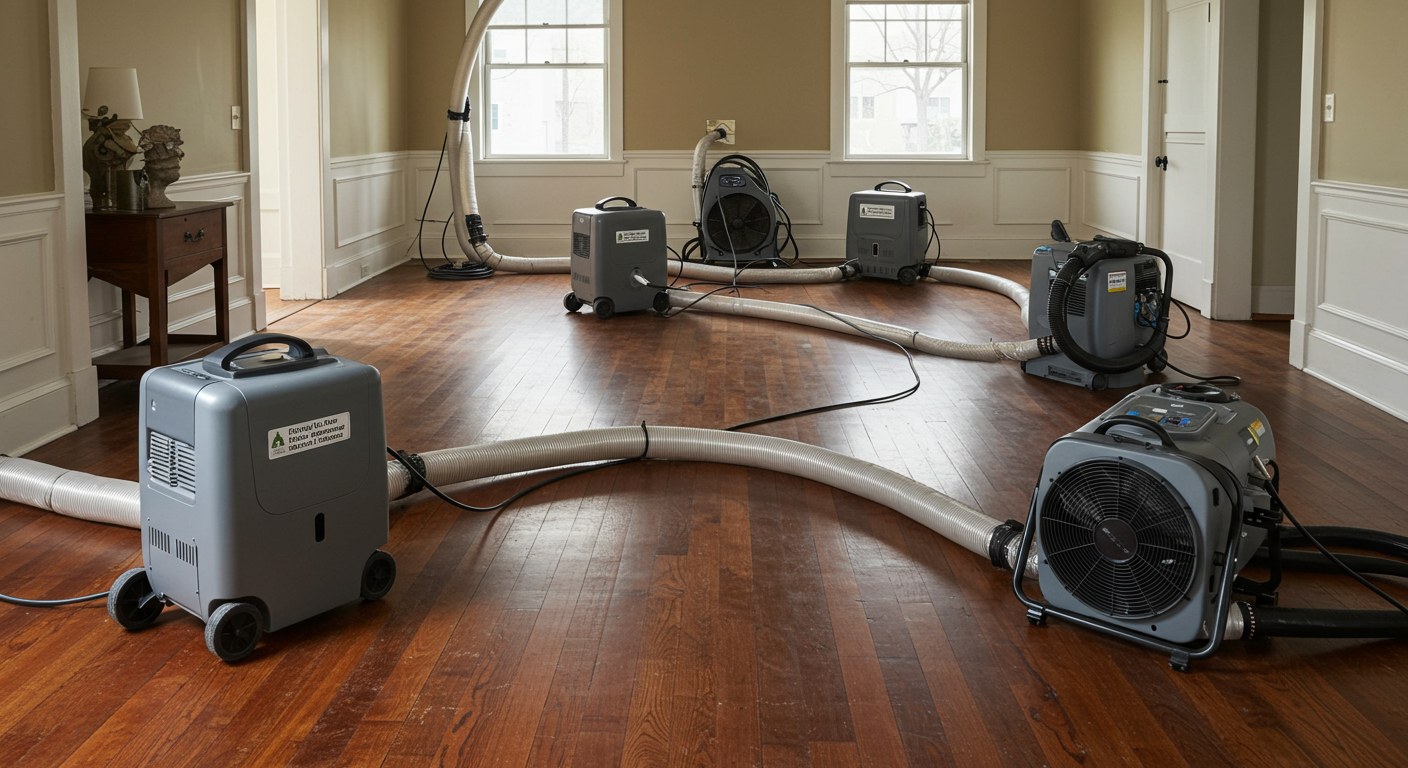
- Drying equipment staged: industrial dehumidifiers, air movers, desiccant units for basements
- Insurance documentation started: photos, moisture readings, scope of loss
Minnesota-specific factor: If the event happens in winter, frozen ground prevents moisture from draining. Water trapped in a basement slab or crawl space can wick upward for days after the visible source is stopped. Thermal imaging catches this; a basic visual inspection does not.
Phase 2: Structural Drying (Days 1–5)
This is the phase most homeowners underestimate. Drying isn’t about removing visible water — it’s about extracting moisture from inside walls, subfloors, ceiling cavities, and framing. The IICRC S500 standard (the industry benchmark) defines “dry” as achieving a moisture content within 2% of unaffected materials in the same structure.
| Damage Type | Typical Drying Time | Minnesota Modifier |
|---|---|---|
| Category 1 (clean water, dishwasher, supply line) | 3–5 days | +1–2 days in winter (low indoor humidity) |
| Category 2 (gray water, washing machine, toilet overflow) | 5–7 days | +2–3 days if crawl space involved |
| Category 3 (black water, sewage, flood) | 7–10 days | +3–5 days; full demolition usually required |
| Ice dam-related ceiling/wall intrusion | 4–6 days | Must wait for ice dam removal first |
Why Minnesota drying takes longer: Our climate creates a unique drying challenge. In January through March, outdoor dew points drop to -10°F to 5°F. That sounds like it should help — dry air should absorb moisture faster. But it also means that when contractors run dehumidifiers, they’re fighting low ambient humidity that causes materials to lose surface moisture quickly while deeper structural moisture remains. Moisture readings stabilize at the surface before the interior dries. Experienced contractors in this market run monitoring cycles every 24 hours rather than every 48 hours standard in warmer climates.
Phase 3: Demolition and Mold Prevention (Days 3–7, if needed)
If drying targets aren’t being met — or if Category 2/3 water was involved — affected materials need to come out. Drywall, insulation, baseboards, and subfloor sections are removed to expose framing for drying and to prevent mold colonization.
The 48-72 hour mold window: Mold can begin colonizing wet organic materials (drywall paper, wood framing, insulation) within 48 to 72 hours at indoor temperatures above 55°F. In a heated Minnesota home in winter, conditions are ideal for mold growth. This is the single biggest reason to call a restoration contractor the same day — not the next morning.
What gets demolished vs. saved:
- Almost always demolished: Wet drywall and insulation (not cost-effective to dry in place), Category 2/3-affected flooring, wet carpet and padding
- Usually saved with aggressive drying: Solid hardwood floors (if caught within 24 hours), cabinet boxes (not bases), solid wood trim and millwork
- Assessed case by case: Engineered hardwood, plaster walls, ceramic tile over wet subfloor
Phase 4: Reconstruction (Weeks 1–4)
Once the structure passes final moisture readings, rebuilding begins. This is where timelines vary most widely, because reconstruction scope depends entirely on what was removed and the complexity of matching existing finishes.
| Scope of Damage | Reconstruction Timeline | Typical Cost Range (Twin Cities 2025) |
|---|---|---|
| Minor: 1 room, drywall + paint only | 3–7 days | $2,500–$6,000 |
| Moderate: 1–2 rooms, flooring + drywall + trim | 1–2 weeks | $8,000–$18,000 |
| Major: Multiple rooms, subfloor, cabinetry | 2–4 weeks | $18,000–$45,000 |
| Severe: Structural framing, full room gut | 4–8 weeks | $45,000–$120,000+ |
Material lead times in Minnesota: During peak storm season (March–May and September–October), restoration contractors across the Twin Cities metro are competing for the same subcontractors and materials. Flooring lead times that are 3–5 days in summer can stretch to 2–3 weeks during hail or ice dam season. If your insurer requires three competitive bids, add another 5–10 days.
The Insurance Timeline: What Actually Slows Things Down
For most homeowners, insurance approval — not the physical work — is what determines how long you’re displaced. Here’s what the typical Minnesota insurance claim timeline looks like:
- Day 1–2: Claim filed, adjuster assigned
- Day 3–7: Adjuster inspection (may be in-person or virtual photo review)
- Day 7–14: Initial estimate issued by insurer
- Day 10–21: Scope disputes resolved (this is where most delays happen — insurers routinely underscope on first review)
- Day 14–30: Approval to proceed with reconstruction
- Day 30–60+: Supplemental claims for hidden damage discovered during demolition
What speeds it up: Working with a restoration contractor who documents the loss comprehensively on Day 1 — moisture logs, thermal photos, room-by-room scope — reduces the back-and-forth with adjusters significantly. Contractors who use Xactimate (the industry-standard insurance estimating software) and submit complete packages get faster approvals than those who submit handwritten estimates.
Minnesota-Specific Factors That Change the Timeline
1. The Age of Your Home
The west metro has a high concentration of homes built between 1955 and 1995. These homes have specific vulnerabilities that affect restoration timelines:
- 1955–1975 homes (Edina, St. Louis Park, Hopkins): Original cast iron or galvanized supply lines. Higher probability of multiple points of failure once a pipe event starts. Restoration often reveals secondary moisture from previous undetected leaks, adding scope.
- 1975–1990 homes (Plymouth, Minnetonka, Maple Grove): First-generation polybutylene or CPVC plumbing. Prone to widespread failure. A single event may require whole-house plumbing assessment before reconstruction is approved.
- 1990–2000 homes (Chanhassen, Chaska, Eden Prairie): PVC and copper, generally stable. But these homes often have large open-concept basements that, when flooded, require significantly more drying equipment and longer monitoring.
2. Ice Dams: A Category Unto Themselves
Ice dam water damage is uniquely slow to resolve in Minnesota because the source can’t be stopped until the ice dam is physically removed — and ice dam removal can’t begin until a roofing contractor or ice dam specialist is available. During peak ice dam season (January–February), wait times for ice dam removal can be 24–72 hours.
Meanwhile, melt water continues entering the wall cavity. Ice dam events that take 48 hours to address often present with Category 2 contamination (water has picked up insulation, drywall, and organic debris) even though the source was initially clean snow melt.
3. Sump Pump Failures During Spring Thaw
March through May is the highest-risk window for Minnesota basement flooding. When snowmelt, spring rain, and saturated clay soils combine, sump pumps can’t keep up. The ground can discharge 4–6 inches of water into a basement in under 4 hours during a major thaw event.
The complication: during regional flooding events, every restoration company in the metro is mobilized simultaneously. Response times stretch from 1–2 hours to 12–24 hours. If your neighbors are also flooded, equipment availability — dehumidifiers, air movers, desiccant trailers — tightens. Restoration timelines during regional events typically run 30–50% longer than isolated events.
How to Know Your Restoration is Actually Complete
Restoration is complete — not when it looks dry, but when moisture readings confirm it. Ask your contractor for:
- Final moisture report: Pin-type moisture meter readings from all affected structural components, showing values within normal range for the material and region
- Clearance documentation: Written certification that the structure meets IICRC S500 drying standards
- Mold clearance (if applicable): If mold was found or suspected, a post-remediation verification report from an independent industrial hygienist (not the same company that did the remediation)
- Photo documentation: Before/after photos showing the cleaned and dried structural components before they’re covered with new drywall
Do not allow a contractor to close walls without this documentation. Your insurance company will ask for it during the final reconciliation, and if you ever sell the home, you’ll need to disclose the water damage event — having clearance documentation protects your sale.
Questions Minnesota Homeowners Ask Most
Can I stay in my home during restoration?
For minor events (one room, no contamination), yes — with the understanding that industrial dehumidifiers run 24 hours a day, are loud (comparable to a window AC unit), and raise indoor temperatures by 5–10°F. For multi-room events, Category 2/3 water, or any mold involvement, temporary relocation is strongly recommended. Your homeowner’s insurance typically covers Additional Living Expenses (ALE) if the damage makes the home uninhabitable — ask your adjuster specifically about ALE coverage on Day 1.
Will my insurance cover the full timeline?
Homeowner’s insurance covers sudden and accidental water damage — burst pipes, appliance failures, ice dams (in most policies), and roof leaks from storms. It does not cover flood damage from rising water (that requires separate flood insurance) or damage from gradual leaks that went undetected. The distinction matters because gradual leak claims are frequently denied. If your adjuster calls the damage “long-term” or “gradual,” push back with the contractor’s documentation showing the moisture pattern is consistent with an acute event.
What’s the difference between mitigation and restoration?
Mitigation is everything that stops the damage from getting worse: water extraction, drying equipment, demolition of unsalvageable materials. Restoration is rebuilding: drywall, paint, flooring, trim. Your insurance policy covers both, but they’re often handled as separate line items with separate approval processes. Some insurers require the mitigation scope to be approved before reconstruction begins — knowing this upfront prevents the most common source of delay.
How do I know if the contractor is certified?
Look for IICRC certification (Institute of Inspection, Cleaning and Restoration Certification) — specifically the WRT (Water Restoration Technician) and ASD (Applied Structural Drying) designations. In Minnesota, licensed contractors must hold a state residential contractor license. Ask to see both before signing any work authorization.
The Bottom Line
Water damage restoration in Minnesota takes as long as it takes to do it right — and doing it right means hitting dry standard before closing walls, not just when things look dry to the eye. Cutting the timeline by skipping moisture monitoring is how homes develop mold problems 6 months after a “completed” restoration.
The fastest path through restoration is a contractor who responds immediately, documents everything, has a direct relationship with your insurance company’s adjusters, and doesn’t skip the final moisture certification. That’s what separates a 2-week restoration from a 2-month dispute.
Partners Restoration serves Edina, Minnetonka, Plymouth, Wayzata, Chaska, Chanhassen, Deephaven, Shorewood, and the entire Minneapolis west metro. If you have active water damage, call now — we respond within 60 minutes and document from the first hour.
Related Resources From Partners Restoration
- Water Damage Restoration — Minneapolis & Western Suburbs
- Mold Remediation — Minneapolis & Western Suburbs
- Fire & Smoke Damage Restoration
- Storm Damage Restoration
- All Service Areas — Minneapolis West Metro
Related: The Complete Guide to Property Damage Restoration in Minneapolis and the SW Metro
Leave A Comment