
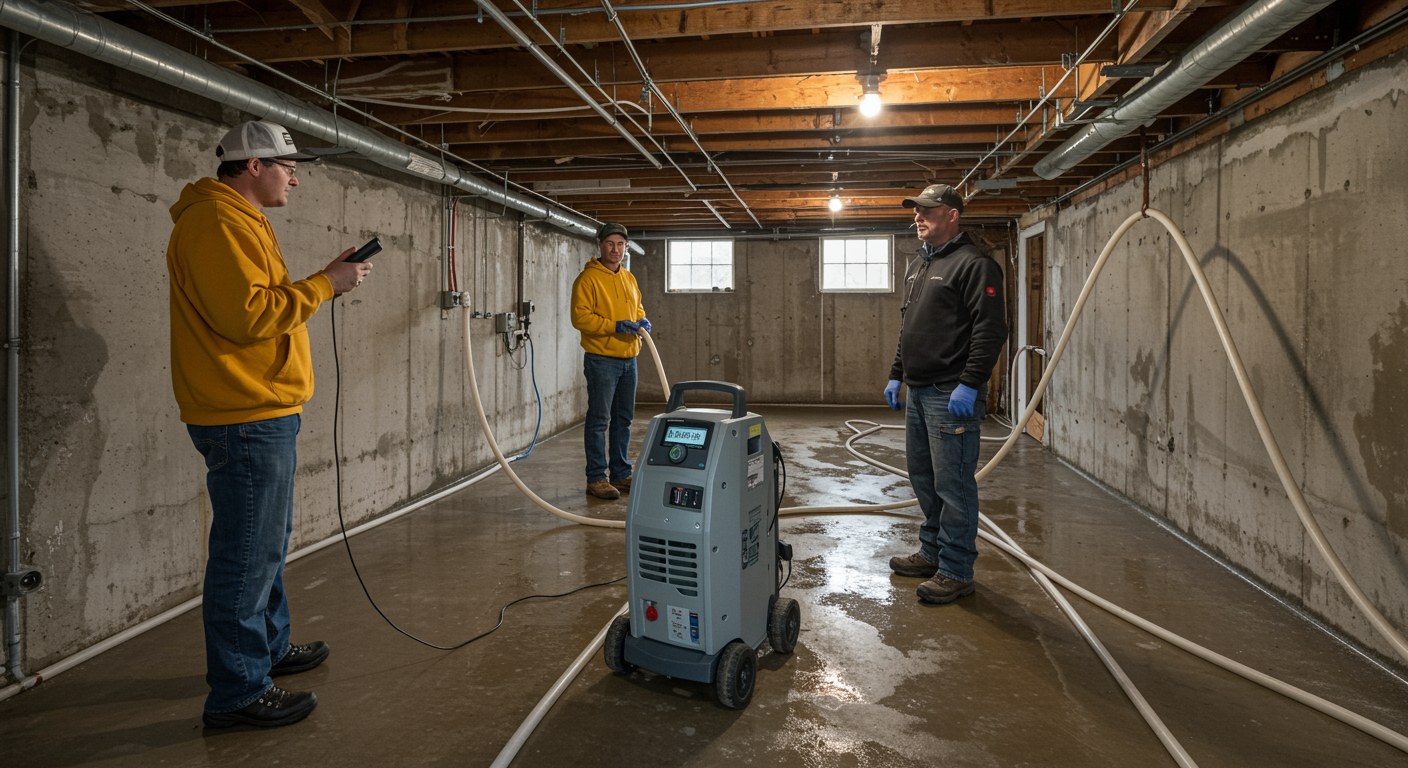
Hopkins is a first-ring suburb with a specific water damage profile that isn’t shared by the newer communities to its west: a housing stock built primarily in the 1950s and 1960s that’s now at the age where original galvanized plumbing, cast iron drains, and minimal attic insulation are producing failures at scale. Combine that with Nine Mile Creek watershed exposure and you have a city where water damage risk is driven as much by the age of what’s inside the walls as by what falls from the sky.
Hopkins’s Aging Infrastructure: When 1950s Plumbing Reaches Critical Age
Hopkins developed primarily in the late 1940s through the 1960s. The ramblers and modest two-stories that fill neighborhoods like West Hopkins, Hopkins Crossing, and the blocks east of Highway 169 are now 60 to 75 years old. Original galvanized steel supply pipes from this era have an expected service life of 40 to 50 years — a threshold that Hopkins’s housing stock crossed 10 to 25 years ago depending on the specific property.
Galvanized steel corrodes from the inside out. The first signs are discolored water (rust-colored or yellow-tinged, particularly after periods of no use), reduced flow at fixtures, and lower water pressure than the home had when newer. The failure mode is typically sudden: internal corrosion creates a weak point at a fitting or horizontal run, and the pipe fails. When galvanized supply pipes fail inside a wall or ceiling, the damage is significant — water enters the wall cavity and can run for hours before reaching a visible surface.
Cast iron drain lines from the same era present a different but related problem. Cast iron joints deteriorate over decades, allowing root intrusion from Hopkins’s mature elm and oak trees. Root-infiltrated cast iron lines restrict flow, eventually causing backups — and in the worst cases, line collapses that introduce sewage into finished lower levels. The smell of sewage backup in a Hopkins basement is Category 3 biohazard territory: not a DIY cleanup event.
Nine Mile Creek Watershed: Shared Risk Across Five Communities
The Nine Mile Creek Watershed District covers Hopkins along with Edina, Bloomington, Minnetonka, and Richfield across approximately 50 square miles. For Hopkins homeowners, this shared watershed means that water damage risk from creek-level changes isn’t purely determined by what happens in Hopkins. A heavy rain event in Minnetonka or Edina raises Nine Mile Creek levels in Hopkins hours later. Properties in Hopkins near the creek’s path or in low-lying drainage areas have flood exposure that extends beyond their local conditions.
The mechanism that most often affects Hopkins homeowners isn’t dramatic surface flooding — it’s groundwater. When Nine Mile Creek rises, the water table in adjacent soils rises with it. Basement walls in older Hopkins homes that lack adequate waterproofing experience seepage through foundation wall cracks, through the floor-wall joint, and through older drain tile systems that weren’t designed for sustained high groundwater.
Ice Dam Damage: The Hopkins Winter Problem
Original attic insulation in Hopkins’s 1950s and 1960s homes is typically three to four inches — well below current code minimums of R-49 for Minnesota climate zones. This inadequate insulation allows heat to escape from the living space into the attic, warming the roof deck and creating ice dam conditions every winter. Hopkins homeowners deal with ice dam damage at a higher rate than owners of newer homes simply because the insulation deficiency has never been corrected.
Ice dam water intrusion typically occurs at the eave — under lifted shingles where the dam forms — and enters the attic or runs down inside the exterior wall. Depending on where it enters, it can damage attic insulation, wet roof sheathing, saturate wall insulation, and eventually produce mold in spaces that homeowners don’t have line of sight to. Hopkins homeowners who notice water stains on ceilings near exterior walls after cold snaps are seeing the surface indication of damage that may be more extensive in the attic and wall cavity above.
Frequently Asked Questions — Water Damage Restoration in Hopkins, MN
What water damage risks do Hopkins homes face from Nine Mile Creek?
Hopkins sits within the Nine Mile Creek Watershed District, which covers approximately 50 square miles across Hopkins, Edina, Bloomington, Minnetonka, and Richfield. The creek and its tributaries run through portions of Hopkins, and properties near the creek corridor have flood exposure tied to watershed-wide conditions. Heavy rain in Minnetonka or Edina can raise Nine Mile Creek levels in Hopkins hours later, creating basement seepage risk that isn’t tied to local rainfall.
How old is the housing stock in Hopkins, and why does it matter?
Hopkins developed primarily in the late 1940s through 1960s, making it one of the older housing markets in the western suburbs. The dominant housing type — 1950s ramblers and two-stories — now has plumbing that’s 60 to 75 years old. Original galvanized steel supply pipes are at or well past design life. Cast iron drain lines from this era are prone to joint deterioration and root intrusion from the mature trees that define Hopkins’s residential neighborhoods. When these pipes fail, they fail suddenly.
What are the most common water damage events in Hopkins?
Pipe failures from aging galvanized steel supply lines and cast iron drains are the leading cause in Hopkins’s older housing. Ice dam damage is significant given the inadequate attic insulation common in 1950s and 1960s construction. Sump pump failures during storm events affect lower-lying properties near Nine Mile Creek. And appliance failures — dishwashers, water heaters, washing machine supply lines — are increasingly common as Hopkins homeowners age out their original mechanical systems.
Does Hopkins’s close proximity to Minneapolis affect its water damage risk?
As a first-ring suburb, Hopkins has dense development and more impervious surface per acre than outer suburbs. The Nine Mile Creek Watershed District covers Hopkins along with four surrounding communities — meaning that development decisions across the watershed affect Hopkins’s drainage conditions. The city has participated in watershed-level flood management planning to address the cumulative effects of impervious surface across the watershed.
How quickly can Partners Restoration respond to water damage in Hopkins?
Partners Restoration is based in Medina, approximately 15 to 20 minutes from Hopkins. We answer 24/7 at 952.500.2426.
Water damage in Hopkins? Contact Partners Restoration. Based in Medina, approximately 15 to 20 minutes from Hopkins. Call 952.500.2426 24/7.
Also see: Water damage restoration services in Hopkins | All restoration and remodeling services in Hopkins, MN | Insurance claims help
Leave A Comment