
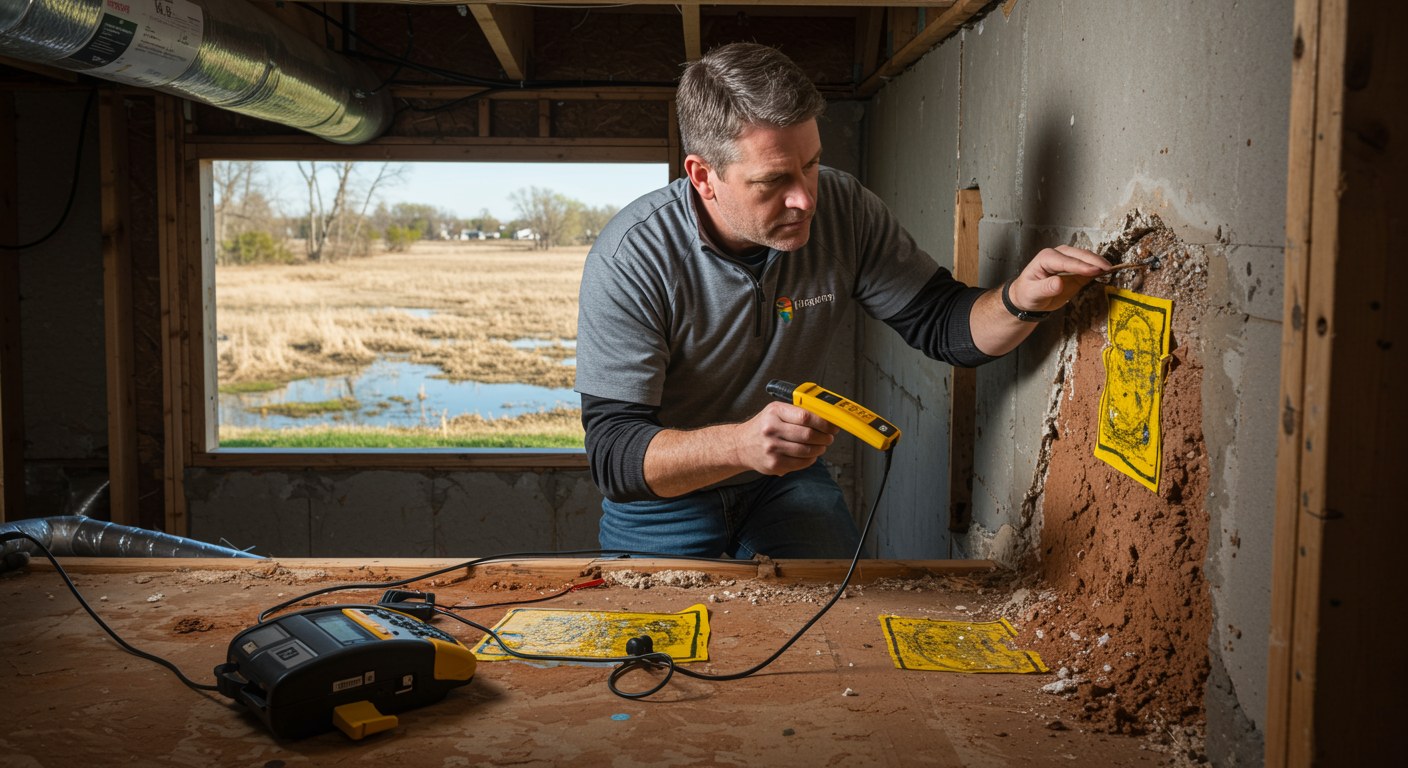
Chanhassen’s mold profile is shaped by a combination of factors that make it one of the more complex mold environments in the western suburbs: 356 wetlands create elevated ambient humidity throughout the city’s neighborhoods, clay-heavy soils retain moisture longer than surrounding communities, and former farmland under current subdivisions may have active tile drainage networks concentrating soil moisture around foundations in ways that weren’t anticipated when the homes were built. Understanding which of these applies to your specific property is the starting point.
Wetland-Adjacent Properties: Chanhassen’s Most Persistent Mold Risk
Chanhassen’s Surface Water Management Plan documents that surface water features — including the city’s 356 wetlands — account for roughly 26% of the city’s total area. These wetlands are distributed throughout all of Chanhassen’s neighborhoods, not concentrated in one area. This means that a significant share of Chanhassen’s residential lots are within a short distance of a wetland that influences local groundwater.
Wetlands maintain water levels that fluctuate with seasonal conditions. In wet years, wetland levels rise and the water table in adjacent soils rises with them. For homes with basements or crawl spaces adjacent to wetland areas, this means that below-grade spaces experience elevated moisture conditions during wet periods regardless of what happens inside the home. Vapor transmission through concrete and masonry foundation walls increases when soil moisture is elevated, feeding moisture into wall cavities and subfloor assemblies over time.
Chanhassen homeowners near wetlands who don’t have whole-home dehumidification or crawl space encapsulation are operating with chronic moisture in below-grade spaces that accumulates season over season. The mold that results isn’t dramatic — it’s the slow colonization of insulation, paper-faced drywall, and wood framing in wall assemblies that were built without accounting for persistent elevated soil moisture.
Clay Soil: Why Moisture Stays Longer in Chanhassen
Chanhassen’s drainage documentation notes that clay and silt soils have a higher water-holding capacity than sandy or loam soils. The city recommends residents check USDA soil survey data for their specific lot — acknowledging that soil type is a meaningful variable for drainage and ponding. In practical terms, clay soil means:
- Rain events saturate the soil faster and the soil stays saturated longer than in better-draining soils
- Foundation walls stay in contact with saturated soil for extended periods after each rainfall, increasing the cumulative vapor transmission into below-grade spaces
- Sump systems must manage higher sustained groundwater levels during wet periods, increasing failure risk
- The window for mold development after a water damage event may be shorter, because soil moisture remains elevated and structures don’t dry as quickly
The Tile Drainage Problem: When Former Farmland Concentrates Moisture
Agricultural tile drainage networks — installed to drain fields for planting — remain under portions of Chanhassen’s subdivision lots where the farmland wasn’t properly decommissioned before development. An active tile line under a residential lot channels soil moisture from a larger drainage area toward a concentrated point — often the lot’s foundation drain or sump pit. This can produce sump systems that run continuously in wet seasons, not because of high local groundwater but because the tile network is concentrating drainage from a much larger area than the lot itself.
For mold, the consequence is a foundation environment with persistently elevated moisture that doesn’t respond to the usual interventions. A whole-home dehumidifier helps. Improved foundation waterproofing helps. But if the underlying cause is a tile network concentrating drainage against the foundation, addressing only the interior moisture symptoms produces partial and temporary results. The full solution requires identifying the tile drainage source and either properly abandoning the tile lines or redirecting their discharge away from the foundation system.
Frequently Asked Questions — Mold Remediation in Chanhassen, MN
Why is mold so common in Chanhassen homes near wetlands?
Chanhassen has 356 wetlands distributed throughout its neighborhoods — accounting for roughly a quarter of the city’s total area. Properties adjacent to wetlands have groundwater that tracks wetland water levels. During extended wet periods, wetland levels rise and adjacent soil moisture increases, raising vapor pressure against foundation walls. Homes built near Chanhassen’s wetlands experience chronic moisture conditions in below-grade spaces that support mold growth without any specific water damage event.
How does Chanhassen’s clay soil affect mold risk?
Clay soils drain slowly and hold moisture longer than sandy or loam soils. The city’s own drainage documentation specifically notes that clay and silt soil increases the likelihood of ponding and pooling. For foundations, clay soil means the ground surrounding the foundation stays wet longer after rain events — extending the duration of elevated moisture pressure against walls and increasing vapor transmission rates into below-grade spaces. Homes on clay soil in Chanhassen have higher baseline mold risk in lower-level spaces than similar homes on better-draining soil.
What is the connection between agricultural tile drainage and basement mold in Chanhassen?
Much of Chanhassen was farmland before suburban development in the 1980s and 1990s. Agricultural tile drainage networks — perforated pipes buried to drain fields — weren’t always properly abandoned when subdivisions were built. Active tile lines under subdivision lots can concentrate drainage in foundation drain systems, maintaining higher-than-expected soil moisture around foundations year-round. This persistent elevated moisture is a chronic mold risk factor that’s unique to Chanhassen’s former-farmland development pattern.
What mold species are most common in Chanhassen homes?
Cladosporium is the most common species in Chanhassen’s wetland-adjacent and clay-soil homes — it thrives in moderate-humidity environments and colonizes wall assemblies, window frames, and bathroom tile grout. Penicillium and Aspergillus appear in finished basements with vapor-trapping wall assemblies. In cases where agricultural tile drainage has maintained chronic soil saturation, Serpula lacrymans (dry rot fungus) can develop in subfloor and crawl space wood framing.
Does homeowners insurance cover mold in Chanhassen from wetland-adjacent humidity?
No. Mold from chronic ambient humidity — including elevated humidity from wetland proximity, clay soil moisture retention, or legacy tile drainage — is classified as a maintenance issue rather than a sudden and accidental event. It’s generally not covered by standard homeowners policies. Mold that develops within the covered window after a specific water damage event (burst pipe, appliance failure) may be covered under the original claim. Chanhassen homeowners with wetland-adjacent properties should treat mold prevention as a maintenance responsibility, not an insurance expectation.
Mold concern in your Chanhassen home? Contact Partners Restoration for a moisture assessment and mold inspection. Based in Medina, 10 to 15 minutes from most Chanhassen neighborhoods. Call 952.500.2426.
Also see: Mold remediation services in Chanhassen | All restoration and remodeling services in Chanhassen, MN | Water damage restoration in Chanhassen
Leave A Comment