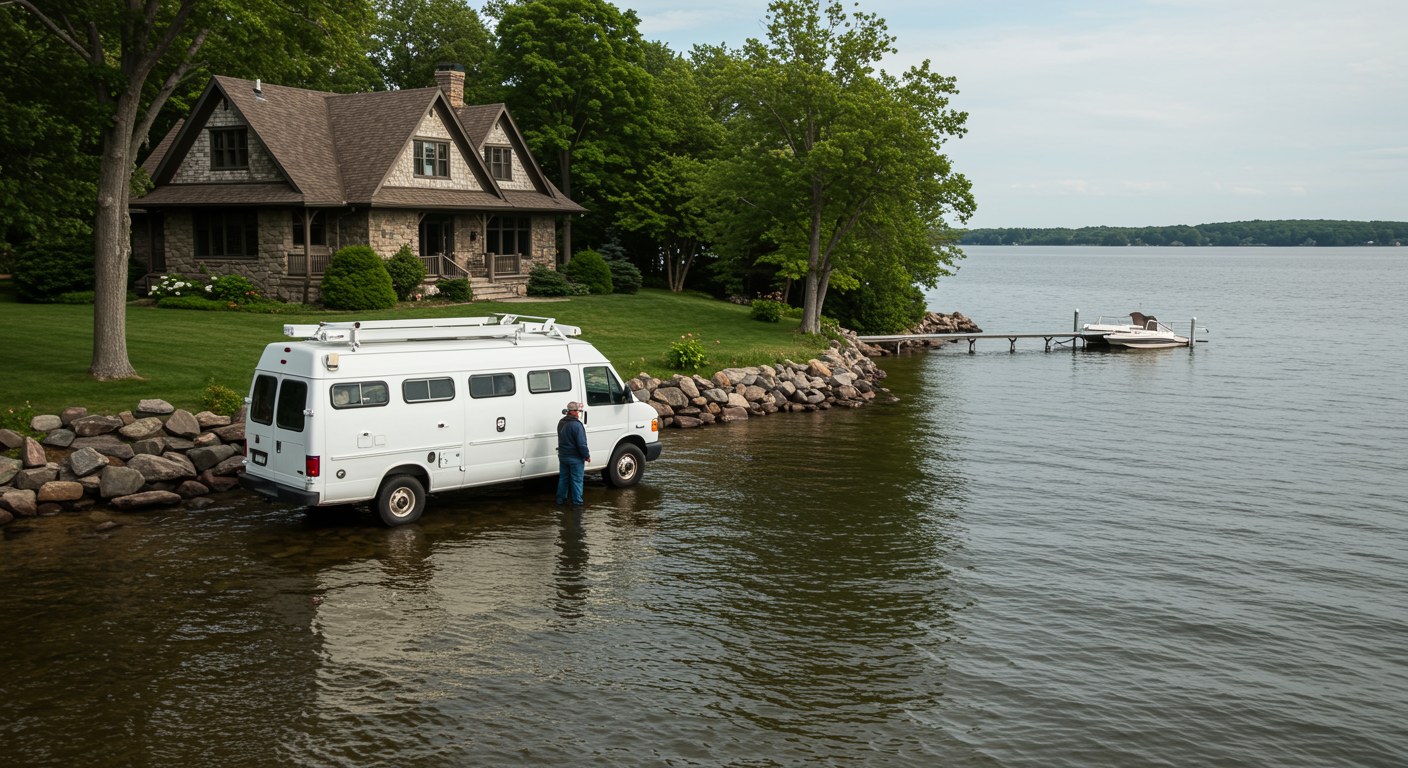
Orono is not a typical Twin Cities suburb, and its water damage picture reflects that. The city controls roughly 40% of Lake Minnetonka’s shoreline, runs on a split infrastructure system where much of the city still relies on private septic rather than municipal sewer, sits entirely within the jurisdiction of the Minnehaha Creek Watershed District, and houses some of the most valuable — and architecturally significant — residential properties in Minnesota. Water damage here touches all of those layers simultaneously.
Orono’s Infrastructure Split: Municipal Sewer vs. Private Septic
This is the fact most restoration companies don’t know going into an Orono job: the city’s municipal sanitary sewer system serves the Navarre area and the Highway 12 corridor. Much of the rest of Orono — including large portions of the lakefront estate areas — is served by private septic systems. The city bills these properties a quarterly septic fee and maintains compliance records, but the systems themselves are private infrastructure.
Why does this matter for water damage restoration? Several reasons. Drainfield setback requirements mean that any reconstruction or excavation within 50 feet of a well and within 20 feet of the drainfield itself requires careful coordination to avoid compromising the septic system. If the water damage event itself involved sewage — a backup through floor drains, a failed septic component — the remediation is categorically different than clean water damage and triggers Category 3 biohazard protocols. And any significant reconstruction that involves bedroom additions or changes in water use may trigger a septic compliance inspection before permits can be issued. A contractor who walks onto an Orono job without understanding the septic picture will hit these issues mid-project.
Lake Minnetonka’s Water Table: Why Orono Basements Flood Without a Leak
Orono holds approximately 40% of Lake Minnetonka’s 125 miles of shoreline. The lake covers 14,004 acres and its level fluctuates meaningfully with seasonal conditions — a wet spring can raise it significantly, a dry summer drops it. The Minnehaha Creek Watershed District manages outflow through Gray’s Bay Dam, but the lake still moves.
For Orono’s lakefront and near-shore properties, the groundwater table tracks the lake level. When the lake rises, groundwater in adjacent soils rises with it. Homes that have sat dry for years can develop basement seepage during a high-water year — not from rain, not from a pipe — from the rising water table pressing against a foundation wall that lacks adequate waterproofing. Original masonry foundations on Orono’s older estates, built when waterproofing standards were minimal, are particularly vulnerable. The MCWD’s watershed management framework specifically notes groundwater recharge and flood prevention as core functions of Orono’s surface water management plan.
The Three-Agency Permit Reality for Orono Restoration Work
Orono’s entire city lies within MCWD jurisdiction. Lakefront properties additionally fall under Lake Minnetonka Conservation District regulation for docks, moorings, and on-water structures. In-water or shoreline alterations require DNR Public Waters Work Permits. The City of Orono issues building permits under its own shoreland overlay ordinance.
For most interior water damage restoration — drying, drywall replacement, flooring — these regulatory layers don’t come into play. But for any reconstruction that involves exterior drainage changes, foundation work near protected water resources, or work adjacent to a regulated wetland, the permit picture is layered in a way that requires advance planning. Shoreline contractors in the area book early for spring and summer. Discovering mid-restoration that a MCWD permit is needed adds weeks to a project timeline.
Partners Restoration’s builder background means we identify permit requirements before the project starts. We coordinate with MCWD and the city as part of our project management, not as a surprise after demo begins.
Orono’s Housing Stock: Three Eras, Three Risk Profiles
Orono’s housing spans more than a century. The oldest properties — early 1900s summer cottages on Brackett’s Point and around the bays — are now year-round residences with original masonry foundations, original supply plumbing, and septic systems that have been updated over the decades but are tied to aging drainfield infrastructure. Mid-century estates from the 1950s and 1960s have copper supply plumbing now 60–70 years old, cast iron drain lines, and foundations that predate modern waterproofing. Newer construction and teardown-rebuilds from the 1990s through today have more current systems but carry the full weight of Orono’s regulatory environment for any work near the lake.
Across all eras, the common thread is property value. The average lakefront listing in Orono is in the millions. Water damage restoration on these properties isn’t a commodity service — it requires material matching, preservation decisions, permit coordination, and the kind of documentation that supports insurance claims and real estate transactions on high-value assets.
Frequently Asked Questions — Water Damage Restoration in Orono, MN
What makes water damage restoration in Orono different from other Lake Minnetonka communities?
Orono’s defining characteristic is its infrastructure split: the Navarre area and the Highway 12 corridor have municipal sewer, but the rest of the city — including most of the lakefront estate properties — is served by private septic systems. A water damage event that involves sewage, sewer backup, or any ground disturbance near a septic system triggers a different set of considerations than it would in a fully sewered suburb. Drainfield setback requirements, septic system compliance checks, and potential drainfield damage must all be addressed before reconstruction can proceed.
How does Lake Minnetonka’s water level affect Orono homes?
Orono holds roughly 40% of Lake Minnetonka’s shoreline. When the lake is at high water — as it can be after a wet spring or sustained rainfall — groundwater around shoreline properties rises directly with lake levels. This creates hydrostatic pressure against lower-level foundations and can produce basement seepage and crawl space moisture in homes that have been perfectly dry during lower-water years. The Minnehaha Creek Watershed District manages outflow through Gray’s Bay Dam, but lake levels still fluctuate significantly year to year.
What permits are required for water damage restoration work on Orono lakefront properties?
Restoration work on Orono properties near Lake Minnetonka or regulated wetlands may require coordination with multiple agencies: the City of Orono for building permits, the Minnehaha Creek Watershed District (MCWD) for any work affecting drainage, stormwater, or near protected water resources, the Lake Minnetonka Conservation District (LMCD) for dock and shoreline structures, and the Minnesota DNR for Public Waters Work Permits if in-water or shoreline alterations are involved. A contractor who doesn’t know these permit layers in advance will discover them mid-project — causing delays and cost overruns.
What water damage issues are most common in Orono’s older lakefront estates?
Original cast iron and galvanized supply and drain piping in Orono’s pre-1960 homes is at or past design life. Masonry foundations on the oldest estates lack modern waterproofing. Septic systems on older properties may have aging drainfields that can be compromised by water damage events or reconstruction activities. And the lake-proximate water table means sump systems in lower-level spaces work harder and fail more often than in upland suburban properties.
Can Partners Restoration handle full restoration of high-value Orono estate properties?
Yes. Our builder background means we assess and manage the full scope — from emergency water extraction through structural reconstruction, premium material matching, and permit coordination with MCWD, LMCD, and the city. We don’t hand off Orono jobs to a separate general contractor. One contract, one team, full accountability. We answer 24/7 at 952.500.2426.
Water damage in Orono? Contact Partners Restoration for emergency response or an assessment. We’re based in Medina, adjacent to Orono’s eastern border. Call 952.500.2426 24/7.
Also see: Water damage restoration services in Orono | All restoration and remodeling services in Orono, MN | Insurance claims help
Leave A Comment