
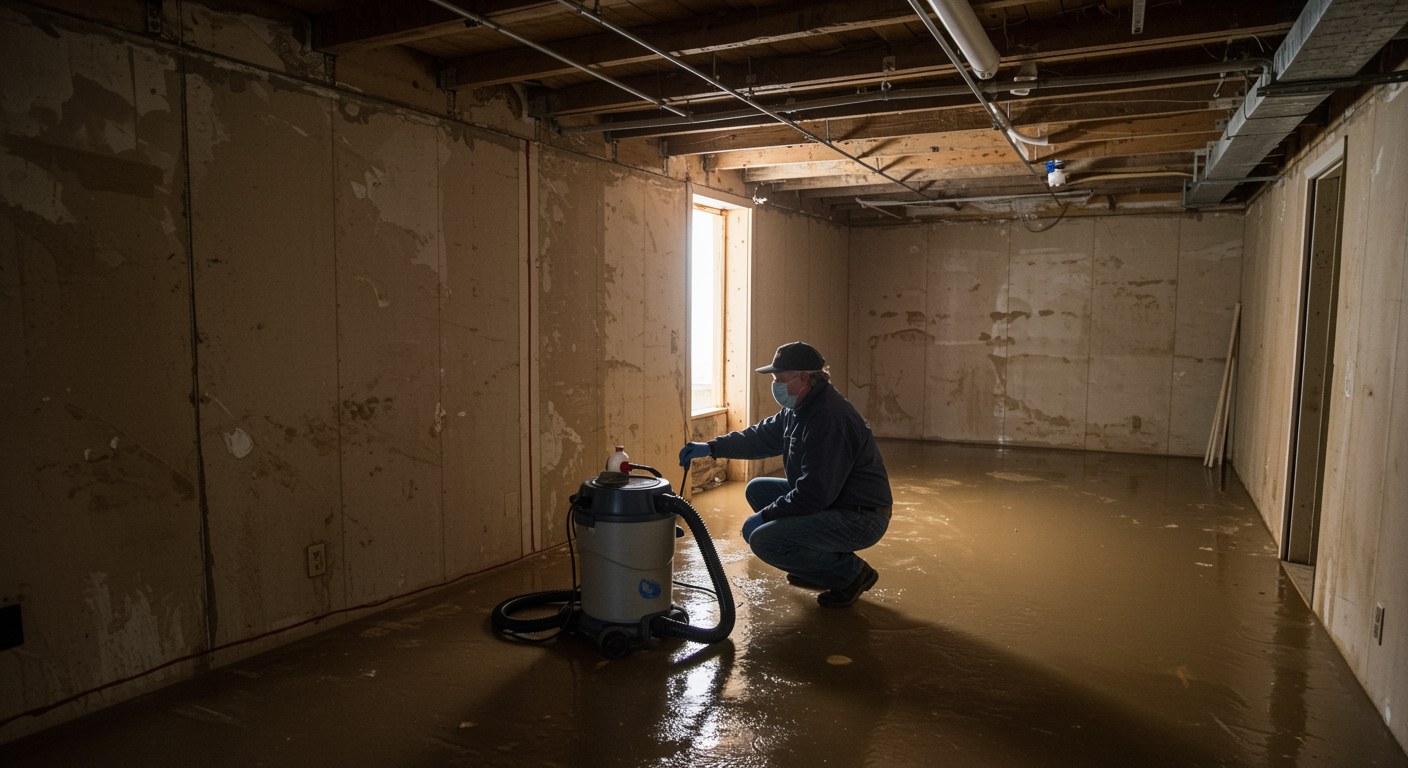
Bloomington’s mold picture reflects the city’s geography and age. The Minnesota River floodplain runs along the southern edge, Nine Mile Creek watershed covers the northern and central neighborhoods, and a large proportion of the city’s housing was built in the postwar boom decades when moisture management practices were minimal. Mold in Bloomington homes is often the intersection of where the home sits, how old it is, and what its foundation and drainage systems can handle after 50 or 60 years of service.
The Minnesota River Valley’s Humidity Influence on Southern Bloomington
The Minnesota River Valley is one of the most significant natural features in the Twin Cities metro — a broad valley carved by glacial meltwater that now hosts an extensive wetland and wildlife refuge complex. Bloomington’s southern tier sits on the bluffs above this valley. The valley’s wetland complex maintains a persistently higher ambient humidity in adjacent areas than the upland portions of Bloomington to the north.
For homeowners in southern Bloomington neighborhoods closest to the valley — near Black Dog Road, Overlook Drive, and the residential areas that look south over the Minnesota Valley National Wildlife Refuge — this means two things: their homes sit in a moister ambient environment than comparable properties farther from the valley, and in high-water years when the Minnesota River rises, the groundwater table in adjacent areas rises with it. Original foundations in the older homes in these neighborhoods were not designed for persistent elevated groundwater conditions.
Bloomington’s Postwar Housing: Five Decades of Moisture Accumulation
Bloomington’s residential explosion happened between roughly 1950 and 1975. The city added homes so rapidly during this period that it became one of the largest suburbs in the state within two decades. The homes built during this era are now 50 to 75 years old — well into the range where original infrastructure is failing and chronic moisture effects are becoming visible for the first time.
Original Galvanized Plumbing
Bloomington’s 1950s and 1960s homes were built with galvanized steel supply pipes. These pipes corrode internally over decades — reducing flow, discoloring water, and creating weak points at fittings and horizontal runs. When they fail, they fail suddenly, producing water damage in wall cavities and finished spaces before the homeowner is aware of the problem. Post-water-damage mold in Bloomington’s oldest housing frequently traces to a galvanized pipe failure that was slow enough to produce ongoing moisture before reaching catastrophic failure.
Minimal Attic Insulation and Ice Dam Mold
Original attic insulation in Bloomington’s postwar housing stock is typically inadequate by modern standards — often just a few inches of blown cellulose or fiberglass that provides far less thermal resistance than current codes require. This inadequate insulation produces heat loss through the roof deck, uneven snow melt, and ice dam formation at the eaves every winter. Over decades of repeated ice dam events, water intrusion saturates attic insulation and wets roof sheathing — producing mold in the attic assembly that’s often discovered during a roof replacement when the sheathing is exposed for the first time.
Original Basement Construction
Basement finishing practices in Bloomington’s 1960s and 1970s construction often involved applying paneling or framing walls directly against concrete with minimal or no vapor barrier. In homes near Nine Mile Creek or in the lower-lying portions of Bloomington where groundwater is closer to the surface, this construction has been transmitting moisture from the foundation into the wall assembly for decades. The mold is there — whether it’s been discovered yet or not.
Nine Mile Creek Watershed: Why Groundwater Matters More Than Surface Flooding
Nine Mile Creek runs through Bloomington as part of a 50-square-mile watershed that also covers Edina, Hopkins, Minnetonka, and Richfield. In Bloomington, the creek influences groundwater in adjacent low-lying areas — particularly during high-flow periods after major storms or snowmelt. This groundwater influence isn’t surface flooding in the traditional sense; it’s rising groundwater that increases the hydrostatic pressure against basement foundation walls.
Homes near Nine Mile Creek’s corridor through Bloomington that have original uncoated foundation walls and no interior drainage system may experience seepage through the foundation after significant rain events — not as visible water running in, but as moisture transmission that wets the interior face of the wall and anything in contact with it. The mold that develops from this is often attributed to general dampness rather than traced to its actual cause.
Frequently Asked Questions — Mold Remediation in Bloomington, MN
Why does Bloomington have elevated mold risk near the Minnesota River?
Bloomington’s southern tier sits adjacent to the Minnesota River floodplain — one of the most significant wetland corridors in the Twin Cities metro. Properties near the bluffs above the river valley experience elevated ambient humidity from the wetland complex below, and in high-water years, groundwater in the surrounding area rises with river levels. Basements and lower levels in homes close to the valley edge have more persistent moisture exposure than properties farther north in Bloomington.
What makes Bloomington’s 1960s housing stock particularly prone to mold?
Bloomington grew explosively in the 1950s and 1960s. Homes from this era typically have galvanized steel supply plumbing that’s now at or past design life, cast iron drain lines prone to joint failure and root intrusion, and minimal attic insulation that creates ice dam conditions every winter. Original basement finishing from this era — if it exists — was done without drainage planes or vapor barriers, creating chronic moisture traps. And sump pump systems in these homes have typically been replaced once or twice but may now be on aging replacement units with no backup.
How does Nine Mile Creek affect mold risk in Bloomington?
Nine Mile Creek runs through northern and central Bloomington. Properties within the creek’s drainage area — which includes much of Bloomington’s residential neighborhoods — have groundwater that responds to creek levels. During high-flow periods after major rain events or snowmelt, groundwater in lower-lying areas rises, increasing moisture pressure against basement foundations. For homes with inadequate basement waterproofing or sump systems, this translates to basement seepage and the mold risk that follows.
Is mold from basement flooding covered by Bloomington homeowners insurance?
Mold that results directly from a covered water damage event — burst pipe, appliance failure — is typically covered if addressed promptly. Mold from sewer backup requires a water backup endorsement. Mold from gradual moisture accumulation or deferred maintenance is generally not covered. For Bloomington homeowners near Nine Mile Creek or the Minnesota River, mold that results from groundwater seepage through foundation walls may fall into a gray area — document the specific cause at the time of discovery.
What does mold remediation cost in Bloomington, MN?
Costs vary significantly by scope. A contained bathroom or single-wall basement issue runs from a few thousand dollars for small areas to $15,000 to $25,000 for a significant wall section with structural involvement. Whole-basement remediation in a Bloomington 1960s home with original construction can be more extensive. We provide detailed assessments and line-item estimates before any work begins. Partners Restoration answers 24/7 at 952.500.2426.
Mold concern in your Bloomington home? Contact Partners Restoration for a moisture assessment and mold inspection. Call 952.500.2426.
Also see: Mold remediation services in Bloomington | All restoration and remodeling services in Bloomington, MN | Water damage restoration in Bloomington
Leave A Comment