
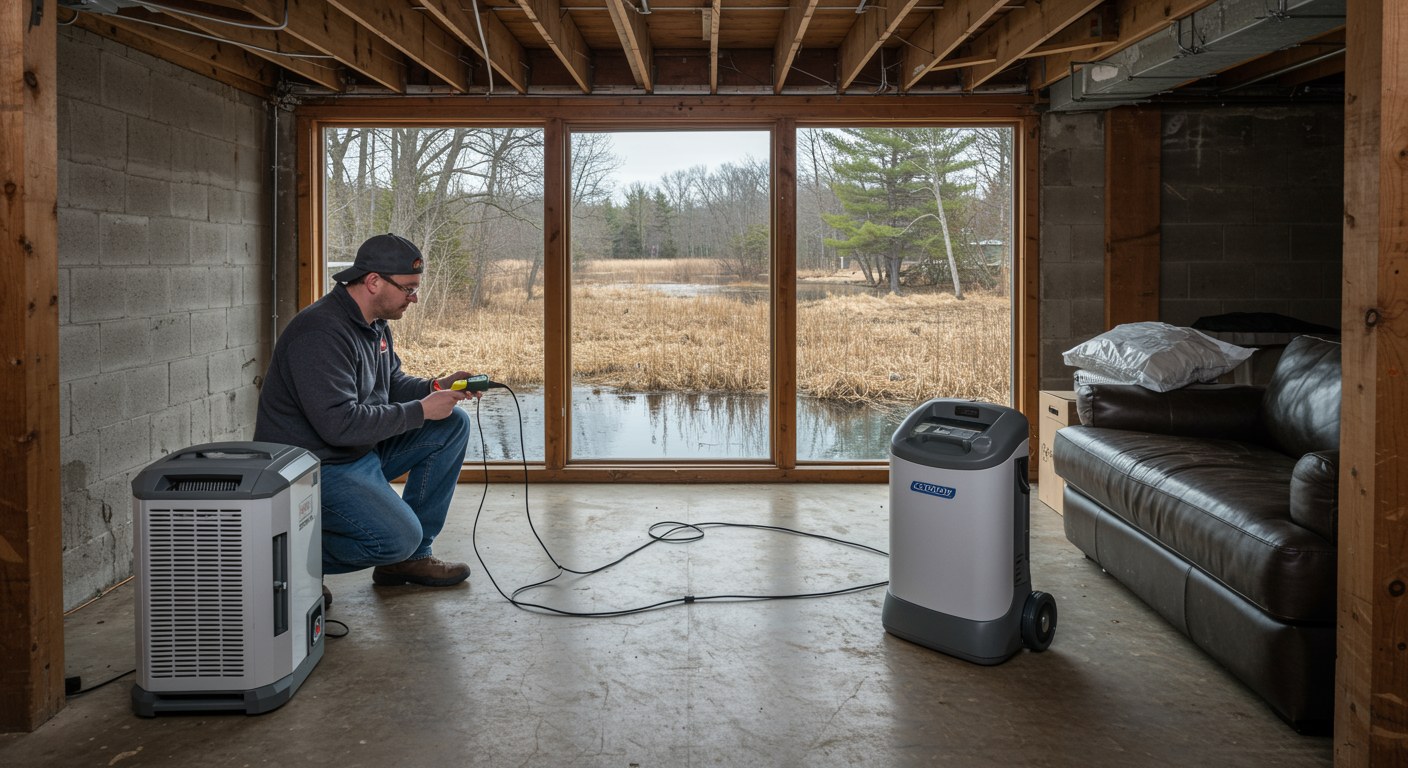
Minnetonka’s mold picture has a specific character that distinguishes it from other western suburbs. The city’s proximity to Lake Minnetonka, its 252 stormwater ponds, and the countless smaller water features woven through its neighborhoods create a baseline humidity profile that makes mold a recurring issue — not just after water damage events, but in homes that have never had a leak. Understanding this context is the starting point for effective mold prevention and remediation in Minnetonka.
How Water Proximity Elevates Baseline Mold Risk in Minnetonka
Mold requires three things: organic material (virtually every building material qualifies), warmth (Minnesota homes are heated), and moisture. In a standard dry-climate environment, the moisture condition is the variable — control moisture and you control mold. In Minnetonka, the challenge is that the soil moisture around many homes is persistently elevated by proximity to water. Lake Minnetonka, the city’s extensive pond network, and the many small wetlands within the watershed all maintain higher ambient soil moisture in adjacent properties year-round.
This elevated soil moisture translates into elevated relative humidity in below-grade and lower-level spaces. A finished basement in a Minnetonka home adjacent to a stormwater pond may have relative humidity consistently in the 60–70% range during summer months — well into the range where mold will colonize wood framing, paper-faced drywall, and soft furnishings — even if no water event has ever occurred. Many Minnetonka homeowners discover mold behind finished basement walls during a renovation and are genuinely surprised, because they’ve never had a leak. The moisture came from the soil, not a pipe.
Where Mold Actually Appears in Minnetonka Homes
Behind Finished Basement Walls
This is the most common hidden mold location in Minnetonka. Finished basement walls built against concrete foundation walls — particularly those without a proper drainage plane and vapor barrier between the concrete and the framing — trap moisture from soil vapor transmission. Over time, the paper face of drywall and the wood framing provide a substrate where mold colonizes invisibly. The first indication is often a musty smell when the HVAC runs, or discoloration on the baseboard. By the time it’s detectable, there’s typically mold coverage on the back face of the drywall throughout the affected wall section.
In Crawl Spaces
Minnetonka has a significant number of older homes with crawl space foundations. Crawl spaces in lake-proximate and pond-adjacent properties are high-risk mold environments — elevated groundwater tables mean the soil in the crawl space is often damp, the vapor barrier (if installed) may be inadequate, and ventilation is typically minimal. Wood joist systems in crawl spaces are a classic location for Serpula lacrymans (dry rot fungus) and Cladosporium mold. Crawl space mold often goes undetected for years because no one looks there until there’s a different problem.
Attic Mold: The Ice Dam Connection
Attic mold in Minnetonka homes typically traces to one of two causes: inadequate attic ventilation allowing warm humid air to accumulate against cold roof sheathing (producing condensation and mold), or ice dam leaks that saturate attic insulation and wet the sheathing from below. Both are common in Minnetonka’s housing stock, which spans multiple construction eras with variable insulation and ventilation quality. Attic mold in roof sheathing and rafters can go undetected for years until a real estate inspection or roof replacement uncovers it.
IICRC S520 Mold Remediation: What the Standard Requires
The IICRC S520 Standard and Reference Guide for Professional Mold Remediation sets the technical requirements for professional mold work: assessment protocols, containment requirements, PPE, removal procedures, and clearance testing. Partners Restoration follows S520 standards on every mold job. This matters for two reasons:
- Health and liability. Mold remediation performed without proper containment spreads spores throughout the home. S520 containment protocols prevent cross-contamination during removal. For Minnetonka homeowners dealing with mold behind finished walls, cutting into that wall without negative air pressure and containment barriers is actively harmful.
- Insurance documentation. Many insurance claims for mold remediation require documentation that work was performed to IICRC standards. A scope of work and completion report referencing S520 compliance supports the claim and reduces disputes about whether the remediation was adequate.
Prevention: What Minnetonka Homeowners Can Actually Do
The elevated baseline humidity of Minnetonka’s lake and pond-adjacent environment can’t be eliminated, but it can be managed. The most effective prevention strategies for Minnetonka homes are:
- Whole-home dehumidification — a whole-home dehumidifier integrated with the HVAC system maintains indoor humidity in the 40–50% range year-round, below the threshold where mold colonizes most building materials.
- Crawl space encapsulation — replacing an inadequate crawl space vapor barrier with a full encapsulation system (sealed walls, floor, and mechanical dehumidification) eliminates the most common source of below-grade moisture infiltration.
- Drainage plane behind basement walls — for homes finishing or refinishing basement walls, installing dimple mat drainage board between the concrete and the wall framing breaks the moisture transmission pathway from the foundation wall.
- Attic air sealing and ventilation assessment — addressing penetrations where warm household air escapes into the attic eliminates the primary cause of attic condensation and mold.
Frequently Asked Questions — Mold Remediation in Minnetonka, MN
Why is mold more common in Minnetonka homes near stormwater ponds?
Minnetonka’s 252 public stormwater ponds maintain ambient moisture in the surrounding soil year-round. Properties adjacent to ponds have higher baseline soil moisture than properties on well-drained upland sites. Higher soil moisture means higher relative humidity in crawl spaces, on concrete slab surfaces, and in poorly ventilated lower-level spaces — creating conditions that support mold growth without any specific water damage event. Finished basements in pond-adjacent Minnetonka homes frequently show condensation on walls and musty odors even in the absence of a leak.
What mold species are most common in Minnetonka homes?
The most common mold species found after water damage and in high-humidity environments in Minnesota homes are Cladosporium, Penicillium, Aspergillus, and Stachybotrys chartarum. In Minnetonka’s lake-proximate and pond-adjacent homes, Cladosporium is particularly common — it thrives in moderate-humidity environments and appears on window frames, bathroom tile grout, and exterior-facing walls before more dramatic visible mold growth develops elsewhere in the home.
Does homeowners insurance cover mold remediation in Minnetonka?
Mold coverage depends on the underlying cause. Mold resulting from a covered water damage event — burst pipe, appliance failure, ice dam — is typically covered under the original claim if addressed promptly. Mold resulting from chronic high humidity, gradual condensation, or deferred maintenance is generally not covered. In Minnetonka’s lake and pond-adjacent homes, the line between covered and uncovered mold can be ambiguous. Documentation of the specific cause at the time of discovery is critical.
Can I prevent mold in a Minnetonka home near a lake or pond?
Yes. The most effective prevention strategies for lake and pond-adjacent Minnetonka homes are: maintaining controlled indoor humidity (target 30-50% year-round with a whole-home dehumidifier or ERV system), ensuring positive drainage away from the foundation, inspecting and maintaining the vapor barrier in crawl spaces seasonally, and addressing any condensation on basement walls or windows promptly. These measures don’t eliminate the elevated baseline humidity of the site, but they prevent it from reaching the threshold where mold colonizes building materials.
How long does professional mold remediation take in Minnetonka?
Timeline depends on scope. A contained mold issue in one bathroom or a small wall cavity can be remediated in one to two days. Mold in multiple wall cavities or throughout a finished basement may take one to two weeks. We provide a clearance inspection after remediation to confirm the space is safe before reconstruction begins.
Concerned about mold in your Minnetonka home? Contact Partners Restoration for a moisture assessment and mold inspection. Based in Medina, adjacent to Minnetonka. Call 952.500.2426.
Also see: Mold remediation services in Minnetonka | All restoration and remodeling services in Minnetonka, MN | Water damage restoration in Minnetonka
Leave A Comment