
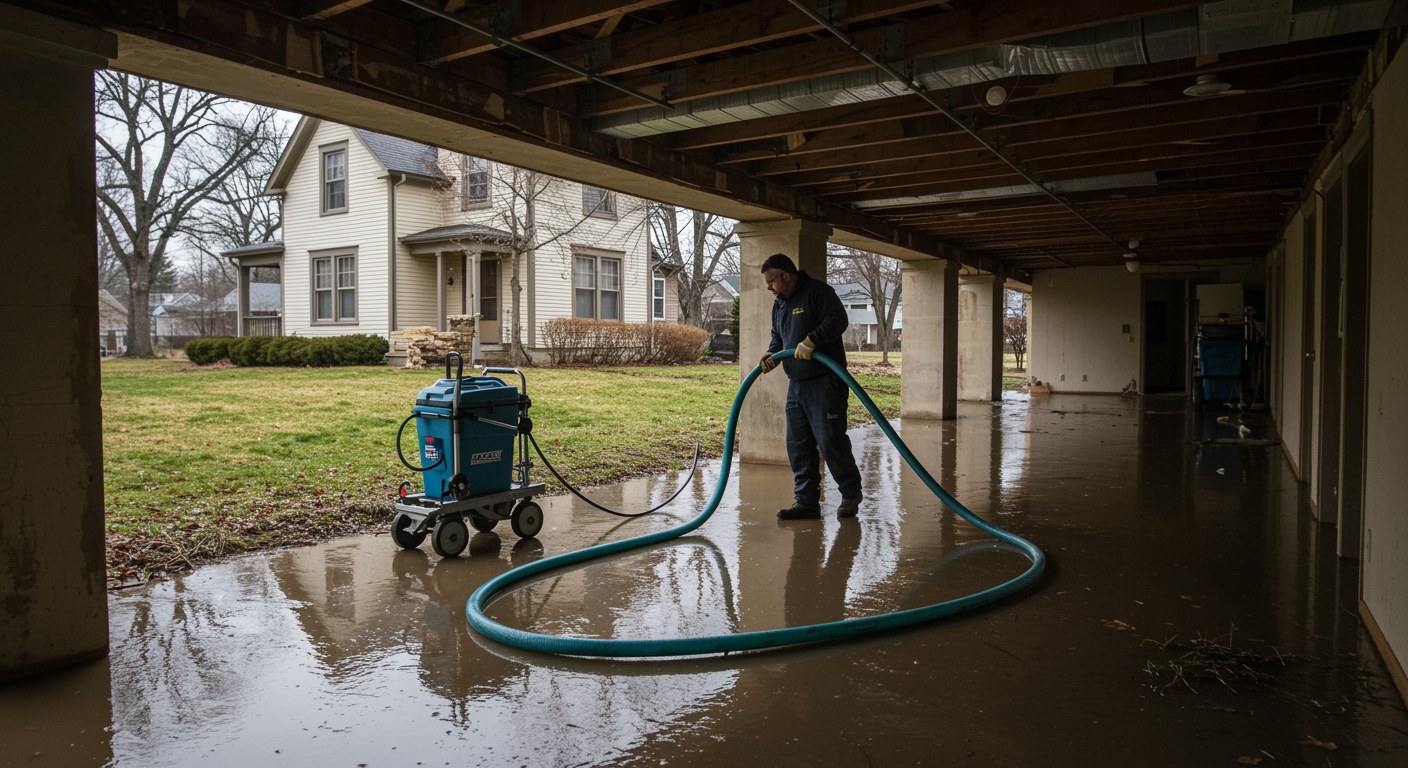
Edina’s water damage picture is more specific than most restoration companies will tell you. The city has distinct neighborhoods with distinct risk profiles — and the problems in a 1950s Country Club District home are different from what a Morningside homeowner faces near the Lynn/Kipling basin, which is different again from a newer property near Southdale. This is what we’ve learned working on Edina properties, and it’s the context that matters when you’re deciding who to call.
Edina’s Water Problem Is Not Generic
The City of Edina has publicly documented that it operates two separate water systems — one serving most of the city drawing from 18 groundwater wells, and a separate Morningside system fed by treated Minneapolis surface water through Edina-maintained piping. That distinction matters for one reason: the Morningside piping infrastructure has age and condition characteristics that don’t apply to the rest of Edina.
More significantly, Edina’s own Flood Risk Reduction Strategy documents something most homeowners don’t know: groundwater levels near Bredesen Park have risen substantially since 2010. Homes in low-lying areas that never needed sump pumps when they were built in the 1950s or 1960s are now in a fundamentally different situation. The ground has gotten wetter around them. That change doesn’t show up in any inspection report unless someone is specifically looking for it.
Neighborhood by Neighborhood: Where Water Damage Risk Concentrates in Edina
Morningside
Morningside is Edina’s highest-documented flood risk neighborhood. The city has identified several landlocked low areas — the Lynn/Kipling basin and the Grimes Avenue low point are the two most significant — where stormwater has nowhere to drain naturally. The city completed a major flood infrastructure project to expand pond storage and improve pipe capacity, but the project addresses probability, not certainty. More than 160 Morningside homes remain in elevated risk zones for significant rain events.
For Morningside homeowners, the relevant water damage issues are: basement flooding from overwhelmed stormwater infrastructure, groundwater seepage through foundation walls (rising groundwater table), and sewer backflow during extreme events when the sanitary system exceeds capacity. The sewer backflow scenario — sewage entering through floor drains during heavy rain — is a Category 3 biohazard situation that requires professional remediation, not DIY cleanup.
Country Club District
The Country Club District is Edina’s oldest neighborhood, with most homes built in the 1920s through 1940s. The water damage issues here are driven by age, not geography. Original galvanized steel supply pipes from this era have a service life that many of these homes have already exceeded — internal corrosion reduces flow capacity and creates weak points that fail suddenly, typically at fittings, valves, and horizontal runs where sediment accumulates. Original cast iron drain lines are prone to root intrusion and joint failure.
When a Country Club District home has water damage, the restoration challenge is matching the restoration to the existing materials — original plaster walls, period hardwood floors, custom millwork, historic tile. These materials behave differently than modern drywall and LVP, and a contractor who doesn’t understand them will do more damage in the restoration than the water event caused.
Concord, Creek Knoll, and Nine Mile Creek Corridor
The Nine Mile Creek Watershed District covers the land area draining to Nine Mile Creek across Edina, Hopkins, Bloomington, Minnetonka, and Richfield. Properties near the creek and its tributaries have flood exposure tied to watershed-wide conditions. A heavy rain event upstream in Hopkins or Minnetonka can raise water levels in Edina’s creek corridor without significant local rainfall. Edina homeowners near Nine Mile Creek who don’t think of themselves as being in a flood zone should review their actual flood risk — many have not looked at this since they bought their home.
Southdale Area and Newer Construction
Edina’s commercial corridor near Southdale and surrounding residential development from the 1970s and 1980s has different water damage patterns. The dominant issues here are appliance failures (dishwashers, water heaters, washing machines), ice dam damage on homes with inadequate attic insulation, and sump pump failures. The sump pump risk is significant in this part of Edina because many of these homes were built when sump pump installation wasn’t standard — they may have inadequate pit capacity or aging pumps that have never been replaced.
Why High-Value Homes Require Different Restoration
Edina’s median home value significantly exceeds the regional average, and that has a direct bearing on water damage restoration. The premium finishes and original materials that define value in an Edina home — hardwood floors, plaster walls, original tile, custom built-ins — respond to water and heat differently than modern commodity materials. Standard restoration protocols that work on drywall and LVP are actively damaging when applied to plaster or century-old Douglas fir flooring.
Specifically:
- Original hardwood floors can often be saved if dried carefully at low heat over an extended period. High-heat, high-speed drying — the default for budget restoration — causes cupping and warping that turns a saveable floor into a replacement project.
- Plaster walls have different moisture absorption and drying characteristics than drywall. Moisture meters calibrated for drywall read incorrectly on plaster. A contractor who doesn’t know to adjust for this will either under-dry (leaving hidden moisture) or over-dry (cracking the plaster).
- Original millwork and built-ins may be irreplaceable. The decision of what to remove and what to dry in place matters enormously in a Country Club District or Morningside home, and that decision requires someone who has worked with these materials before — not someone following a standard protocol.
Partners Restoration’s construction background means we assess Edina homes with a builder’s understanding of what’s there. We’ve done this work in Edina’s neighborhoods. We know the difference between a plaster wall worth saving and one that needs to come out, and we make that call based on the actual material — not a standard checklist.
The Insurance Picture for Edina Homeowners
Edina homeowners with higher-value properties frequently encounter a gap between what their policy covers and what it actually costs to restore to the right standard. The core issue is replacement cost vs. restoration cost for premium materials. Your policy may cover replacement cost for hardwood floors — but if replacement cost is calculated at commodity LVP pricing and you have original 3-inch white oak, the settlement won’t restore what you had.
This is why documentation at the time of the event matters so much in Edina. Documenting the specific materials — original hardwood species and grade, plaster construction, period-appropriate tile — before any work begins supports a claim that accurately reflects what needs to be restored. Partners Restoration documents this as part of our standard intake on every Edina job.
Morningside homeowners in particular should verify their water backup endorsement coverage and its limits, given the documented flood risk in the neighborhood. Standard homeowners policies do not cover sewer backflow or sump pump failure without this endorsement.
Frequently Asked Questions — Water Damage Restoration in Edina, MN
Why is water damage so common in Edina’s Morningside neighborhood?
Morningside sits in a low-lying area with several landlocked drainage basins. Groundwater levels in the area have risen significantly since 2010, and the stormwater infrastructure was sized for historical rainfall patterns that no longer match current conditions. The City of Edina has made substantial infrastructure investments, but more than 160 homes remain in elevated flood risk zones.
What makes water damage in Edina’s older homes different?
Edina’s mid-century housing — Country Club District, Morningside, Concord — was built with cast iron and galvanized steel plumbing that has exceeded its design life in many homes. These pipes corrode internally, creating failure points. Restoration also requires matching the materials: plaster walls, original hardwood, period millwork all require different handling than modern construction.
Does the Nine Mile Creek Watershed affect flood risk for Edina homeowners?
Yes. The Nine Mile Creek Watershed covers approximately 50 square miles across Edina, Hopkins, Bloomington, Minnetonka, and Richfield. Heavy rain events upstream can raise water levels in Edina’s creek corridor. Properties near Nine Mile Creek have flood exposure tied to watershed-wide conditions that extends beyond what most homeowners realize.
How quickly should I respond to water damage in a high-value Edina home?
Immediately. Premium materials — original hardwood, plaster walls, custom millwork — are more time-sensitive than modern construction. The window for saving original hardwood floors is much shorter than for LVP, and plaster behaves differently under heat-drying than drywall. Every hour matters more, not less, with high-value finishes.
What water damage issues are most common in Edina homes built before 1970?
Pipe failures from corroded galvanized supply lines and cast iron drains, sump pump failures in homes with inadequate or outdated configurations, water intrusion through original foundation walls lacking modern waterproofing, and ice dam damage through rooflines not designed for current insulation standards.
Dealing with water damage in Edina? Contact Partners Restoration for emergency response or a damage assessment. We’re based in Medina — 15 minutes from Edina — and answer 24/7 at 952.500.2426.
Also see: Water damage restoration services in Edina | All restoration and remodeling services in Edina, MN | Insurance claims help
Related: The Complete Guide to Property Damage Restoration in Minneapolis and the SW Metro
Leave A Comment