
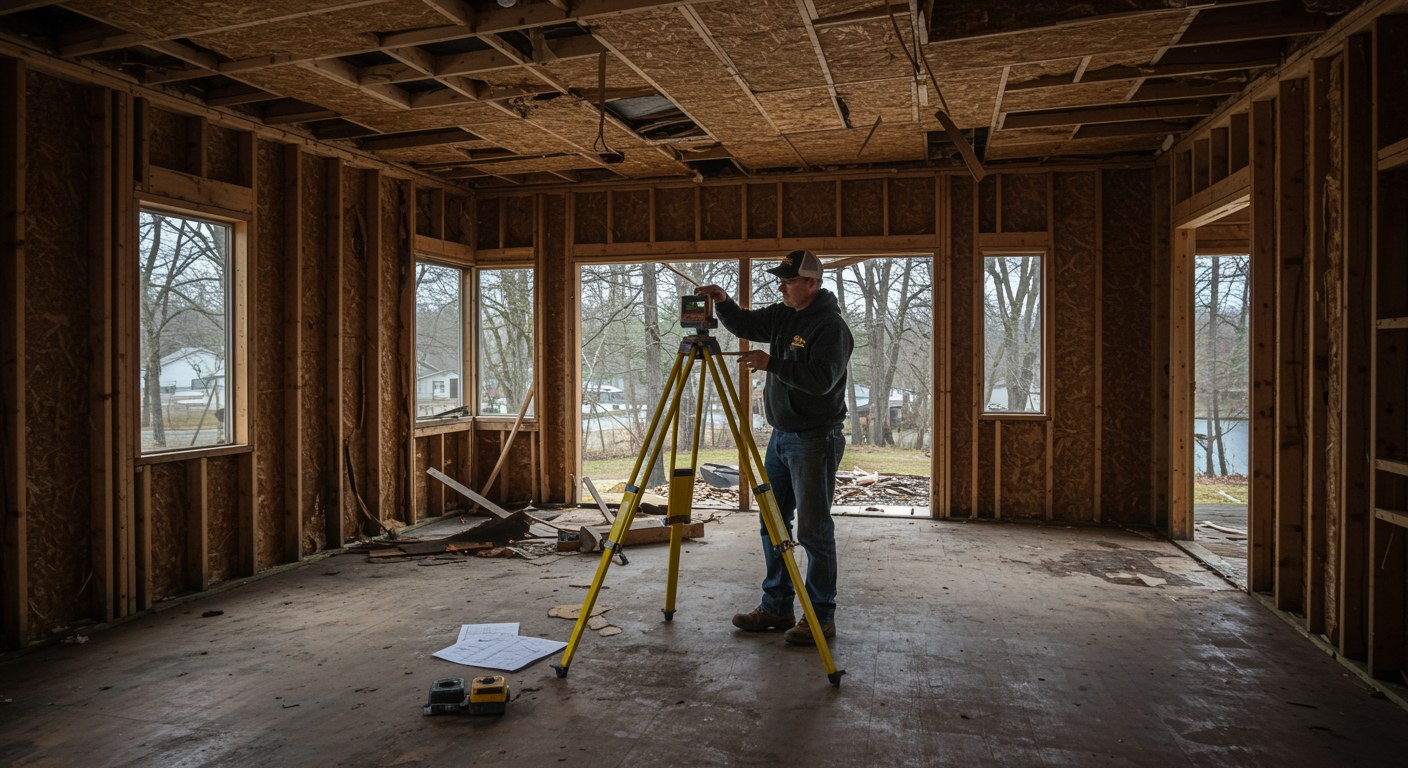
There’s a phrase in the restoration industry that gets used a lot: “back to pre-loss condition.” It sounds clear enough — restore what was damaged, replace what was destroyed, return to where you started. In practice, what it means for a Minnesota homeowner after a significant fire, flood, or storm event is considerably more complicated. This article explains the distinction between restoration and rebuild, when each applies, and why the type of contractor you hire matters enormously for how the project ends.
What “Restoration” Actually Means
In the industry’s technical definition, restoration refers to the process of cleaning, drying, deodorizing, and repairing property that has been damaged — returning it to a usable, pre-loss condition. A water damage restoration job might involve extracting water, drying the structure with commercial equipment, cleaning and treating affected surfaces, and repairing the drywall that was removed for drying access.
Restoration is what most franchise mitigation companies do. Servpro, Paul Davis, ServiceMaster — their core business is mitigation and restoration. They have the training, the equipment, and the certifications for this work. What many of them do not have is a general contractor license that allows them to perform significant structural reconstruction.
When Restoration Becomes Rebuilding
Every significant damage event has a threshold where restoration transitions into construction. Replacing drywall that was opened for drying access is simple reconstruction — most restoration contractors handle it. But the scope of “rebuild” expands quickly in larger events:
- Fire damage often requires replacing entire wall and ceiling assemblies, structural framing, roof sheathing, windows, and interior finishes. This isn’t restoration — it’s new construction attached to an existing structure.
- Severe water damage in older homes frequently reveals pre-existing issues (knob-and-tube wiring, inadequate insulation, undersized framing) that must be addressed to current code before the walls close again. This triggers code upgrade requirements that exceed what “restoration to pre-loss condition” covers.
- Storm damage that compromises the roof structure or load-bearing walls requires structural engineering and new construction expertise, not just cleanup and patching.
When a damage event crosses this threshold, a restoration-only company reaches the edge of what they’re licensed to do. The handoff to a separate general contractor introduces delays, communication gaps, and divided accountability — two companies each responsible for part of your project but neither responsible for the whole.
The Builder Advantage in Restoration: Why It Matters
Partners Restoration was founded with a construction background. Our principals came from the building side of the industry, not the mitigation side. That distinction creates tangible differences in how we work:
We Assess the Full Scope Immediately
A restoration-only company assesses what they can mitigate. A builder-restorer assesses the full scope — what can be saved, what needs to be removed and replaced, and what code upgrades will be required before the project is complete. This means the initial scope of loss we provide to your insurance adjuster is more complete, reducing the likelihood of supplement claims and project delays later.
No Handoff, No Gap
When a restoration project transitions into reconstruction, we don’t hand your project to a different company. The same team that extracted your water and dried your structure manages the rebuild. You have one point of contact, one contract, one warranty, and one company accountable for the finished product.
The “Better Than Before” Outcome
Our builder background means that when we’re opening walls anyway — and the insurance is paying for the restoration — we can simultaneously address upgrades you’ve wanted to make. The kitchen that flooded gets better cabinets. The bathroom that had smoke damage gets retiled. The basement that flooded gets properly finished this time. The insurance covers the restoration baseline; you invest in the upgrade. You end up better than before, not just back to before.
Ordinance and Law Coverage: The Minnesota Homeowner’s Hidden Risk
This is one of the most important — and most overlooked — coverage considerations for Minnesota homeowners with older homes. When a significant loss triggers a rebuild, local building codes require that rebuilt portions meet current standards, not the codes that existed when the home was originally built.
For a Minnesota home built in the 1960s or 1970s, the gap between original construction standards and current codes can be substantial: electrical panels, wiring methods, egress window sizes, insulation R-values, smoke detector requirements, structural engineering standards. The cost of these code-required upgrades is not covered by your standard homeowners policy — it’s covered by ordinance and law coverage, an endorsement that many Minnesota homeowners don’t have or have at insufficient limits.
Check your policy for this endorsement now, before you need it. If you’re rebuilding after a loss and you don’t have ordinance and law coverage, the cost of code upgrades comes entirely out of pocket.
Making the Decision: Restore, Rebuild, or Both
After any significant damage event, there’s a practical decision sequence that determines how the project proceeds:
- Assess what’s salvageable. Not everything needs to be replaced. A builder-restorer distinguishes between materials that can be cleaned and dried and materials that must be removed — and makes that call based on technical standards (IICRC guidelines, structural assessment) rather than defaulting to replace-everything or save-everything.
- Identify code upgrade triggers. Any significant structural work in most Minnesota municipalities triggers a permit that requires current-code compliance. Know what this means for your specific project before the scope is set.
- Understand the insurance coverage boundaries. What does your policy cover to restore to pre-loss condition? What does ordinance and law coverage add? Where does your personal investment begin?
- Decide on upgrades. If you’re opening walls and rebuilding anyway, what improvements make sense? This is often the most underutilized opportunity in a damage event.
Frequently Asked Questions — Restoration vs. Rebuild in Minnesota
What is the difference between restoration and rebuilding after property damage?
Restoration returns property to pre-loss condition — cleaning, drying, repairing what’s salvageable. Rebuilding replaces what’s beyond repair with new construction. Significant damage events typically require both. A contractor with both restoration certification and a general contractor license handles the full scope under one contract.
When does property damage require a full rebuild?
A rebuild is typically required when structural damage is extensive, when fire or water destroyed a significant portion of the structure, when restoration cost approaches replacement cost, or when damage triggers code upgrades that make original restoration impractical.
What is ordinance and law coverage in a Minnesota homeowners policy?
Ordinance and law coverage pays for the additional cost of rebuilding to current codes rather than the codes your home was built to. Most older Minnesota homes face significant code gaps. Without this endorsement, code upgrade costs are out of pocket. Check your policy — this endorsement is often missing or underinsured.
Why does the restoration industry separate mitigation from rebuilding?
Many restoration companies are certified for mitigation but not licensed as general contractors. They hand off reconstruction to a separate builder, creating coordination gaps and divided accountability. Partners Restoration holds both restoration certifications and contractor licensing — eliminating the handoff entirely.
Facing a significant damage event and wondering whether you need restoration, rebuild, or both? Contact Partners Restoration for an honest assessment. We serve Minneapolis and all western Twin Cities suburbs. Call 952.500.2426 — answered 24/7.
Also see: Fire and smoke damage restoration in Minneapolis | Home additions and custom building | How our restoration process works | Insurance claims help
Leave A Comment