
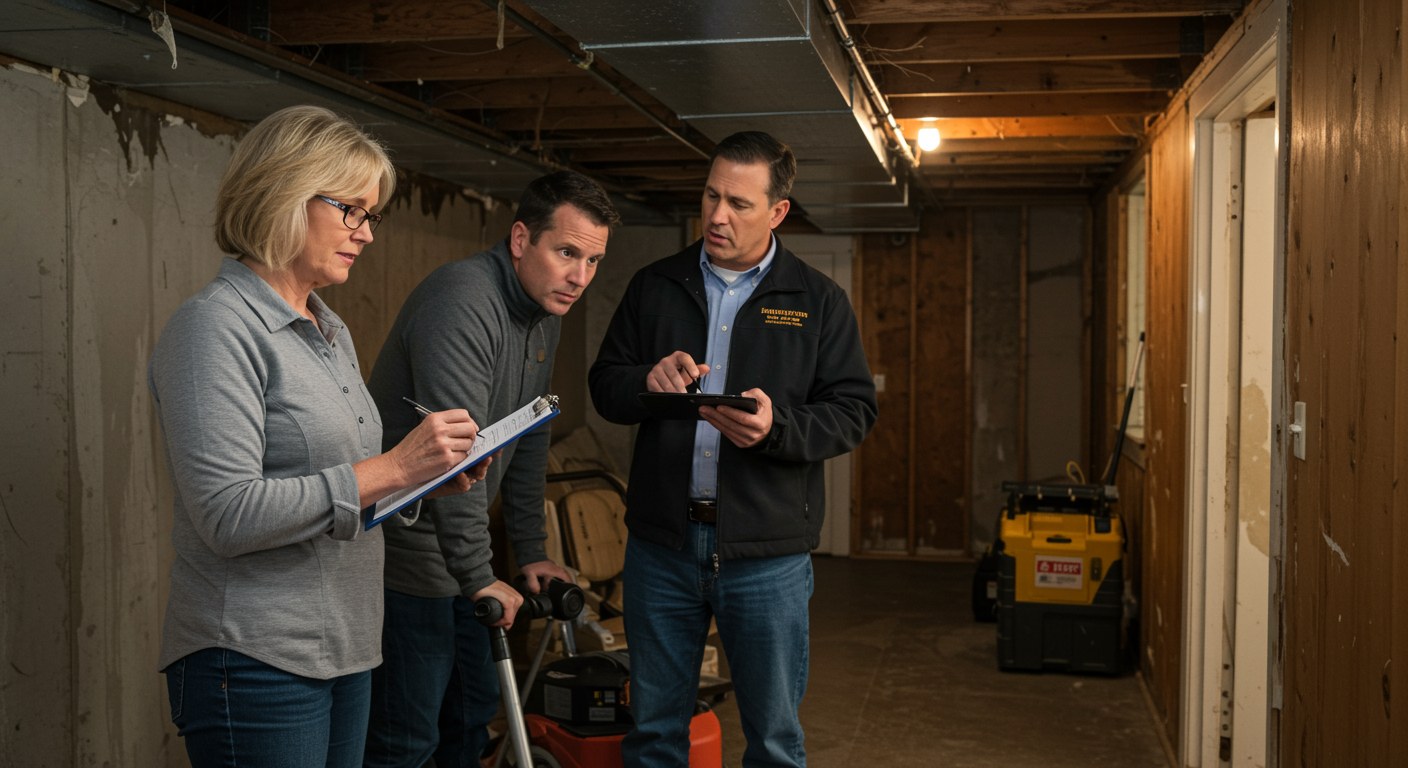
A well-documented property damage claim is worth more than a poorly-documented one — sometimes significantly more. Insurance adjusters assess what they can see and what you can prove. Minnesota homeowners who document thoroughly, systematically, and early consistently get more complete settlements than those who don’t. This guide is the documentation protocol we follow and recommend to every homeowner we work with.
The Golden Rule: Document Before You Clean Anything
This is the most important rule in property damage documentation, and the one most frequently violated. The impulse to clean up, remove damaged items, or start repairs is strong — especially after a traumatic event like a fire or flood. Resist it until you’ve documented everything.
The only exceptions: taking immediate action to prevent additional damage is allowed and expected. Tarping a breached roof, stopping an active water leak, or boarding up a broken window protects your property and your claim. But document what you find first, even if it’s just a few photos before you cover the hole.
Step-by-Step Documentation Protocol
Step 1: Orient and Establish Context
Start with wide-angle photos and video of the affected areas from a distance — what adjusters call “establishing shots.” These show the scope and location of the damage in relation to the rest of the property. For exterior damage, photograph the whole face of the house before moving to close-ups. For interior events, photograph each room from the doorway before moving inside.
Step 2: Document the Source
Photograph the cause of the damage as clearly as possible. The burst pipe. The hail-damaged shingles. The point of fire origin. The failed sump pump. The breached roof section. This establishes the proximate cause, which determines coverage. Get close-up photos of the failure point and the path the water, fire, or wind took from there.
Step 3: Document All Affected Areas and Surfaces
Work systematically through every affected area. For water damage: photograph water levels, water lines on walls (these are critical evidence of the high-water mark), wet flooring, saturated drywall, damaged ceilings. For fire and smoke: photograph soot patterns, smoke damage to walls and contents, structural damage. For storm damage: photograph every damaged surface inside and out.
Use video to capture what still photos can’t — the extent of flooding, the pattern of soot spread, the sound of water running. A three-minute video walkthrough of the affected area is worth more than fifty photos.
Step 4: Inventory Every Damaged Item
Every piece of property that was damaged or destroyed needs to be documented: photograph it, note what it is, and note its approximate age and value if you know it. For contents claims, a spreadsheet is the most useful format — item description, approximate purchase date, approximate value. This is tedious work, but an undocumented item is an unpaid item.
Do not discard damaged items until your insurer has seen or approved their disposal. Many adjusters want to inspect damaged contents in person, and disposal before inspection can result in items being excluded from the claim.
Step 5: Note Dates, Times, and Conditions
Write down — or add voice notes to your phone — the date and approximate time of the event, when you discovered the damage, what the weather conditions were (for storm and ice damage claims), and any immediate steps you took. This narrative supports the claim timeline and establishes that the damage was sudden and accidental.
Step 6: Preserve All Damaged Materials Until Authorized
Do not remove damaged drywall, flooring, insulation, or structural materials until your insurer has authorized the work and your restoration contractor has documented the full scope. Hidden damage — moisture in wall cavities, mold starting behind drywall — is documented during the controlled demolition phase of restoration. This documentation is often what unlocks coverage for damage that wasn’t visible in the initial photos.
How a Restoration Contractor Strengthens Your Documentation
A licensed restoration contractor does more than repair your home — they produce the technical documentation that adjusters need to process your claim. At Partners Restoration, our documentation includes:
- Moisture mapping — calibrated meter readings throughout the affected structure showing moisture levels in framing, subfloor, and wall assemblies. This documents hidden damage that photos can’t capture.
- Scope of loss report — a line-item breakdown of all damaged materials and required restoration work, typically formatted using Xactimate (the industry-standard estimating platform most adjusters use). This makes the adjuster’s job easier and the settlement more complete.
- Daily drying logs — records of equipment deployed and moisture readings over the drying period, used to support the time and materials portion of the claim.
- Photo documentation of concealed conditions — photos taken during controlled demolition of conditions not visible in the initial survey, such as wet insulation, mold in wall cavities, or structural damage behind finished surfaces.
We work directly with adjusters throughout the claims process. Our documentation is prepared in formats adjusters are familiar with, which speeds up review and reduces the likelihood of disputes.
Minnesota-Specific Insurance Claim Timelines
Under Minnesota Statute 72A.201, insurers must acknowledge a claim within 10 business days of receiving notice and make a coverage determination within 30 business days of receiving all required documentation. If you feel your claim is being unreasonably delayed, you can file a complaint with the Minnesota Department of Commerce.
Frequently Asked Questions — Property Damage Documentation in Minnesota
What should I photograph after property damage for an insurance claim?
Photograph the source of damage, all affected areas and surfaces, every damaged item of personal property, and any structural damage. Use video for extent and context. Document before anything is moved, cleaned, or discarded — this is the most important rule.
Should I start cleaning up before the insurance adjuster comes?
Take steps to prevent additional damage (tarp a roof, stop a leak) but do not remove damaged materials or discard property until you’ve documented everything and spoken with your insurer. Premature cleanup can complicate or reduce your claim.
What is a proof of loss in a Minnesota insurance claim?
A proof of loss is a formal signed statement detailing the damage, cause, date, and dollar amount of your claim. Your restoration contractor and adjuster can help prepare this document. Minnesota insurers may require it to process the claim.
How long does a property damage claim take in Minnesota?
Under Minnesota law, insurers must acknowledge claims within 10 business days and make coverage determinations within 30 business days of receiving complete documentation. Complex claims take longer. Thorough upfront documentation reduces delays.
Dealing with property damage and need help navigating the insurance process? Contact Partners Restoration. We work directly with adjusters and provide complete documentation support. Call 952.500.2426 24/7.
Also see: Insurance claims help from Partners Restoration | Storm damage repair in the Twin Cities | Water damage restoration | How our restoration process works
Leave A Comment