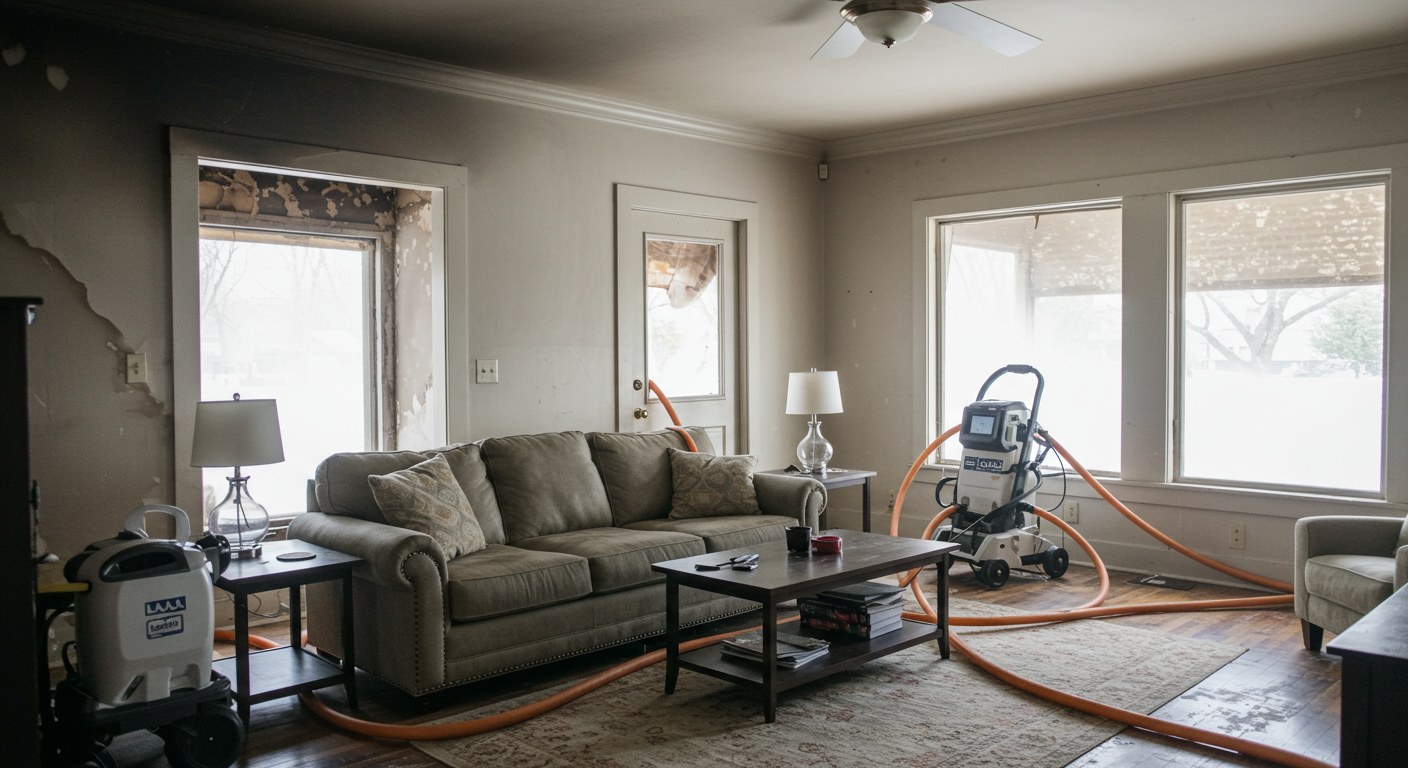
Fire damage restoration is the comprehensive process of stabilizing a fire-damaged structure, removing smoke and soot contamination, eliminating odor, and rebuilding to pre-loss condition. A residential fire involves multiple simultaneous damage types — structural char, smoke penetration into cavities, heat damage to materials that never burned, water damage from suppression, and often hidden hazards including asbestos or lead paint disturbed by the fire.
Partners Restoration provides fire and smoke damage restoration across Minneapolis and the western suburbs. We handle the complete scope — emergency stabilization and board-up, contents pack-out and restoration, smoke and soot decontamination, structural drying from suppression water, selective demolition, and full reconstruction — under a single project manager with direct insurance carrier coordination.
The First 24 Hours After a House Fire
The decisions made in the first 24 hours after a fire significantly affect both the final restoration cost and the timeline. Secondary damage from soot, smoke acid, and suppression water continues long after the fire is out.
Emergency board-up and stabilization
Openings created by the fire or by firefighters — broken windows, roof penetrations, breached walls — must be boarded and tarped immediately to prevent weather intrusion, secure the structure against unauthorized entry, and protect against additional water damage. Partners deploys emergency crews 24/7 for board-up within hours of notification.
Contents pack-out
Salvageable personal property — furniture, clothing, documents, artwork, electronics, valuables — is inventoried, packed out to our climate-controlled facility, and assessed for restorability. Contents restoration specialists clean and treat items using ultrasonic cleaning, ozone treatment, thermal fogging, and other proven methods. A detailed contents inventory is provided to your insurance adjuster. Items deemed non-restorable are documented for replacement value claims.
Suppression water extraction
Fire suppression — whether from sprinklers or fire department hose lines — introduces significant water into the structure. This water must be extracted and the structure dried to IICRC dry standard before reconstruction can begin. A fire-damaged structure that is not properly dried after suppression will develop mold within days, adding a remediation scope to an already complex project.
Smoke and Soot Damage: Why It Extends Far Beyond the Burn Area
Smoke and soot from a residential fire travel throughout a structure through HVAC systems, wall cavities, and air pressure differentials. In a forced-air heated home, the HVAC system can distribute smoke residue to every room in minutes. This is why the damage scope of a kitchen fire, for example, is rarely limited to the kitchen — the entire HVAC system and often the entire home requires assessment.
Types of smoke residue
Dry smoke (fast-burning, high-temperature fires — paper, wood) leaves a dry, powdery residue that is relatively easy to clean from hard surfaces. Wet smoke (slow-burning, low-temperature fires — plastics, rubber, synthetics) leaves a thick, smearing, pungent residue that penetrates porous surfaces and is significantly more difficult to remediate. Protein residue (cooking fires, especially grease) leaves an almost invisible but intensely pungent film on all surfaces. Most residential fires produce a combination of all three types.
Smoke odor elimination
Smoke odor cannot be masked with deodorants or air fresheners — the volatile compounds responsible for odor have penetrated into porous materials and must be neutralized at the molecular level. Professional odor elimination uses thermal fogging (penetrating all cavities the smoke reached), hydroxyl generators (oxidizing odor compounds in occupied spaces), ozone treatment in unoccupied spaces, and HEPA air scrubbing. A home that smells like smoke after a restoration is a home that was not adequately remediated.
Fire Damage and Hidden Hazards in Minnesota Homes
Minnesota has a significant housing stock built before 1980, when asbestos-containing materials (ACM) and lead-based paint were standard in residential construction. A fire that affects these materials — floor tile, pipe insulation, joint compound, window glazing compound, painted surfaces — creates a hazardous materials abatement obligation before restoration work can proceed.
Partners coordinates asbestos testing and abatement through licensed Minnesota asbestos abatement contractors when ACM involvement is suspected. Fire damage claims in pre-1980 homes should anticipate hazmat costs as part of the overall scope — these are typically covered as part of the fire damage claim.
Fire Damage Reconstruction
After hazmat clearance, drying to standard, and decontamination, reconstruction begins. The scope ranges from cosmetic repair (drywall, paint, flooring) in rooms affected only by smoke to full structural rebuild in rooms with significant structural char.
For high-value homes in Wayzata, Orono, Minnetonka, and Edina — where custom cabinetry, imported stone, hardwood floors, and specialty lighting are standard — reconstruction requires craftsmen who can match existing finishes and materials. Partners maintains relationships with the finish carpenters, cabinet makers, stone fabricators, and specialty flooring contractors who serve the western suburbs market. We source replacement materials to match pre-loss specifications, not to a production-line standard.
Working With Your Insurance Company After a Fire
Fire damage claims are among the most complex residential insurance claims. The scope typically involves multiple damage categories (fire, smoke, water, contents), multiple trades, and significant reconstruction cost. Having a knowledgeable restoration contractor engaged from the beginning — before the adjuster’s initial inspection — materially affects the outcome of your claim.
Partners provides comprehensive documentation for fire claims: scope of work aligned with Xactimate pricing, contents inventory with restoration versus replacement designation, photo documentation of all conditions before any work begins, and hazmat testing results where applicable. We attend the initial adjuster walkthrough when requested and advocate for the full scope that Minnesota building codes and your policy entitle you to.
Service Area
Partners Restoration serves the full western and southwestern Minneapolis metro for fire and smoke damage restoration. Primary service area includes Medina, Wayzata, Orono, Minnetonka, Plymouth, Maple Grove, Eden Prairie, Edina, Deephaven, Excelsior, Shorewood, and Chanhassen. 24/7 emergency response at 952.500.2426.
Frequently Asked Questions
Can a fire-damaged home be fully restored?
In most cases, yes. Even significant fire damage — where portions of the structure are structurally compromised — can be rebuilt to pre-loss or better-than-pre-loss condition. The determining factors are the extent of structural involvement, the presence of hazardous materials requiring abatement, and the policy limits relative to reconstruction cost. Total losses (where rebuild cost exceeds policy limits) are relatively rare in owner-occupied residential fires.
How long does fire damage restoration take?
A minor fire affecting one room with smoke damage to adjacent areas might be completed in 2–4 weeks. A significant fire with structural damage, full contents pack-out, hazmat abatement, and major reconstruction typically takes 3–6 months. The timeline is heavily influenced by insurance carrier approval speed, material lead times for custom finishes, and the availability of specialty subcontractors. Partners provides a detailed project schedule at the start of reconstruction.
Will my home ever smell normal again after a fire?
Yes — with proper professional remediation. Smoke odor that persists after restoration is the result of incomplete decontamination, not permanent damage. Odor compounds that have penetrated into wall cavities, attic insulation, HVAC systems, and structural framing must be addressed directly. A properly remediated home will not have residual smoke odor.
Should I clean up after a fire myself?
No. Soot from residential fires contains carcinogenic compounds including polycyclic aromatic hydrocarbons (PAHs). Disturbing soot without proper PPE and containment spreads contamination. More importantly, disturbing the scene before insurance documentation is complete can complicate your claim. Call your insurance company and a restoration contractor — do not begin cleanup on your own.
What happens to my belongings after a fire?
Salvageable contents are inventoried and packed out to our climate-controlled facility where contents restoration specialists assess and treat each item. Non-salvageable items are documented for replacement value claims. Valuable items including artwork, jewelry, and collectibles are handled with particular care and may be referred to specialists. The contents inventory becomes part of your insurance claim documentation.
Leave A Comment