Sewage Backup Cleanup: Safety Protocols and Sanitization for Municipal Property Owners
The Crisis of Aging Infrastructure in Urban Centers
In my two decades of managing large-loss restoration projects, I have observed a recurring pattern in older urban infrastructure areas. Cities with legacy sewer systems—often featuring vitrified clay pipes or Victorian-era brick culverts—are increasingly prone to basement sewage backup events. For municipal property owners, these incidents are not merely maintenance nuisances; they are significant legal and health liabilities. Our data shows that 40% of municipal backups in older districts are caused by structural failure or root intrusion in communal lines, requiring specialized sewage cleanup services.
Phase 1: Emergency Safety and Biohazard Protocols
Safety is the non-negotiable priority. Sewage is classified as Category 3 (Black Water), containing gross unsanitary contaminants including pathogens, viruses, and parasitic organisms such as E. coli and Hepatitis A. When a backup occurs, our expert protocol dictates:
- Immediate Evacuation: Personnel should vacate the affected area until a professional assessment is completed.
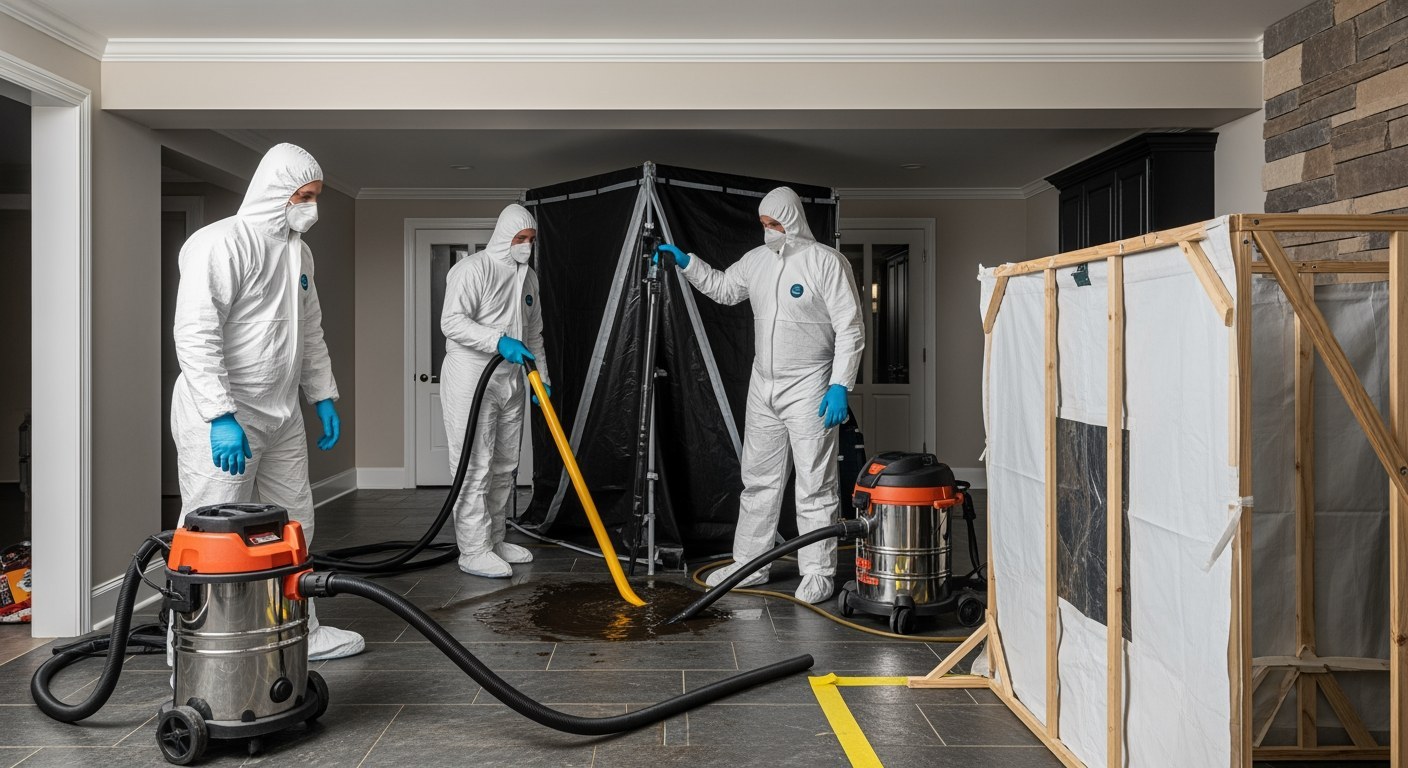
- PPE Requirements: Technicians must utilize full-body Tyvek suits, N95 or PAPR respirators, and nitrile gloves.
- Electrical Isolation: Ensure the power is cut to the basement or affected floor to prevent electrocution risks from submerged outlets.
Phase 2: Professional Biohazard Remediation
Effective biohazard remediation requires more than just water extraction. In older urban buildings, porous materials like brick, mortar, and timber framing can absorb contaminated fluids deep into their structure. I’ve found that thermal imaging and moisture mapping are essential to identify the full migration of the effluent. We utilize industrial-grade HEPA air scrubbers to manage airborne particulates and prevent the spread of odors and pathogens to upper floors of the municipal facility.
Phase 3: Advanced Sanitization Services
The final stage of sanitization services involves the application of broad-spectrum disinfectants. In municipal settings, we focus on high-touch surfaces and structural components. Our process includes:
Surface Cleaning and Debridement
Removing all solid waste and pressure-washing non-porous surfaces with specialized detergent solutions.
Antimicrobial Application
Using ULV (Ultra-Low Volume) fogging to ensure antimicrobial agents reach every crevice, ensuring total sewage cleanup services efficacy.
Verification Testing
We recommend ATP (Adenosine Triphosphate) testing after sanitization to provide empirical proof that the area is biologically safe for re-occupancy.
Case Study: The 19th-Century Municipal Hub Recovery
Recently, our team handled a massive basement backup in a historic administrative building. The cause was a collapsed sewer lateral under an adjacent cobblestone street. By implementing a rapid containment strategy and a 72-hour deep-clean cycle, we prevented the building’s permanent closure and saved the city thousands in structural replacement costs. This demonstrates the necessity of specialized expertise when dealing with sensitive urban sites.
For professional water damage restoration services across the Minneapolis western suburbs, contact Partners Restoration at 952.500.2426.
Leave A Comment