
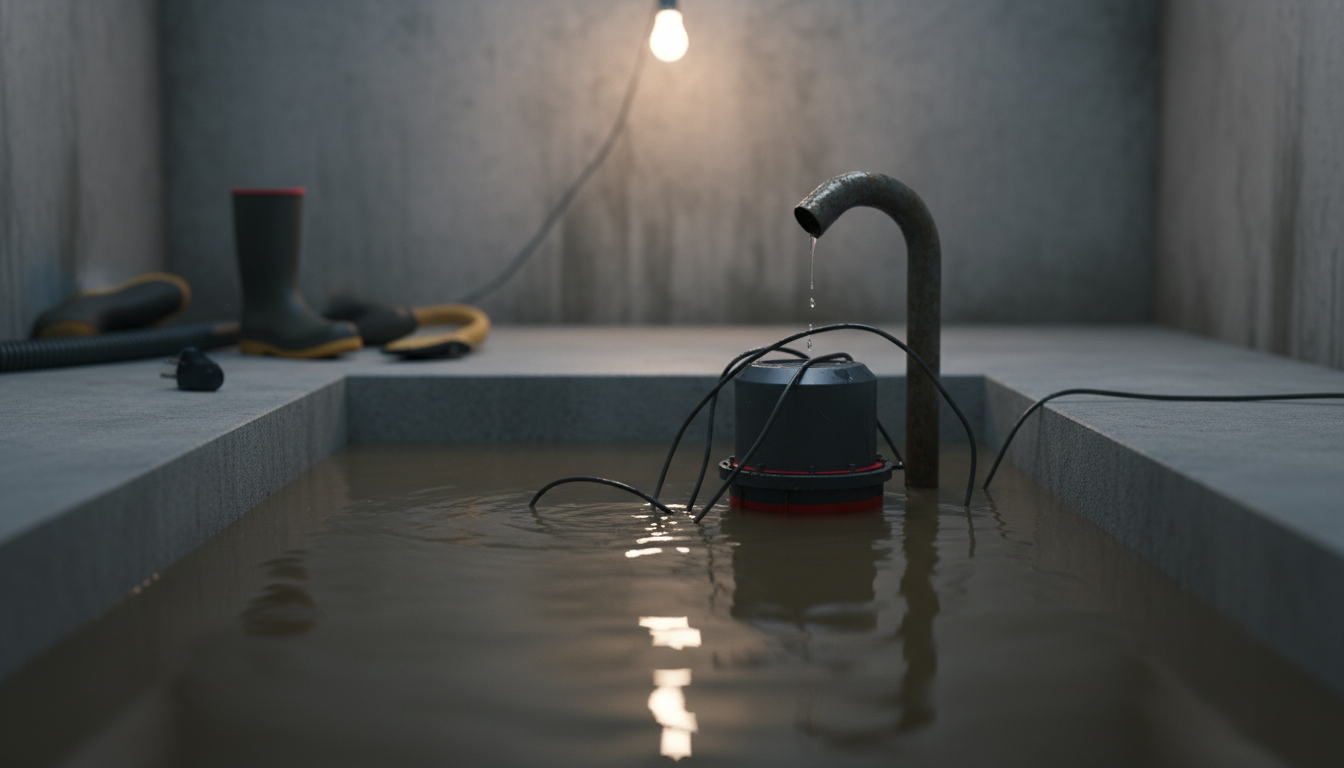
Sump Pump Failure: Immediate Steps for Plymouth Homeowners
As homeowners here in Plymouth, we take pride in our beautiful properties, from the quiet streets of Medicine Lake to the sprawling yards near French Regional Park. However, our local climate presents a unique challenge: significant rainfall in the spring and heavy snowmelt that saturates the ground. For most of us, the only thing standing between a dry basement and a catastrophic indoor pool is a single mechanical device—the sump pump.
When you hear that silence where there should be a reassuring hum, or worse, you step onto a damp carpet, panic is a natural response. A sump pump failure in Plymouth isn’t just an inconvenience; it is a race against time. Within hours, humidity levels spike, and the structural integrity of your drywall and flooring begins to compromise. This guide outlines the immediate, high-priority steps you must take to protect your home before the professional restoration team arrives.
The Nightmare Under Your Feet: Understanding Sump Pump Failure in Plymouth
Our geography in the Twin Cities suburbs often places us on soil with high moisture content. Hydrostatic pressure builds up against our foundations, and the sump pump is designed to relieve that pressure. When it fails, the water has nowhere to go but in. Whether it’s a tripped breaker, a clogged discharge line, or a mechanical motor failure, the result is the same: basement flooding.
First Response: What to Do the Moment You Notice Water
If you discover that your sump pump has failed, your actions in the first 60 minutes can save you thousands of dollars in restoration costs. Follow this sequence immediately:
- Prioritize Safety: Never walk into a flooded basement until you are certain the power is off. Water and electricity are a lethal combination. If your circuit breaker is in the basement and you have to walk through water to reach it, do not attempt it. Call an electrician or your local utility provider.
- Stop Water at the Source (If Possible): If the water is coming from an appliance or a burst pipe connected to the pump system, shut off the main water valve. If it’s ground-water seepage due to a failed pump, focus on the pump itself.
- Check the Power: Sometimes the “failure” is simply a tripped GFC outlet. Check your electrical panel. If the pump is plugged in but not running, try plugging a small lamp into the same outlet to see if the outlet has power.
- Clear the Float Switch: Occasionally, the “float” (the device that tells the pump to turn on) gets stuck against the side of the basin. Reach in (with gloves) and ensure it can move freely.
Evaluating the Damage: Common Sump Pump Issues
Understanding why the system failed can help you communicate effectively with emergency responders. Use the table below to identify common symptoms and their likely causes.
| Symptom | Potential Cause | Immediate Action |
|---|---|---|
| Pump is running but no water is moving | Clogged discharge pipe or broken impeller | Check the exterior exit point for ice or debris. |
| Pump is completely silent despite water level | Power failure or burnt-out motor | Check breaker; if power is on, the motor has likely seized. | Internal mechanical failure | Disconnect power to prevent electrical fire and call for repair. |
| Water is overflowing despite pump working | Volume of rain exceeds pump capacity | Begin manual bailing and call for emergency extraction. |
Immediate Mitigation: Protecting Your Property
Once you have addressed the immediate safety concerns, your goal is to minimize the “soak time” of your belongings. In Plymouth, our basements often serve as family rooms, gyms, or storage for seasonal gear. This makes quick action vital.
Move High-Value Items
Prioritize moving electronics, heirlooms, and documents to an upper floor. If furniture is too heavy to move, place aluminum foil or plastic “wood blocks” under the legs to prevent wood stain from bleeding into the carpet and to stop the wood from wicking up water.
Manual Water Removal
If the water level is rising and help is still on the way, you may need to use a wet/dry vac or an old-fashioned bucket and mop. Every gallon of water you remove manually is one less gallon that can seep into the baseboards and wall studs.
Increase Ventilation
If it is safe to do so, and the outdoor humidity isn’t higher than the indoor humidity (common during our humid Minnesota summers), open windows. Run any fans you have on the upper levels to encourage airflow, but do not use floor fans in the basement if there is standing water near electrical outlets.
The Professional Difference: Why Fast Extraction Matters
While DIY efforts are noble, a failed sump pump often introduces “grey water”—water that may contain soil contaminants or microbes. Furthermore, water hides in places homeowners can’t see. It gets trapped behind baseboards, under subfloors, and inside insulation.
Professional extraction teams use industrial-grade truck-mounted vacuums that remove water at a rate no shop-vac can match. More importantly, they use thermal imaging cameras to find moisture pockets that would otherwise lead to mold growth within 24 to 48 hours. In the Plymouth area, the rapid shift in temperatures can create the perfect “greenhouse effect” in a damp basement, making professional drying non-negotiable.
Preventing Future Sump Pump Failures
Once the current crisis is managed, it is time to “flood-proof” your home for the next big storm. Consider these upgrades:
- Battery Backup System: Most sump pumps fail during storms when the power goes out. A battery backup ensures your pump keeps running even when the grid fails.
- Dual-Pump Setup: Installing a secondary pump slightly higher in the pit provides redundancy if the primary motor burns out.
- Smart Water Alarms: Devices like the Moen Flo or Ring Water Sensor can alert your smartphone the second water is detected on the floor, allowing you to act before the basement is submerged.
- Annual Maintenance: Every spring, before the thaw, pour a bucket of water into your pit to ensure the pump engages and clears the water quickly.
Frequently Asked Questions
How long do I have before mold starts to grow?
In a typical Plymouth home, mold spores can begin to colonize on organic materials like drywall paper and wood within 24 to 48 hours of exposure to moisture. This is why immediate professional extraction is critical.
Will my homeowners insurance cover a sump pump failure?
Standard policies often require a specific “Sump Pump Failure” or “Water Back-up” rider. Check your policy. If you have this endorsement, the cleanup and restoration costs are typically covered up to your policy limit.
Can I just let the basement air-dry?
No. Air-drying is rarely sufficient for structural materials. Water wicks up into the drywall (capillary action) and remains trapped. Without professional dehumidification, you risk long-term structural rot and “sick building syndrome” from hidden mold.
Need Help Right Now?
If your basement is taking on water due to a sump pump failure, every second counts. Don’t wait for the damage to spread.
Contact our Emergency Water Extraction Support team at [Insert Phone Number] for 24/7 professional assistance in Plymouth. We provide rapid response, industrial drying equipment, and comprehensive moisture detection to ensure your home returns to a safe, dry state.
Leave A Comment