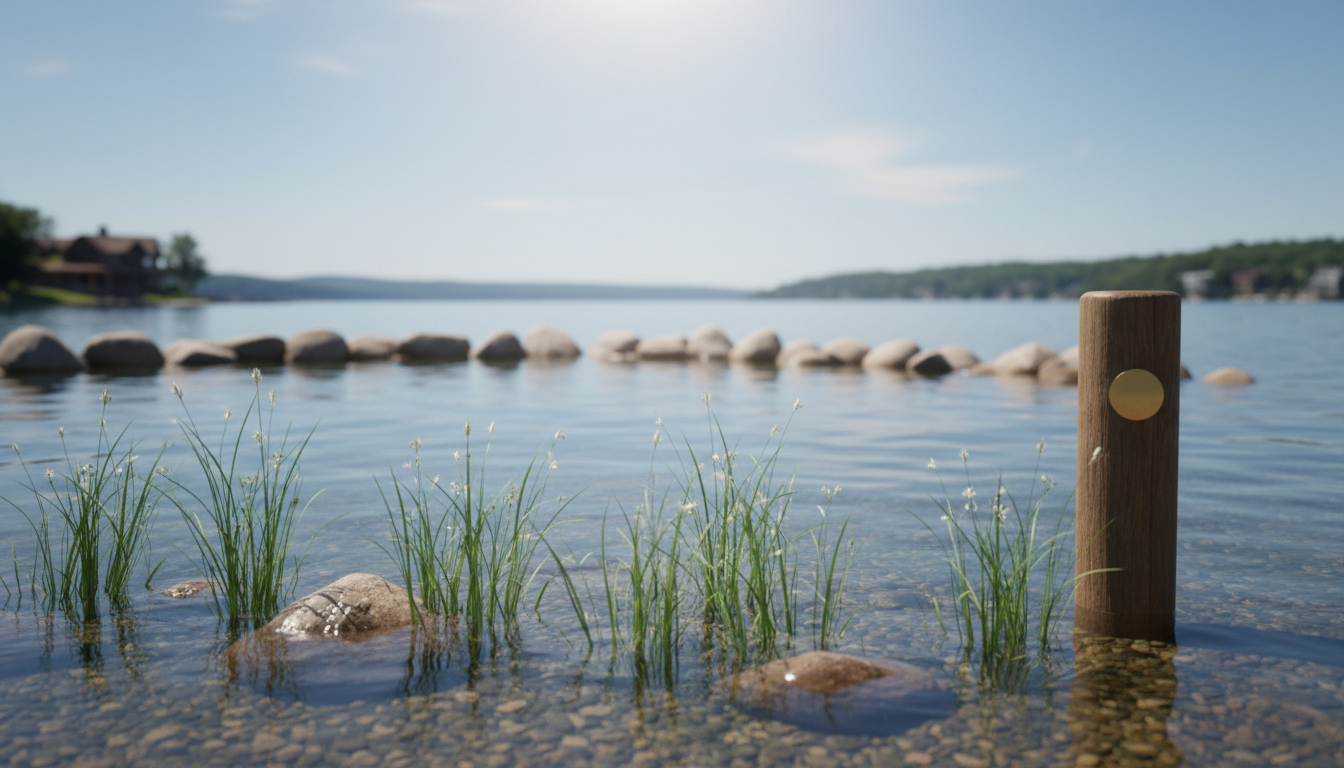
Living on the shores of Lake Minnetonka is a privilege that comes with a unique set of responsibilities. As property owners, we aren’t just stewards of our own backyards; we are the guardians of one of Minnesota’s most precious natural resources. However, when the ice out occurs and we notice the shoreline receding or the riprap shifting, the path to restoration can feel daunting. The primary gatekeeper in this process is the Minnehaha Creek Watershed District (MCWD).
Navigating MCWD Permits for Shoreline restoration is often the most complex part of a landscaping or structural project. Because Lake Minnetonka is the crown jewel of the district, the regulations are stringent. Our builder roots have taught us that a successful project is one where structural integrity meets aesthetic beauty—all while staying strictly within the lines of municipal and watershed environmental codes.
Why the MCWD Regulates Our Shorelines
The MCWD was established to protect the water quality and manage the flow of the Minnehaha Creek Basin. For those of us on Lake Minnetonka, this means any work done at the water’s edge is scrutinized to prevent erosion, minimize phosphorus runoff, and preserve fish habitats. The district’s rules, specifically Rule 3.0 (Shoreline and Streambank Stabilization), dictate exactly what we can and cannot do with our frontage.
Understanding these regulations isn’t just about “checking a box.” It’s about ensuring that your investment in your property is permanent. A poorly executed shoreline project without the proper permits can lead to hefty fines and the requirement to tear out the work and start over.
Common Shoreline Projects Requiring Permits
Most significant changes to the lake-land interface require a permit. Here are the three most common projects we see on Lake Minnetonka:
- Riprap Installation and Repair: Using rock to stabilize the bank. The MCWD has specific requirements regarding the size of the rock and the slope of the bank.
- Bioengineering and Buffers: Using native vegetation to hold the soil. This is often the MCWD’s preferred method as it filters runoff more effectively than hard armoring.
- Sand Blankets: If you are looking to create a swimming area, there are strict limits on the amount of sand and the frequency of placement to prevent “mucking up” the lake bed.
The Permitting Process: What to Expect
Obtaining MCWD Permits for Shoreline work is a multi-step process that requires patience and technical precision. As property owners, we often want to jump straight to the “after” photo, but the “before” paperwork is critical.
1. Site Survey and Assessment
Before applying, you must establish the Ordinary High Water Level (OHWL). This is the boundary that determines where the DNR’s jurisdiction ends and the MCWD’s primary oversight begins. A professional survey ensures your plans are based on accurate elevations.
2. Design and Engineering
The MCWD wants to see a plan that minimizes impact. This involves calculating the “linear feet” of impact and ensuring that any hard armoring (like rock) is absolutely necessary because of high wave energy. If your property is in a low-energy bay, they may push for more naturalized solutions.
3. Application Submission
The application includes detailed drawings, sediment control plans, and often a fee. The district staff reviews these to ensure they meet the specific “Rule” criteria. During this time, they may request modifications to your design to better protect the water quality.
Balancing Aesthetics with Environmental Code
The biggest challenge for Lake Minnetonka homeowners is often the “look.” We want a clean, manicured shoreline that complements our home’s architecture. However, the MCWD focuses on the “health” of the shoreline. Our experience as builders allows us to bridge this gap. We understand how to select stone that provides the necessary structural weight while matching the natural limestone or granite aesthetic of the area. We also know how to integrate native plantings so they look like a deliberate garden rather than an overgrown patch of weeds.
Quick Reference: Shoreline Activity Guide
The following table outlines common activities and the general permitting outlook for Lake Minnetonka properties.
| Project Type | MCWD Permit Required? | Key Requirement |
|---|---|---|
| Minor Riprap Repair | Yes | Must use clean, natural stone; no concrete. |
| New Riprap Installation | Yes | Requires proof of erosion and proper slope (usually 3:1). |
| Native Buffer Planting | Varies | Often encouraged and may simplify other permit paths. |
| Sand Blanket (Beach) | Yes | Strict limits on thickness (usually 2 inches) and area. |
| Retaining Walls | Yes (High Scrutiny) | Generally discouraged at the water’s edge; must be landward of OHWL. |
Frequently Asked Questions
How long does it take to get a permit?
Typically, the review process takes 30 to 60 days once a complete application is submitted. It is highly recommended to start the process in the winter or early spring if you want to complete work during the summer or fall construction windows.
Can I do the work myself?
While you can legally pull the permit as a homeowner, the technical requirements for sediment control and slope stabilization are difficult to meet without professional equipment. Furthermore, the MCWD requires specific “as-built” documentation for some projects to close out the permit.
What happens if I work without a permit?
The MCWD has active enforcement. If you are caught working without a permit, they can issue a “Cease and Desist” order, impose daily fines, and require you to restore the shoreline to its original state at your own expense.
Final Thoughts for the Lake Minnetonka Resident
Your shoreline is the first line of defense for the lake we all love. While the process of obtaining MCWD Permits for Shoreline restoration can feel like a hurdle, it is a vital step in maintaining property values and ecological health. By combining a builder’s eye for structure with a deep respect for environmental standards, we can ensure your shoreline remains beautiful and stable for decades to come.
Ready to Start Your Restoration?
Don’t let the paperwork stall your project. Our team understands the nuances of Lake Minnetonka regulations and is here to help you navigate the complexities of the watershed district requirements.
Leave A Comment