
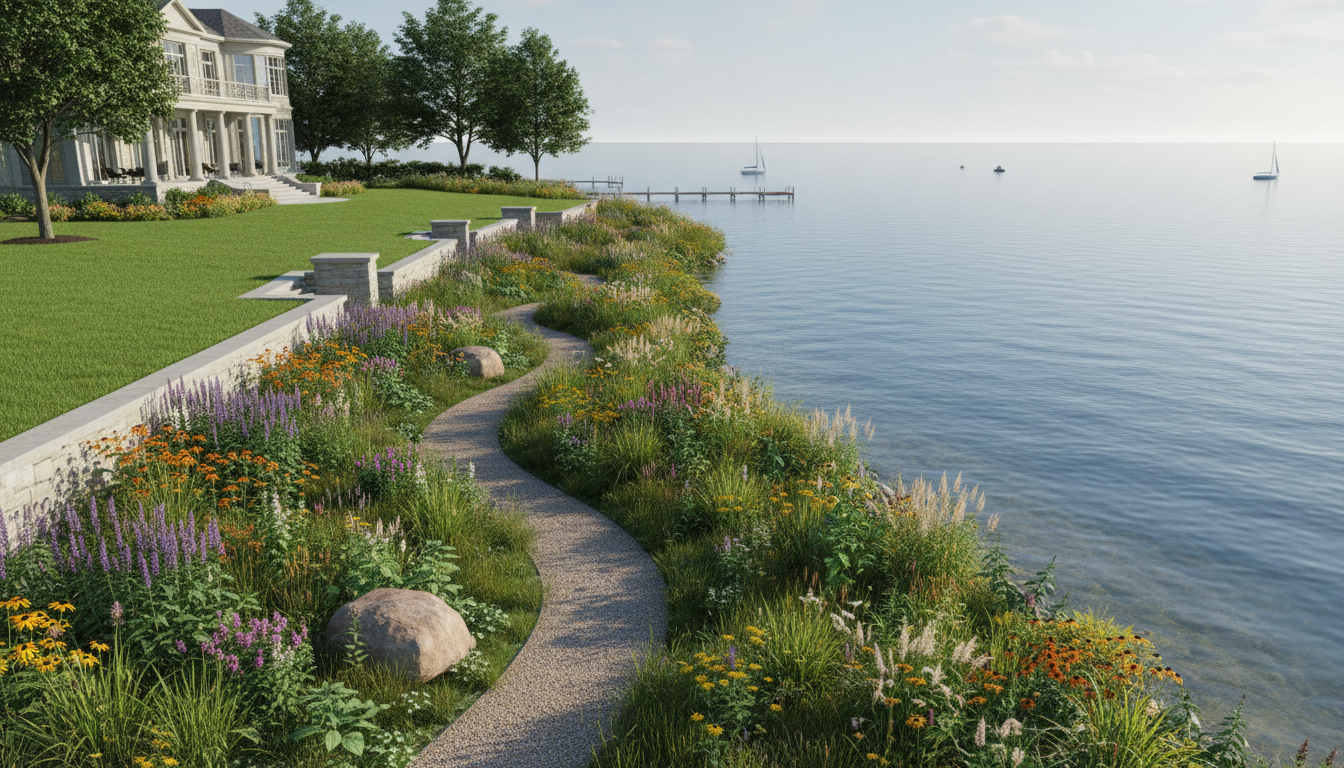
For the discerning Wayzata estate owner, the shoreline is more than a boundary; it is a living frame for one of Minnesota’s most iconic vistas. Wayzata Bay, with its deep blue horizons and historic prestige, demands a landscape that reflects both the elegance of the architecture it surrounds and the ecological sensitivity of the water it touches. However, many property owners view the word “buffer” with a certain degree of trepidation, fearing that regulatory compliance will lead to an unkempt, overgrown “wild” look that obscures the very view they invested in.
At the intersection of sophisticated design and environmental stewardship lies Wayzata Shoreline Buffer Restoration. By viewing the shoreline through the lens of a curator rather than a traditional contractor, we can transform these regulated zones into architectural gardens. These are not mere “weed patches,” but highly structured, intentional landscapes that meet the rigorous requirements of the Minnehaha Creek Watershed District (MCWD) while enhancing the aesthetic and structural integrity of your estate.
The Aesthetics of Regulation: Navigating MCWD Rule 3
In the Lake Minnetonka area, the MCWD Rule 3 dictates that most significant shoreline alterations or new construction projects require the implementation of a native buffer. To the uninitiated, this can feel like a constraint. To the designer, it is an opportunity. These regulations are designed to protect the water quality of Wayzata Bay by filtering runoff and preventing the “slumping” of banks—a common issue where manicured turf grass, with its shallow two-inch root system, fails to hold the soil against the relentless energy of wake and waves.
A sophisticated restoration goes beyond mere compliance. It integrates the Lake Minnetonka Shoreline Stabilization (MCWD) standards into a broader master plan. The goal is to create a “living armor.” While traditional rip-rap (rock) provides a hard barrier, a native buffer provides the subterranean infrastructure necessary for long-term stability. Research indicates that properties with restored shorelines retain a portion more soil during extreme 100-year rain events compared to those with traditional turf-to-edge landscapes. This is not just an aesthetic choice; it is an act of asset protection.
The “Rule 3” buffer typically requires a depth of 15 to 25 feet from the ordinary high-water mark. Within this space, we move away from the chaotic look of a prairie and toward the disciplined beauty of a formal estate garden. By selecting short-stature species and utilizing mass plantings, we can create rhythmic patterns that lead the eye toward the water rather than blocking it.
Curated Native Species: The Designer’s Palette
The secret to a successful Wayzata shoreline restoration lies in the “Native Palette.” We prioritize species that offer visual interest through all four seasons, focusing on fine textures, architectural seed heads, and a controlled height profile. By utilizing low-growth native sedges and short-stature flowers, we ensure that your panoramic views of the bay remain unobstructed.
For instance, Sporobolus heterolepis (Prairie Dropseed) is often referred to as the “aristocrat of the grasses.” It forms elegant, fountain-like mounds of emerald green that turn a shimmering gold in the autumn. Pairing such grasses with the structural spikes of Liatris pycnostachya (Prairie Blazing Star) or the delicate lace of Zizia aurea (Golden Alexanders) creates a sophisticated tapestry that feels intentional and high-end.
Bloom Schedule and Stature for Lake Minnetonka Native Species
A well-designed buffer is never static. It is a slow-motion performance that evolves from the first thaw through the depths of winter. The following table outlines a selection of species curated for Wayzata estates, emphasizing low height to preserve sightlines.
| Species Name | Common Name | Bloom Period | Max Stature | Design Value |
|---|---|---|---|---|
| Carex pensylvanica | Pennsylvania Sedge | May–June | 8–12″ | Soft, carpet-like groundcover; shade tolerant. |
| Iris versicolor | Blue Flag Iris | June–July | 24–30″ | Regal, structural blooms for the water’s edge. |
| Sporobolus heterolepis | Prairie Dropseed | August–Sept | 15–20″ | Fine-textured “fountains”; distinctive autumn fragrance. |
| Symphyotrichum laeve | Smooth Blue Aster | Sept–Oct | 24–36″ | Late-season sky-blue color; clean foliage. |
| Bouteloua curtipendula | Sideoats Grama | July–Aug | 12–18″ | Architectural seed heads that dance in the wind. |
Managing the Transition Zone: From Turf to Tide
One of the most critical elements of a Wayzata Shoreline Buffer Restoration is the transition zone—the space where the formal lawn of the estate meets the functional native buffer. A common mistake is a “hard stop,” which can look accidental or unmaintained. A design-first approach utilizes “cues to care” to signal intentionality.
This is often achieved through the use of clean-lined hardscaping, such as a limestone header or a manicured mulch path that separates the Kentucky Bluegrass from the native sedges. We often design “viewing corridors” or stone outcroppings within the buffer, providing a sophisticated space for a morning coffee or an evening glass of wine, right at the water’s edge. By integrating these human-centric elements, the buffer ceases to be a regulatory hurdle and becomes a destination.
Beneath the surface, the transition zone is working tirelessly. While turf grass roots are measured in inches, the species in our native palette boast root systems that can reach 10 feet into the earth. These roots act as biological rebar, knitting the soil together and preventing the undercutting of the bank by ice-shove and wave action. In an era of increasingly volatile weather, this subterranean architecture is the ultimate luxury: peace of mind.
Long-term Maintenance: Stewardship of the View
A native shoreline is not a “no-maintenance” landscape; it is a “low-maintenance” landscape that requires specialized stewardship. For the first two to three years, the focus is on establishment—ensuring that invasive species do not take advantage of the nutrient-rich lakeside soil. Once established, however, the buffer becomes a self-sustaining ecosystem.
Unlike a traditional lawn, which requires weekly mowing and chemical fertilizers that can harm the bay, a curated native buffer requires only an annual “clean-up.” For our Wayzata clients, we recommend a late-winter or early-spring cut-back. This allows the architectural seed heads and dried grasses to provide visual interest and bird habitat throughout the winter months, standing in beautiful contrast to the frozen expanse of the lake.
Selective pruning and thinning are also employed to ensure that “volunteer” trees—like fast-growing willows or cottonwoods—do not take root and eventually block the view. By managing the buffer with the eye of a gardener, we preserve the “open-concept” feel of the shoreline while reaping the ecological rewards of a native restoration.
Frequently Asked Questions
Will a buffer block my view of Wayzata Bay?
Absolutely not. By selecting short-stature species like Pennsylvania Sedge and Prairie Dropseed, we keep the majority of the vegetation under 18 inches. We curate the palette specifically to preserve your panoramic sightlines while providing the structural benefits of deep-rooted plants.
How wide must the buffer be to meet MCWD requirements?
While requirements can vary based on the specific permit, a buffer is usually required to be 15 to 25 feet wide from the water’s edge. We work directly with the MCWD to ensure our designs meet all legal standards while maximizing your usable lawn space.
Is a native buffer just a bunch of weeds?
In the hands of an amateur, a native planting can look unkempt. However, our design-first approach treats the buffer as a formal garden. By using mass plantings, clean edges, and curated species, we create a sophisticated look that complements the finest Wayzata architecture.
The restoration of a Wayzata shoreline is a legacy project. It is an investment in the longevity of your property, the health of Lake Minnetonka, and the timeless beauty of your estate’s most important view. By choosing a design-oriented approach, you ensure that your shoreline is not just compliant, but captivating.
Leave A Comment