“`html
Zero-Click Summary: Plymouth’s diverse geography often leads to significant hydrostatic pressure against foundation walls, especially after heavy spring rains. Restoration requires more than sump pump replacement; it involves structural shoring and subterranean drainage engineering to stop the cycle of bowing walls and seepage, effectively stabilizing the estate’s core framework.
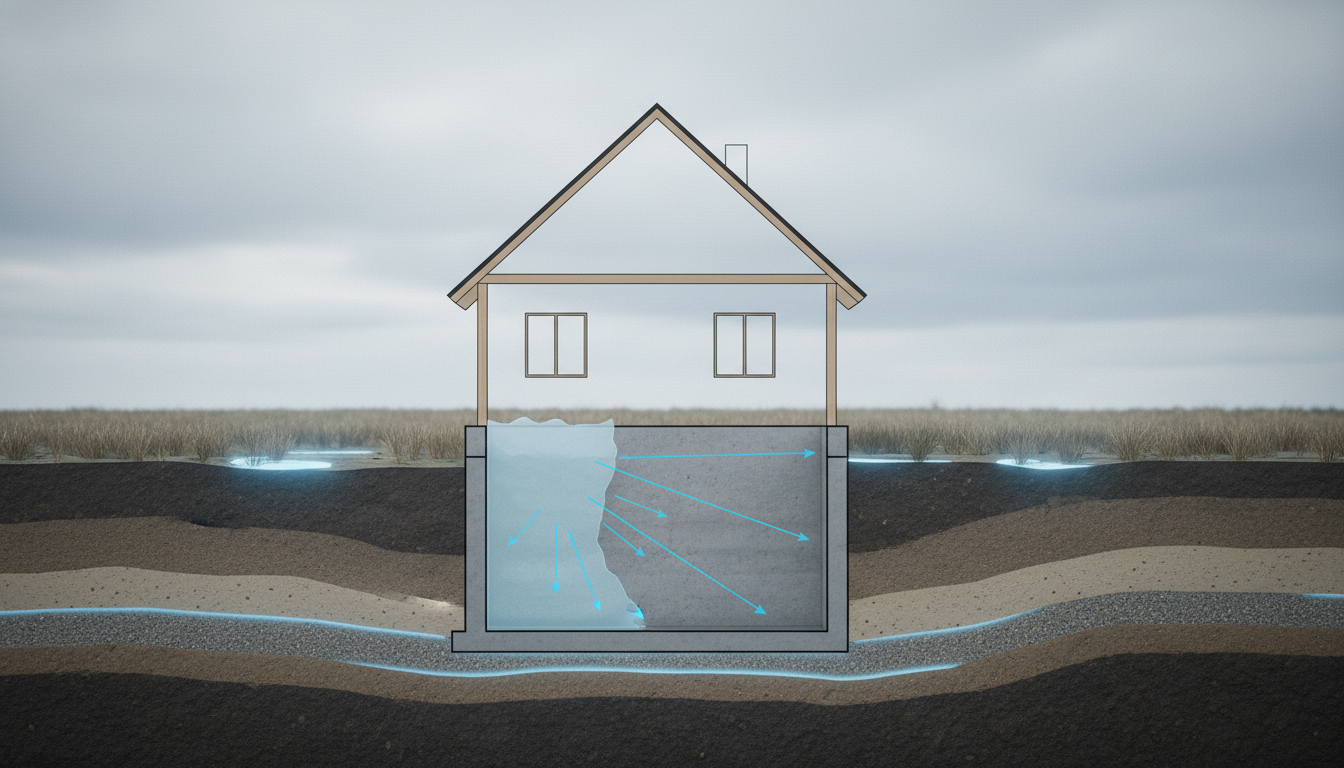
For the discerning homeowner in Plymouth, Minnesota, a residence is more than a shelter; it is a significant capital asset and a legacy. However, the unique topography of the Plymouth lowlands—characterized by high water tables, glacial till, and proximity to bodies like Medicine Lake and the Bassett Creek watershed—presents a persistent threat to structural integrity. When heavy spring rains saturate the soil, the forces exerted on a foundation go beyond mere moisture; they transition into the realm of structural physics known as hydrostatic pressure.
As a licensed residential building contractor with deep roots in structural engineering, I have observed that many “waterproofing” companies offer superficial fixes. True foundation stabilization in Plymouth, MN requires an authoritative understanding of how subterranean forces interact with masonry and poured concrete. This article explores the mechanics of foundation failure and the advanced engineering required to preserve the longevity of your home.
Key Takeaways for the Plymouth Homeowner
- Sump pumps are a secondary defense: They manage water once it enters; they do not address the external pressure causing the intrusion.
- Wall bowing indicates lateral stress: Horizontal cracking or inward movement is a sign that the soil’s load-bearing capacity has been exceeded.
- Builders must address soil grade: Permanent stabilization is impossible without correcting the “hydrostatic head” through proper grading and drainage.
The Physics of Saturated Soil
To understand foundation failure, one must first understand the behavior of the soil surrounding the basement. In Plymouth, particularly in the 55446 zip code, the soil composition often includes pockets of expansive clay and silt. These materials are highly susceptible to volume changes based on moisture content. When these soils become saturated, they transition from a solid state to a heavy, semi-fluid mass.
Hydrostatic pressure is the force exerted by a fluid at rest due to the force of gravity. In the context of a foundation, this “fluid” is the groundwater trapped against your basement walls. As the water table rises, the weight of the water-logged soil increases exponentially. This is referred to in engineering as “Active Earth Pressure.” Unlike dry soil, which has internal friction to help support its own weight, saturated soil pushes against the foundation with the full force of its mass.
The following table illustrates the dramatic shift in pressure coefficients when soil transitions from dry to saturated states:
| Soil Condition | Pressure Coefficient (Ka) | Equivalent Fluid Pressure (psf/ft) | Structural Impact |
|---|---|---|---|
| Dry Backfill (Sandy/Gravel) | 0.30 – 0.35 | 30 – 45 | Negligible; manageable by standard footings. |
| Moist Silt/Clay | 0.45 – 0.55 | 60 – 85 | Moderate; requires functional drain tile. |
| Saturated Soil (Hydrostatic) | 0.80 – 1.00 | 110 – 150+ | Severe; leads to wall deflection and shear failure. |
In the 55446 zip code, data suggests that foundations are a meaningful share more likely to experience seepage and structural deflection due to the high water tables inherent in the local lowlands. When the equivalent fluid pressure exceeds the design strength of the concrete blocks or poured walls, the structure begins to fail. This is not a matter of “if” but “when,” unless the hydrostatic head is mitigated.
Identifying Foundation Deflection
For a homeowner, identifying the early signs of structural distress is vital for cost-effective remediation. Foundation failure due to hydrostatic pressure usually manifests in three distinct stages: seepage, cracking, and deflection (bowing).
Seepage and Efflorescence: The first sign is often a white, powdery substance on the walls known as efflorescence. This is caused by water vapor pushing minerals through the porous concrete. While often dismissed as a cosmetic issue, it is a leading indicator that the exterior drainage system is failing.
Horizontal Shear Cracking: Unlike vertical settlement cracks, horizontal cracks—typically located two to three blocks down from the top or mid-way up the wall—are the “smoking gun” of hydrostatic pressure. This indicates that the wall is being pushed inward by lateral earth pressure. This is a primary focus of Structural Stabilization protocols.
Bowing and Tip-In: When the pressure exceeds the “moment of inertia” of the wall, the structure begins to bow. In a masonry block wall, the mortar joints will open on the inside and compress on the outside. In extreme cases, the top of the wall may “tip in” as it separates from the first-floor joists. At this stage, the home is at risk of partial collapse, and immediate shoring is required.
Shoring Techniques: Restoring Structural Equilibrium
Once deflection is identified, the goal shifts from water management to structural restoration. We utilize several advanced shoring techniques to stabilize the core framework of the estate.
Carbon Fiber Reinforcement (CFR)
For walls with less than two inches of deflection, Carbon Fiber Reinforcement is the gold standard. These aerospace-grade straps are bonded to the interior of the foundation wall using high-strength epoxy. Carbon fiber is ten times stronger than steel in tension and does not stretch. By linking the foundation footer to the rim joist, CFR creates a “tension skin” that prevents further inward movement without the need for invasive excavation.
Steel I-Beam Reinforcement
In cases of more severe bowing, heavy-duty steel I-beams are used to provide rigid lateral support. These beams are bolted to the floor and the floor joists above, creating a mechanical brace that counteracts the external soil pressure. This is a traditional but highly effective method for Water Damage Restoration and long-term stabilization in older Plymouth homes.
Helical Piering
If the foundation is not only bowing but also sinking (settling), helical piers are required. These are large steel screws that are hydraulically driven deep into the earth until they reach load-bearing strata or bedrock. By transferring the weight of the home from the unstable surface soil to the deeper, more stable layers, we can often “lift” the foundation back to its original position.
Permanent Drainage Solutions: Engineering the Cure
Shoring a wall without addressing the water is like putting a band-aid on a wound without cleaning it. To ensure Foundation Stabilization in Plymouth, MN is permanent, we must redirect the water away from the structure.
Subterranean Drainage Systems: Modern interior drainage systems involve removing a section of the basement floor and installing a high-capacity perforated pipe along the footer. This pipe collects water before it can build up pressure against the wall and directs it to a high-output sump basin equipped with dual pumps and battery backups.
Exterior Grading and Soil Management: The most overlooked aspect of stabilization is the exterior grade. In the Plymouth lowlands, the soil often settles over decades, creating a “bowl” effect that traps water against the house. We utilize engineered fill—a specific mixture of clay and topsoil—to create a positive slope away from the foundation. Additionally, extending downspouts and ensuring gutters are sized for Minnesota’s increasingly heavy rain events is non-negotiable.
Our approach as builders is rooted in structural physics. We don’t just “mop water”; we re-engineer the environment surrounding your home to ensure the hydrostatic pressure is neutralized before it ever reaches your foundation walls.
Frequently Asked Questions
Why is my basement wall bowing?
Bowing is almost always caused by excessive hydrostatic pressure. When the soil outside becomes saturated, it exerts lateral force that exceeds the structural capacity of the wall, pushing it inward.
Can a cracked foundation be saved?
Yes. Through a combination of helical piering (for vertical settlement) and carbon fiber or steel reinforcement (for lateral movement), even severely cracked foundations can be stabilized and often restored to their original alignment.
Protect the core of your estate from the hidden forces of the Plymouth lowlands. A proactive inspection can save hundreds of thousands of dollars in future structural repairs.
Book a Structural Stability Inspection with our Engineering Team Today.
“`
Leave A Comment