
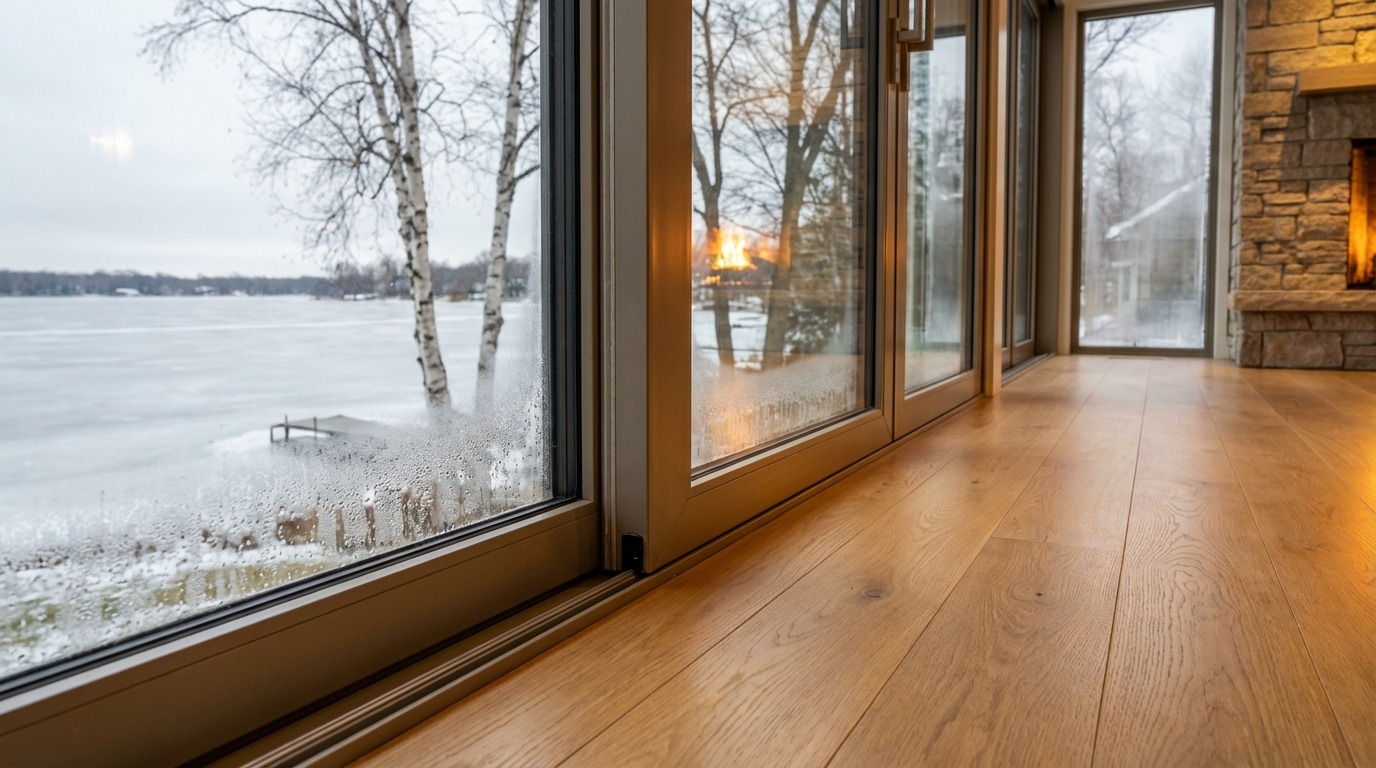
The indoor-outdoor living movement is the defining residential design idea of the West Coast, and it has been for twenty years. In Malibu, in the Palisades, in Portland and Seattle, the goal is to dissolve the boundary between the house and the landscape — sliding glass walls, continuous flooring from interior to exterior deck, the line between inside and outside made deliberately ambiguous.
Minnesota cannot do this the same way. But Minnesota is doing something more interesting: a four-season version of the same idea that the West Coast hasn’t had to figure out, because the West Coast doesn’t have January.
The Minnesota case is genuinely different
A sliding glass wall that disappears into a wall pocket works perfectly in Malibu. In Wayzata, that same wall, fully opened, admits air that registers at -10°F in February. The indoor-outdoor blur that California architects take for granted requires a fundamentally different solution in Minnesota — one that delivers the visual and spatial connection to the exterior landscape without the thermal penalty.
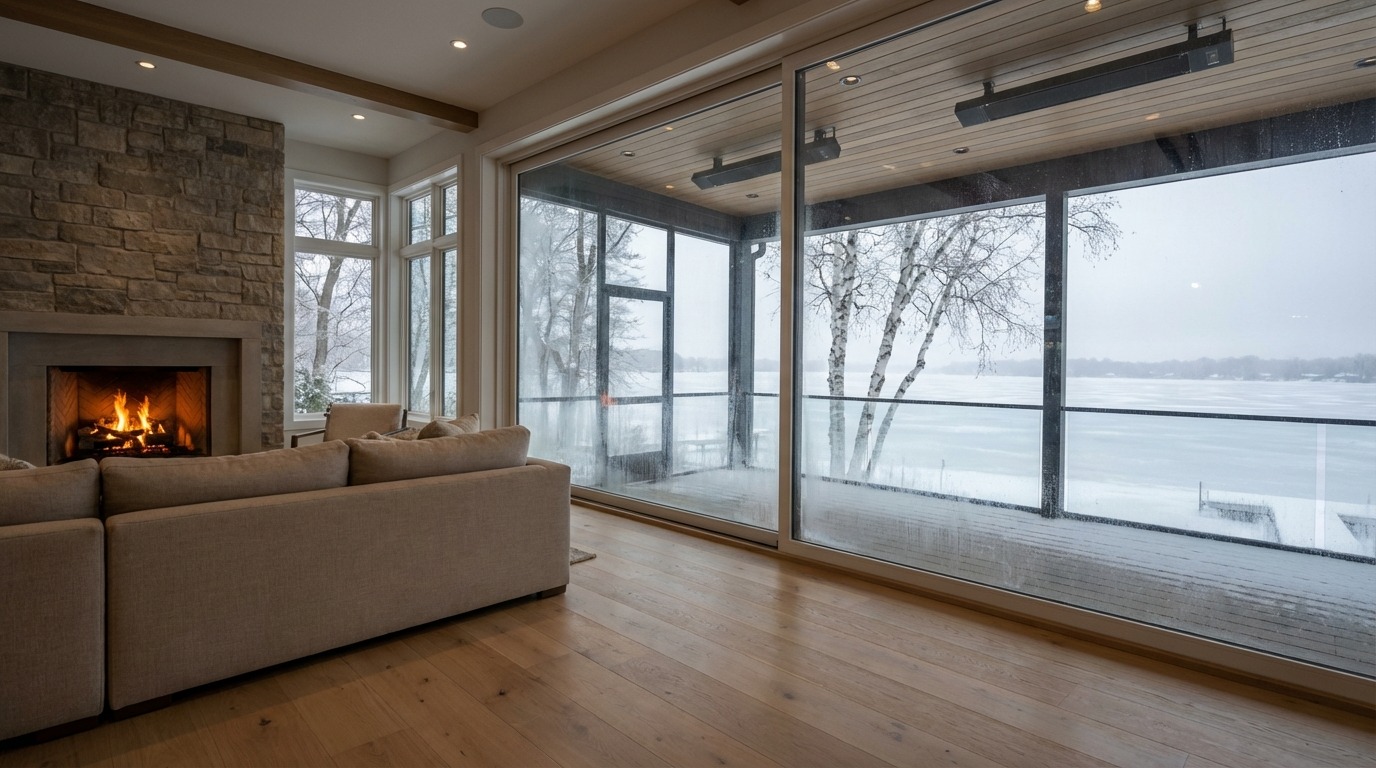
The West Coast version erases the boundary between inside and outside. The Minnesota version makes the boundary the design — a thermally broken glass wall that holds the cold out and the view in simultaneously. The frozen lake in February is not a problem to be solved. It is a composition to be framed.
Where the West Coast version diverges in Minnesota
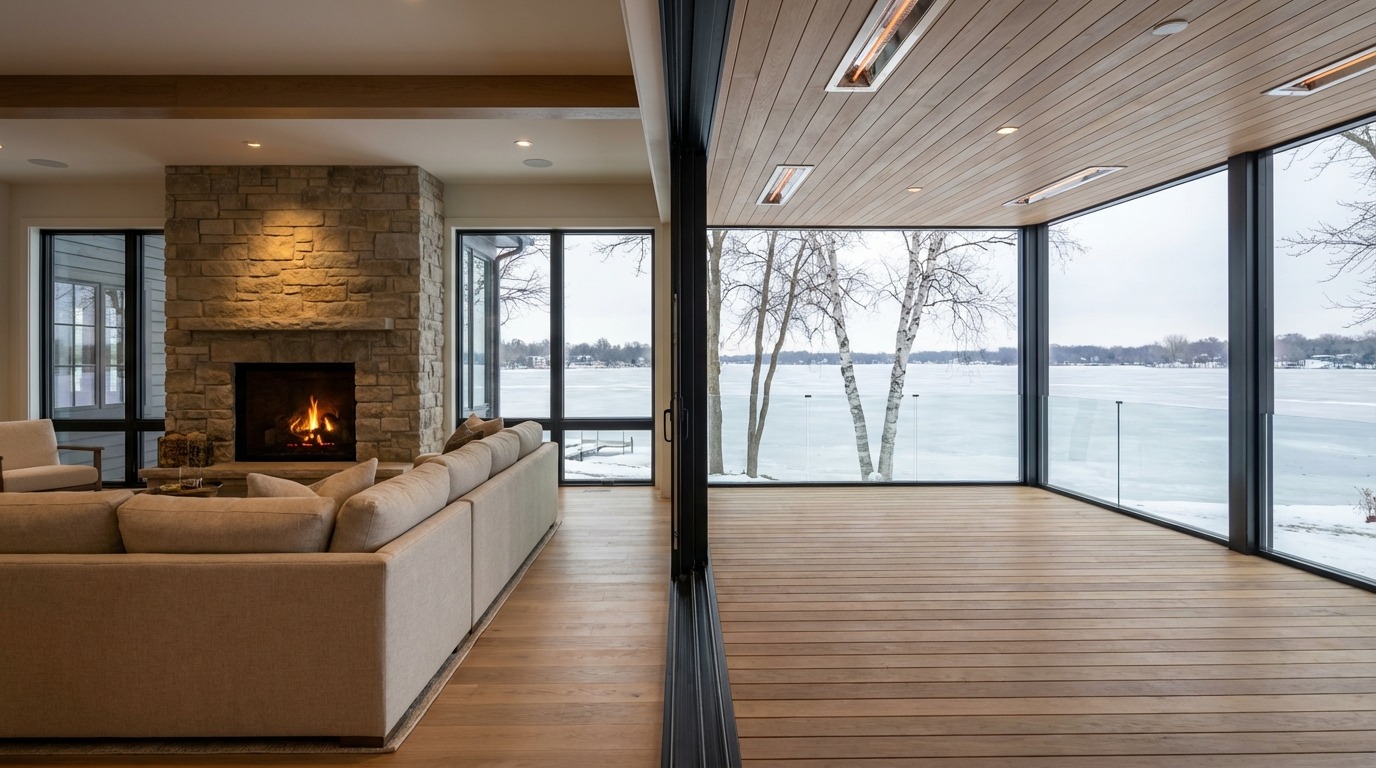
The solutions that are working in Lake Minnetonka corridor homes: thermally broken floor-to-ceiling glass panels rather than operable walls — all the visual connection, none of the heat loss. Four-season sunrooms with radiant heating, wood-clad ceilings, and infrared heaters that extend the livable outdoor zone from May through October without surrendering it entirely in winter. White oak flooring that runs continuously from the interior through the threshold into the sunroom — the material continuity is what makes the connection feel real rather than architectural.
What the Lake Minnetonka version actually looks like
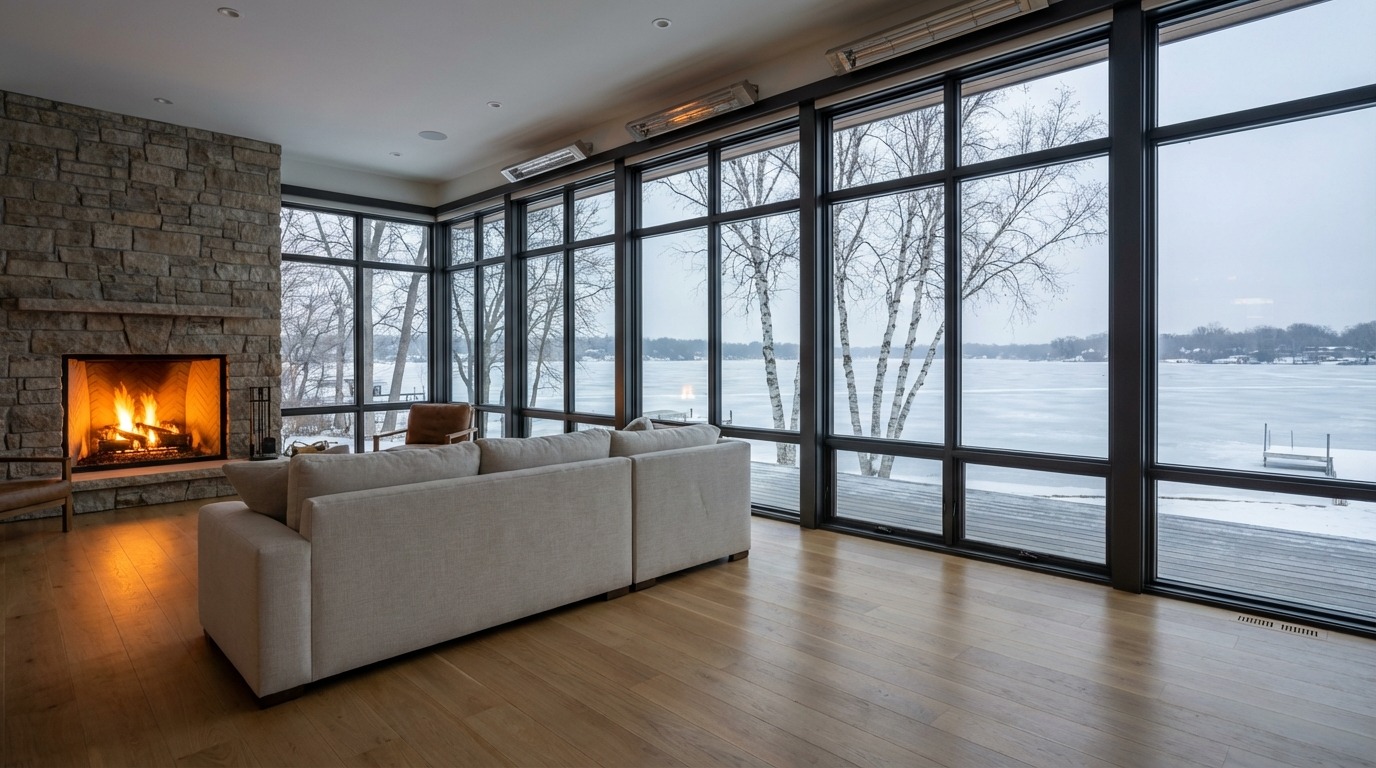
The best examples of this in the western metro treat the winter view as a feature rather than an obstacle. A Wayzata great room with a wall of thermally broken glass facing a frozen lake in February is not a compromise — it’s a composition that a Malibu home literally cannot have. The ice, the leafless birch trees, the flat gray sky — these are the materials of a Minnesota winter landscape, and a home designed to engage with them rather than hide from them is doing something the West Coast aesthetic cannot replicate.
The interior-side expression of this approach: a stone fireplace positioned so that its reflection appears in the glass wall at dusk, the fire readable against the frozen lake beyond. A linen sectional facing the glass rather than the fireplace — the lake is the screen. Wide oak floors that anchor the interior warmth and extend visually through the glass into the sunroom and beyond. Infrared heaters mounted at the sunroom ceiling that make March evenings outside possible. These are not luxury additions. They are the decisions that determine whether a lakeside home is designed for the lake or merely situated near it.
The storm damage opportunity
Storm damage to an exterior wall or roof — events that put windows and structural elements back into play — is the moment when the glass wall conversation becomes possible. If the exterior is being opened up anyway for storm repair, the question of whether the new window configuration delivers more or less of the lake view is a design decision, not an additional cost. Partners Restoration works with homeowners through that window to ensure the reconstruction plan includes the design intent, not just the structural replacement.
See how a storm-damaged Plymouth bedroom ceiling became a vaulted primary suite with clerestory windows and a wooded Minnesota view: Before & After — Storm Damage in Plymouth.
Leave A Comment