
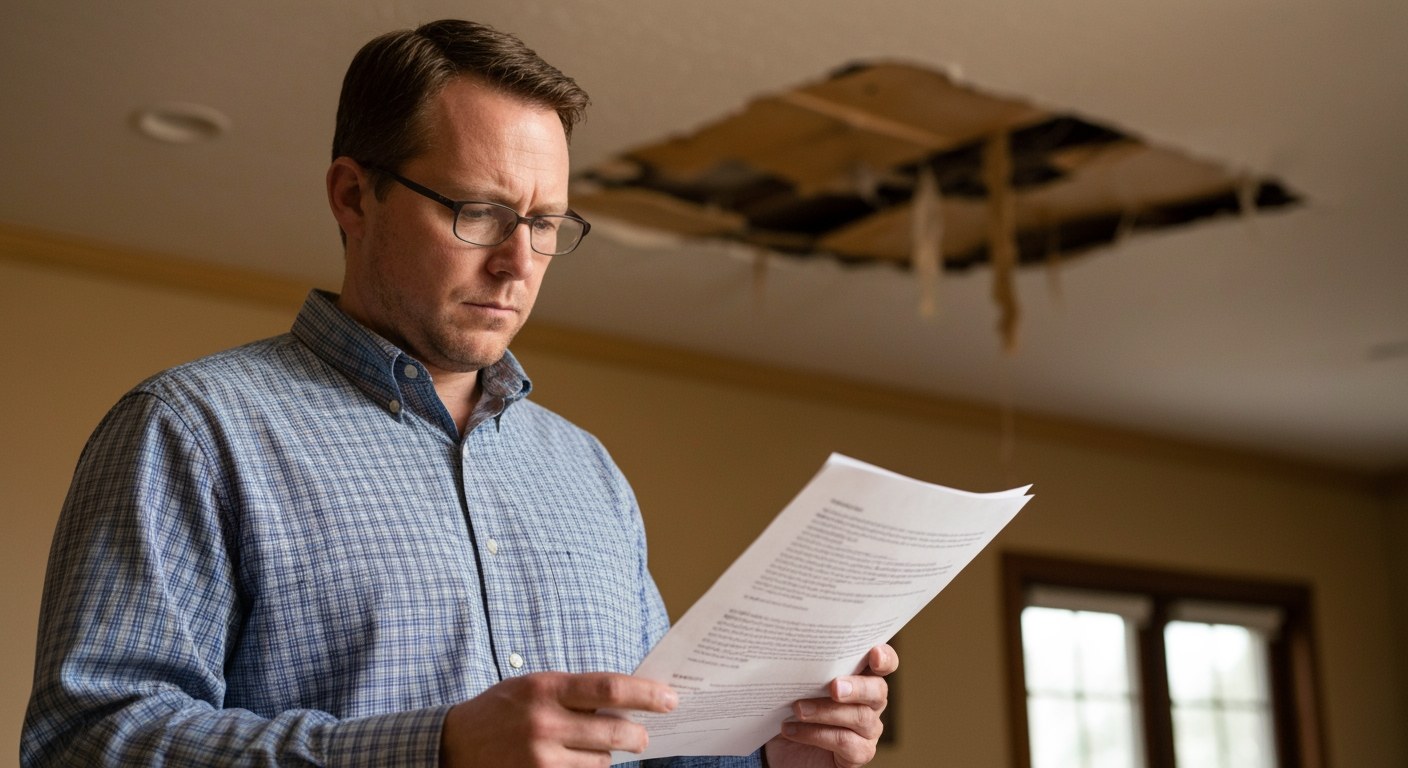
Minnesota’s climate creates a predictable cycle of water damage claims: spring snowmelt pushes into basements, summer storms overflow gutters, winter ice dams force water under shingles. Each of these scenarios triggers different coverage provisions under a standard homeowner’s policy — and the coverage gaps between them matter enormously when you’re standing in a wet basement.
What Minnesota Homeowner’s Policies Typically Cover
Standard homeowner’s policies (HO-3 form) cover sudden and accidental water damage from internal sources — a burst pipe, a failed washing machine supply line, an overflowing toilet. The key phrase is “sudden and accidental.” Slow leaks, long-term seepage, and maintenance failures are routinely excluded as neglect.
Flooding from external sources — overland water, backed-up storm drains, river overflow — requires a separate flood insurance policy, typically through the National Flood Insurance Program (NFIP) or a private flood carrier. Standard homeowner’s policies do not cover this, which surprises many Minnesota homeowners after a significant rain event.
Ice Dam Coverage: A Minnesota-Specific Issue
Ice dam damage is one of the most contested coverage areas in Minnesota. When an ice dam forces water under your shingles and into the wall or ceiling assembly, most HO-3 policies will cover the resulting interior damage — the stained drywall, soaked insulation, damaged flooring. The cost to remove the ice dam itself and repair the underlying roof condition (poor attic ventilation, insufficient insulation) is often excluded as a maintenance issue.
Documenting the sequence of events — when the ice dam formed, when interior water intrusion was first observed, what immediate mitigation was attempted — is critical to claim success.
The Documentation Standard That Matters
Insurance carriers evaluate water damage claims against IICRC S500 standards — the industry benchmark for water damage restoration. An IICRC-certified contractor can provide moisture mapping, psychrometric data, and drying logs that align with how your carrier expects claims to be documented. This matters at settlement time: carriers are more likely to approve scope items that are supported by technical data than those based on visual assessment alone.
Partners Restoration documents every water loss to IICRC standards from the first inspection. Thermal imaging, moisture mapping, and extraction logs are part of every file we open.
Common Minnesota Water Damage Claim Mistakes
- Delaying mitigation: Your policy requires you to mitigate further damage. Waiting to call a contractor while waiting for adjuster approval can result in coverage denial for secondary damage.
- Accepting the first estimate without review: Initial carrier estimates often miss hidden damage — subfloor saturation, wall cavity moisture, affected insulation. A contractor familiar with water damage scope can identify what needs to be supplemented.
- Confusing sewer backup with flooding: Sewer backup coverage is a separate endorsement. If your basement drain backed up, check whether you have that rider — it’s not automatic.
- Not photographing before cleanup: Photograph everything before any water extraction or removal begins. Carriers may dispute scope items if there’s no pre-mitigation documentation.
Replacement Cost vs. Actual Cash Value
Most standard policies offer replacement cost value (RCV) coverage, which pays to repair or replace damaged items at current prices without deducting for depreciation. Some policies — or specific items within a policy — default to actual cash value (ACV), which deducts depreciation. Read your declarations page carefully. Flooring, cabinets, and older mechanical systems are common targets for ACV treatment even under RCV policies.
If your initial payment feels low, compare the line items in the adjuster’s estimate against the RCV/ACV designation for each item. Depreciation holdbacks should be released once repairs are completed and documented.
How Partners Restoration Works With Your Claim
We serve the western Minneapolis suburbs — Edina, Minnetonka, Plymouth, Wayzata, Eden Prairie, Chanhassen, and surrounding communities. Our team coordinates directly with your adjuster, provides Xactimate-compatible scope documentation, and helps identify supplement opportunities when initial estimates are incomplete. We’re IICRC-certified in water damage restoration and work with all major carriers.
Frequently Asked Questions
Does my Minnesota homeowner’s policy cover basement flooding?
Not typically. Standard policies cover sudden internal water damage but exclude flooding from external sources. Flood coverage requires a separate policy through NFIP or a private carrier.
How long does a water damage claim take in Minnesota?
Carrier acknowledgment is required within 10 business days under Minnesota statute. Full claim resolution varies widely based on claim complexity, supplement negotiations, and contractor availability.
Can I choose my own restoration contractor for a water damage claim?
Yes. You have the right to choose your own licensed contractor. Your carrier may recommend a preferred vendor, but that choice is yours.
What is a depreciation holdback?
When a policy pays replacement cost value, carriers typically issue an initial payment at actual cash value (minus depreciation) and release the remaining holdback once repairs are documented as complete.
Leave A Comment