
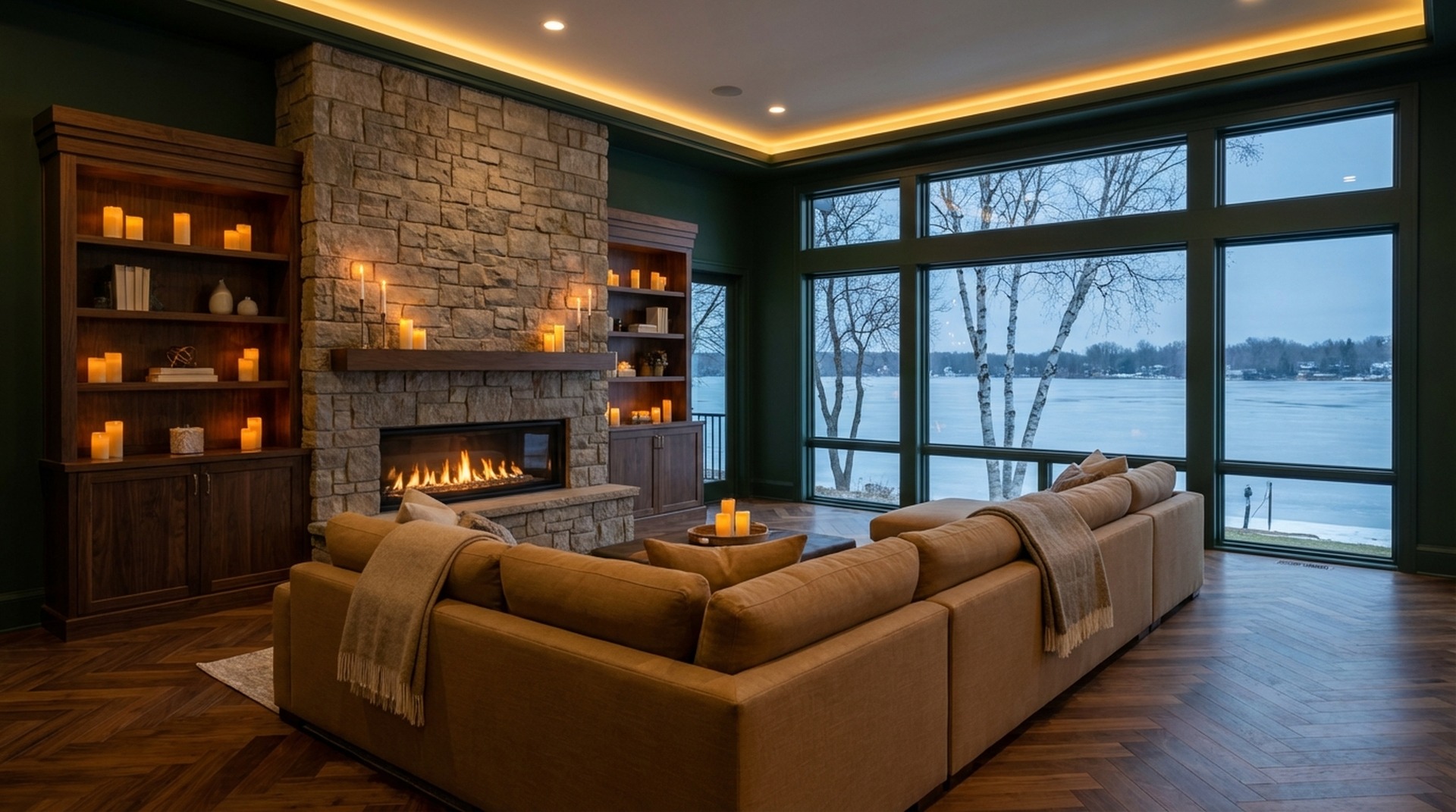
For years, the design playbook for Minnesota homes leaned bright and light — white walls, pale wood, as much natural light as you could coax from a sky that goes gray in October and doesn’t fully recover until April. It was understandable. But something is shifting. The dark interior is arriving in the western suburbs, and it makes more sense here than it might seem.
What the national trend actually is
Design publications from New York to Los Angeles have been tracking the same movement: a decisive turn away from the Apple Store aesthetic. Moody, layered interiors with very little use of white. Deep greens, warm blacks, complex browns, jewel-toned accents. Rooms that feel like something when you walk into them. Hans Lorei, a Brooklyn-based designer whose work is widely followed, put it directly: homeowners are exhausted by pale minimalism and are searching for something with more richness and character.
Pantone’s Color of the Year for 2026 is Cloud Dancer — a serene, soft white — but the more interesting story is the counter-movement. Designers who’ve spent years in all-white rooms are going the other direction with deliberate intensity.
Why it works especially well in Minnesota
Here’s the thing about a dark interior in a Minnesota lakeside home: it doesn’t fight the winter. It responds to it. A deep-toned great room with warm lighting and rich textiles isn’t competing with the gray lake view outside — the contrast becomes the point. Dark walnut millwork against a frozen Lake Minnetonka through floor-to-ceiling glass is not a design mistake. It’s a composition.
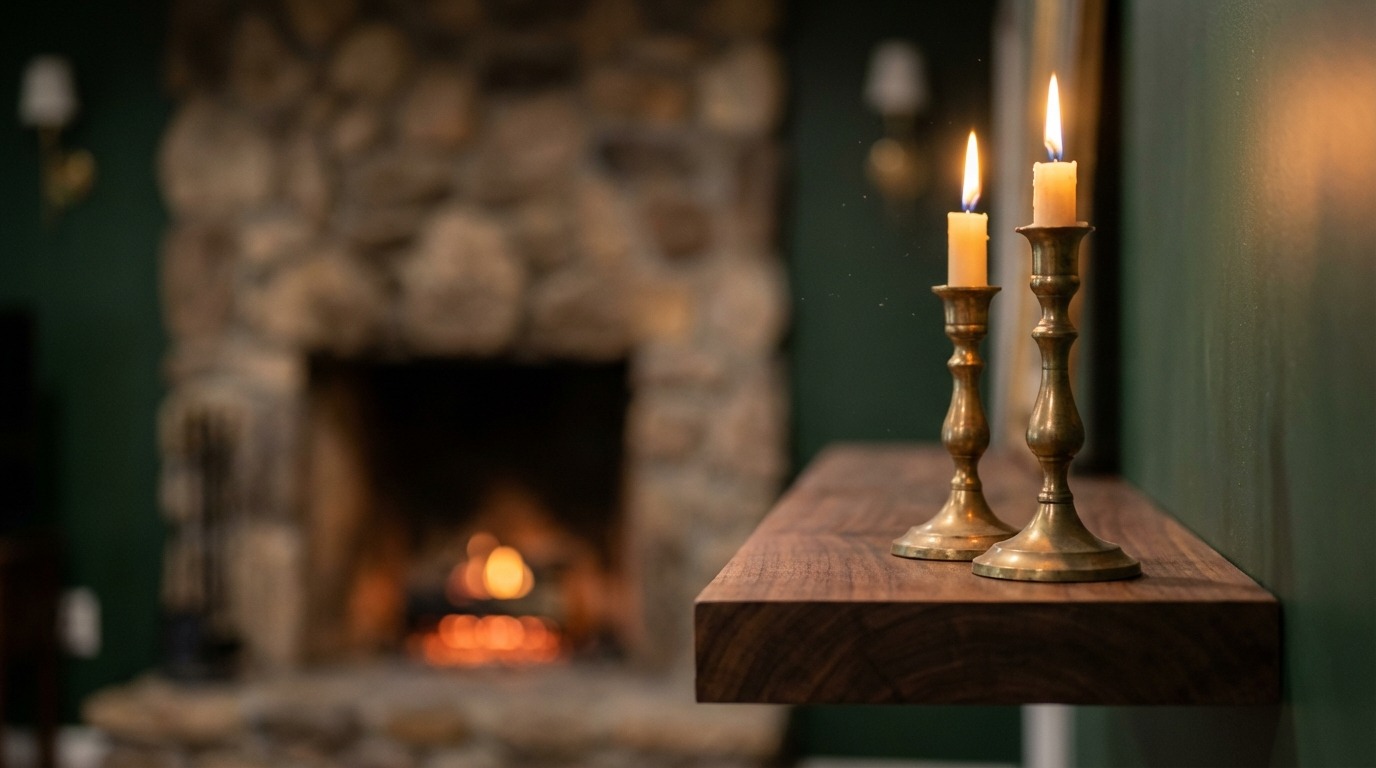
The homes that are executing this best in the Wayzata and Orono corridor tend to share a few characteristics. The dark palette is warm, not cold — forest greens, deep navies, tobacco browns rather than stark charcoals. Natural materials ground the darkness: stone fireplace surrounds, aged brass hardware, linen and wool textiles. And the lighting is layered — warm recessed cove lighting supplemented by table lamps, sconces, and candlelight that reads as intentional rather than ambient.
The rooms where it lands hardest
Primary bedrooms and great rooms are the two spaces where the dark interior has the most impact in a Minnesota home. The bedroom case is straightforward — a room designed for sleep benefits from darkness, and a moody palette with thick linen drapes and a walnut four-poster creates exactly the cocoon effect that cold-weather living calls for.
The great room case is more interesting. In a Lake Minnetonka home where the great room faces the water, a dark interior creates a visual depth that a pale room simply cannot. The furniture reads as sculpture. The lake becomes a painting in the windows. Visitors notice the room in a way they don’t notice a white great room — they feel it.
The materials that make it work
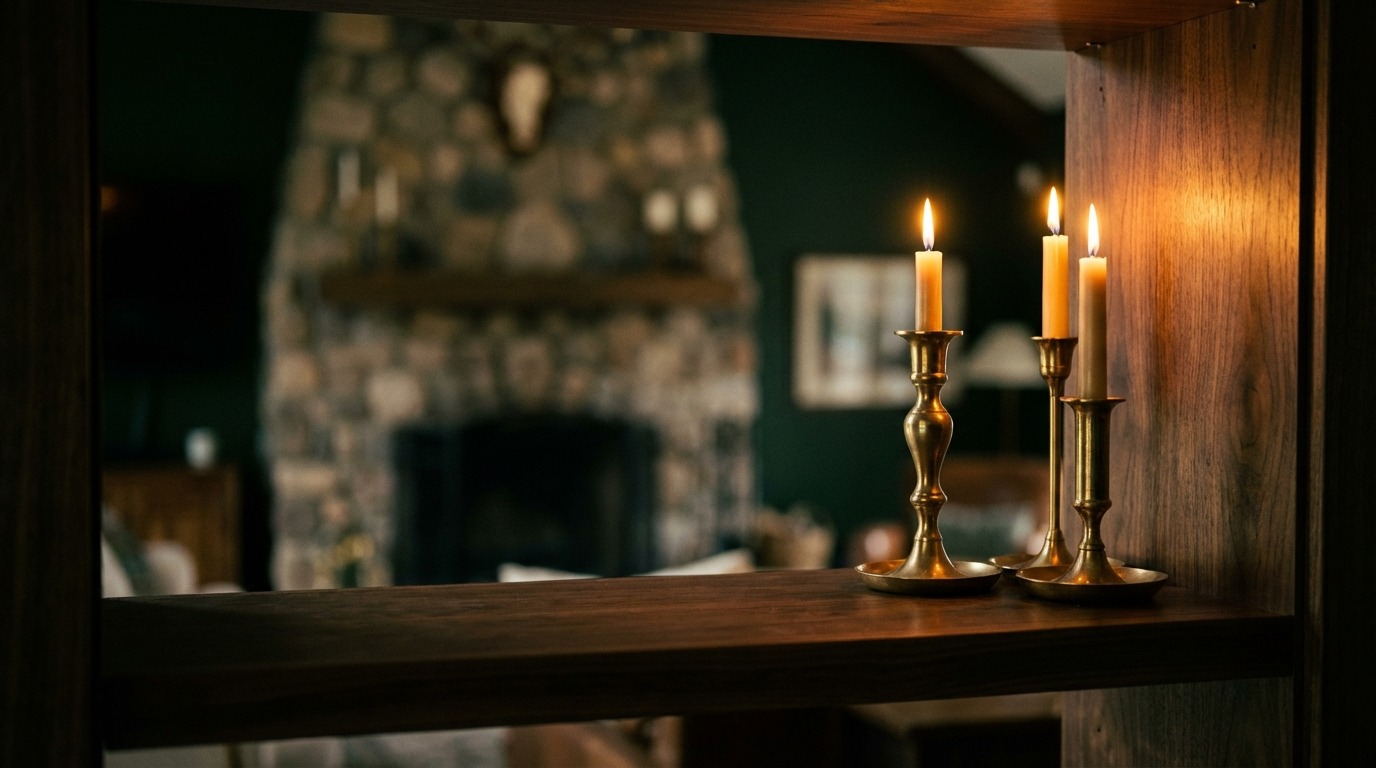
A dark interior fails when it’s only a color decision. What makes it succeed is material layering — the combination of surfaces that respond to light differently and create depth even in a dim room. In a Minnesota great room, that typically means a stone or plaster fireplace surround with visible texture, dark walnut millwork with a matte or satin finish that absorbs light rather than reflecting it, aged or unlacquered brass hardware that shows patina, and textile layering — wool throws, linen upholstery, a natural fiber rug — that adds warmth without adding color.
The floor is often the most important decision. Herringbone hardwood in a dark walnut stain is the pattern that appears most consistently in the best examples of this look in the western metro — it adds visual complexity at floor level that a straight-laid plank doesn’t, and it reads as considered in a way that anchors everything above it.
The reconstruction angle
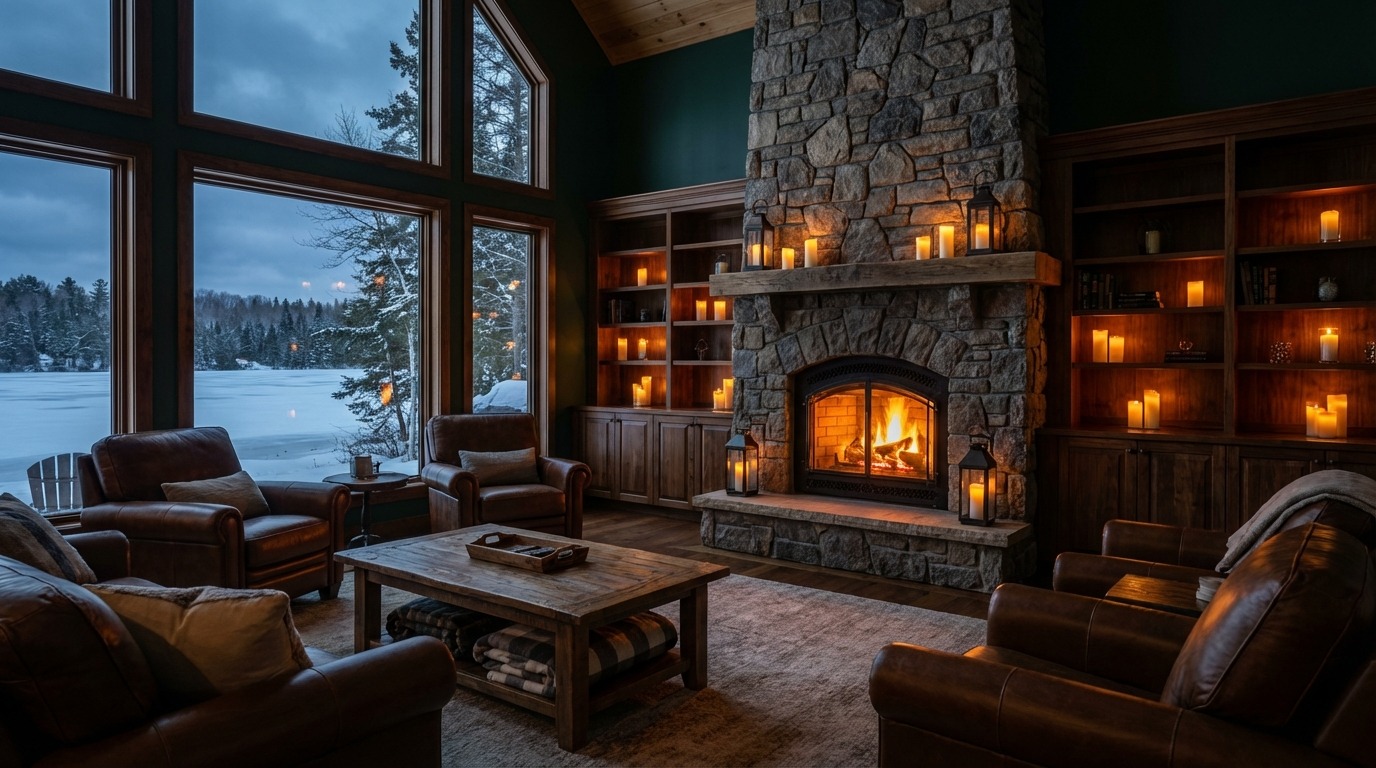
A smoke-damaged or water-damaged great room that has to be rebuilt anyway is the ideal moment to make a move like this. You’re not repainting — you’re choosing every surface from scratch. The drywall is going back in regardless. Whether it goes back white or gets a deep plaster treatment is a design decision, not a construction one. The walnut millwork that didn’t exist before is a line item in the reconstruction scope. The stone fireplace surround that’s being replaced is an opportunity to specify something better than what was there.
Partners Restoration coordinates those finish selections with your adjuster’s scope and your vision simultaneously. The conversation about what kind of room you want to end up with happens before a single nail goes in — which is the only time it can happen at no additional cost.
See how a fire-damaged Lake Minnetonka great room became a custom media and living space: Before & After — Fire Damage in a Lake Minnetonka Great Room.
Leave A Comment