
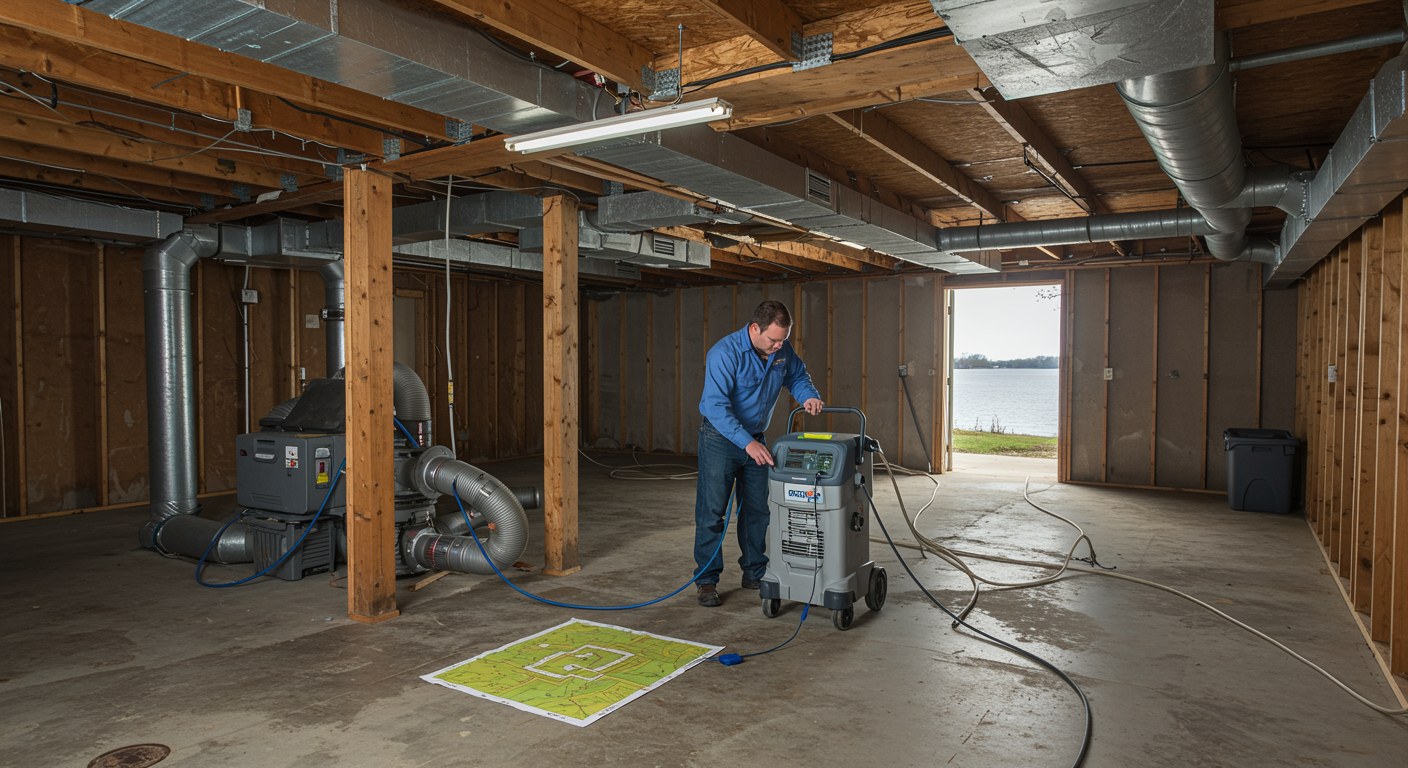
Minnetonka’s water damage landscape changed in 2023, and many homeowners don’t know it yet. The city updated its floodplain maps for the first time since 1999 — using current precipitation data that reflects a wetter, more intense rainfall pattern than what the old maps assumed. Properties that weren’t in mapped flood zones under the 1999 maps may now be in elevated-risk areas under the updated maps. That’s the starting point for understanding water damage risk in Minnetonka today.
The 2023 Floodplain Map Update: What Minnetonka Homeowners Need to Know
The previous Minnetonka floodplain maps were 24 years old when the city updated them. Two decades of land use changes — more impervious surface, altered drainage patterns, development near wetlands — combined with updated precipitation data from NOAA’s Atlas-14 program produced maps that are meaningfully different from the 1999 versions. The City of Minnetonka now offers an interactive online tool for residents to check their updated flood risk designation.
What this means practically: if you bought your Minnetonka home before 2023 and haven’t checked your flood risk designation since, your understanding of your exposure may be based on outdated information. Lenders who require flood insurance review FEMA maps at closing — but updated maps can change the risk picture years after you’ve moved in, without any automatic notification to homeowners.
Lake Minnetonka, Gray’s Bay Dam, and Your Water Table
Lake Minnetonka’s influence on Minnetonka’s water damage picture is indirect but real. The Minnehaha Creek Watershed District operates Gray’s Bay Dam at the lake’s outlet to control flow into Minnehaha Creek — managing lake levels to minimize flooding both on the lake and downstream. When the lake is high after a wet spring or sustained summer rainfall, the dam operations attempt to balance competing pressures: reducing lake flooding upstream versus managing creek flooding downstream.
For Minnetonka homeowners in lower-lying neighborhoods adjacent to the lake and its tributary arms, high lake levels correlate with elevated groundwater in surrounding soils. This shows up as basement seepage through foundation walls, sump pump running continuously, and water intrusion that appears even without direct rainfall on the property. It’s a function of the regional water table tracking the lake level — and it’s a condition that standard home inspections often don’t catch during dry periods when it isn’t active.
Minnetonka’s 252 Stormwater Ponds: Neighbor or Risk?
The City of Minnetonka maintains 252 public stormwater ponds — more than almost any similarly-sized community in the metro. These ponds are designed to capture and hold runoff before releasing it at a controlled rate. Under normal conditions they function as designed. Under extreme rainfall — the kind that Minnetonka’s 2023 Atlas-14 update now treats as a baseline for risk assessment — ponds can fill faster than they drain, raising water levels at the pond edge and potentially affecting adjacent properties.
Properties with backyards that abut Minnetonka stormwater ponds have a specific risk profile: when the pond fills during an extreme event, the water table at the pond boundary rises. Finished basements near these ponds can experience seepage through foundation walls and floor joints during significant storm events even if the home itself was never in a mapped floodplain. This is one of the scenarios the 2023 map update was specifically designed to capture more accurately.
Housing Stock and Plumbing Age in Minnetonka
Minnetonka’s residential development happened in waves. The oldest neighborhoods — particularly in the eastern portion closer to Hopkins and St. Louis Park — contain homes from the 1950s and 1960s. The majority of the city’s single-family housing was built in the 1970s and 1980s, with significant continued development through the 1990s and 2000s in western areas closer to Wayzata and Minnetrista.
For water damage, the relevant consideration is plumbing age. Galvanized steel supply pipes commonly used in Minnesota homes through the 1970s have a design life that’s been reached or exceeded in many Minnetonka homes. These pipes corrode internally, creating weak points at fittings and horizontal runs. The failure mode is typically sudden — a fitting lets go or a corroded section gives way — producing significant water damage in the wall cavity or finished space before the homeowner is aware of the problem. Homes with original galvanized plumbing that haven’t had a plumbing assessment are carrying risk that’s worth addressing proactively.
What MCWD Permits Mean for Water-Damaged Minnetonka Properties
Any significant restoration or reconstruction project on a Minnetonka property near a regulated wetland, water body, or floodplain may require a permit from the Minnehaha Creek Watershed District in addition to city building permits. MCWD regulates work in and around protected water resources — including setbacks from wetland buffers and requirements for any work that affects drainage patterns or impervious surface area.
Most standard interior water damage restoration doesn’t trigger MCWD requirements. However, reconstruction that involves changes to drainage, foundation work near water features, or any exterior grading can. Partners Restoration’s builder background means we identify these permit requirements before we start, not after — avoiding the project delays and rework that occur when a contractor discovers mid-project that additional regulatory approvals were needed.
Frequently Asked Questions — Water Damage Restoration in Minnetonka, MN
Why did Minnetonka update its flood maps in 2023?
The City of Minnetonka hadn’t updated its floodplain maps since 1999. The 2023 update used Atlas-14 precipitation data from NOAA, which reflects more accurate current and projected rainfall patterns. The updated maps identified properties that weren’t previously in mapped flood zones as being at elevated risk. If you haven’t reviewed your flood risk since purchasing your Minnetonka home, the 2023 update is worth checking.
How does Lake Minnetonka affect water damage risk for Minnetonka homes?
Minnetonka’s proximity to Lake Minnetonka means water tables in many neighborhoods track lake levels. When the lake is high after a wet spring or heavy summer rains, groundwater in adjacent low-lying areas rises accordingly — creating basement seepage and sump pump stress that isn’t related to direct rainfall on the property. The Minnehaha Creek Watershed District operates Gray’s Bay Dam to manage lake levels, but the relationship between lake level and local groundwater is a real factor for Minnetonka homeowners.
What are the most common water damage causes in Minnetonka homes?
Sump pump failures during storm events are the leading cause, followed by pipe failures in the city’s older housing stock (1960s–1980s construction has plumbing approaching end of design life), ice dam leaks in winter, and appliance failures. Properties near Minnetonka’s 252 public stormwater ponds have additional exposure if pond capacity is overwhelmed during extreme events.
Does Minnetonka homeowners insurance cover water damage near stormwater ponds?
Standard homeowners insurance covers sudden and accidental water damage from internal sources — burst pipes, appliance failures. Water that enters from stormwater overflow or groundwater seepage is typically not covered without a separate water backup endorsement or flood policy. Properties near Minnetonka’s stormwater ponds should verify their coverage before the next storm season.
How quickly can Partners Restoration respond to water damage in Minnetonka?
Partners Restoration is based in Medina — directly adjacent to Minnetonka’s western border. For most Minnetonka neighborhoods, we can be on-site within one to two hours of your call. We answer 24/7 at 952.500.2426.
Dealing with water damage in Minnetonka? Contact Partners Restoration for emergency response or an assessment. Based in Medina, adjacent to Minnetonka’s western border. Call 952.500.2426 24/7.
Also see: Water damage restoration services in Minnetonka | All restoration and remodeling services in Minnetonka, MN | Insurance claims help
Leave A Comment