
Eden Prairie developed faster than almost any other Twin Cities suburb. In the decades between 1970 and 2000, the city transformed from rural farmland to one of the region’s most populous cities. That rapid development created a water problem that the Riley-Purgatory-Bluff Creek Watershed District has been managing — and documenting — ever since. The short version: a lot of prairie and farmland that used to absorb rainfall is now rooftops, roads, and driveways. The water goes somewhere. Understanding where it goes is the starting point for understanding water damage risk in Eden Prairie today.
Purgatory Creek: Eden Prairie’s Most Consequential Water Issue
Purgatory Creek runs 16 miles from its headwaters through the heart of Eden Prairie before descending to the Minnesota River Valley. The Riley-Purgatory-Bluff Creek Watershed District has monitored the creek since the 1980s and has documented a persistent problem: the creek’s watershed is primarily residential land now, and the increasing runoff from that development — combined with heavier, more concentrated rainfall events — consistently overwhelms the creek’s capacity and Eden Prairie’s storm drainage infrastructure.
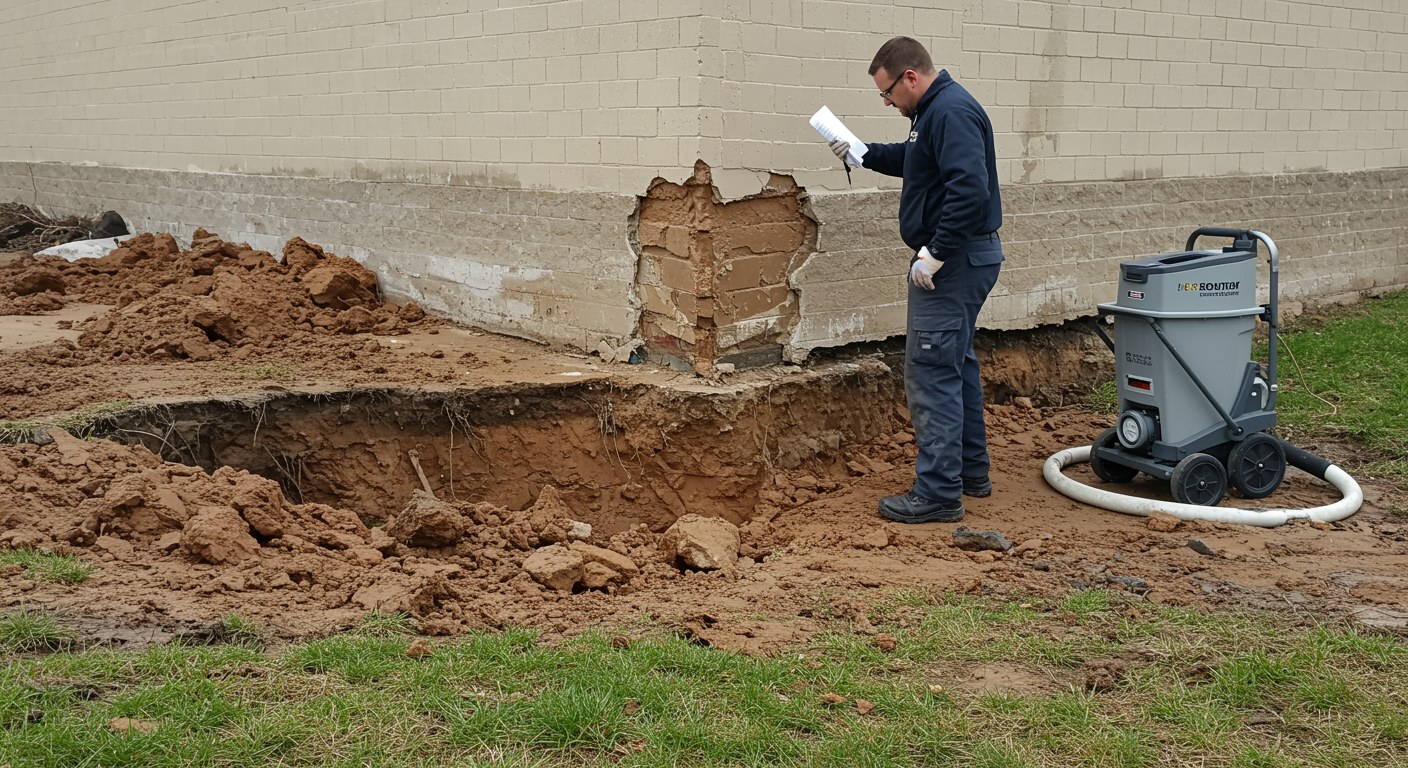
The consequences aren’t theoretical. A major rain event in 2014 overwhelmed Eden Prairie’s storm drainage system and caused a mudslide from a drainage pipe discharge near Burr Ridge Lane — sending a home teetering on the edge of the Purgatory Creek bluff and requiring its emergency demolition. The city has spent tens of millions of dollars on engineering and construction along Purgatory Creek’s banks and tributaries over the past two decades. Properties near the creek corridor, particularly on the bluff edges, carry real structural risk from erosion — not just flood risk from overflow.
Why Eden Prairie’s Sandy Soils Create a Specific Erosion and Drainage Problem
The Watershed District has specifically identified Purgatory Creek’s sandy soil conditions as a major erosion risk factor. Sandy soils don’t hold together well under flowing water — they erode faster than clay or loam soils. This makes Purgatory Creek’s banks particularly vulnerable to undercutting during high-flow events. From a water damage perspective, sandy soils around foundations also tend to drain quickly — which sounds like a benefit — but this means they provide less stable support for foundations under wet conditions, and sinkholes or settlement can occur in areas where fill was placed over unstable natural soils.
Eden Prairie also has areas of significant clay content, particularly in western and northern sections. Clay soils behave oppositely: they drain slowly, hold moisture longer, and create hydrostatic pressure against foundation walls during saturated conditions. A home on clay soil that experiences a basement seepage event may have water entering through foundation cracks for days after the rain event stops, because the surrounding soil stays saturated far longer than sandy soils would.
Eden Prairie’s Housing Stock: What Development Era You’re In Matters
Eden Prairie’s development came in three distinct waves, and each has its own water damage risk profile:
1970s and Early 1980s Construction
The earliest development in Eden Prairie, concentrated in neighborhoods near the historic town center and along the Minnesota River corridor. These homes have the oldest plumbing — many have original copper supply lines that are now 45 to 50 years old, approaching or at the age where pinhole leaks become a real concern. Sump pump systems in these homes have been replaced multiple times and may be undersized relative to modern drainage demands. Original insulation and air sealing is often inadequate by current standards, creating ice dam vulnerability.
Late 1980s and 1990s Construction
This is the largest cohort in Eden Prairie’s housing stock — the mass suburban development years. These homes have fully finished basements, complete sump pump dependency, and plumbing that’s now 30 to 40 years old. The sump pump risk is significant: many of these systems were sized to the drainage loads of 1990 rather than today’s more intense rainfall events, and the pumps themselves have been replaced at least once but may be approaching end of life again.
2000s and Newer Construction
Eden Prairie’s newer construction in areas like Flying Cloud, near Bryant Lake, and infill development is more recent but has its own risks. PEX and CPVC plumbing — common in this era — has a shorter track record than copper. Irrigation system failures (supply line breaks at irrigation heads, controller malfunctions) are a leading cause of water damage in newer homes with elaborate landscaping. And fully finished walkout basements in newer Eden Prairie homes are high-value, high-exposure spaces where a single pump failure or appliance leak can cause damage that exceeds the cost of a modest restoration project.
Frequently Asked Questions — Water Damage Restoration in Eden Prairie, MN
Why does Eden Prairie have so many stormwater and erosion issues?
Eden Prairie developed rapidly in the 1970s through 1990s, converting large amounts of natural land to impervious surface. The Riley-Purgatory-Bluff Creek Watershed District has documented that more than half of Purgatory Creek’s watershed is now residential land. When rain falls on rooftops, driveways, and roads rather than absorbent soil, it runs off faster and in higher volumes — overwhelming storm drainage systems designed to older standards and creating erosion along creek banks and bluffs.
What is the flooding risk from Purgatory Creek for Eden Prairie homeowners?
Purgatory Creek runs 16 miles from its headwaters in Chanhassen and Shorewood through Eden Prairie’s Purgatory Recreation Area and Staring Lake before reaching the Minnesota River Valley. The watershed district lists much of the creek as high risk for erosion due to sandy soil conditions and increasing runoff. Properties near the creek corridor — particularly on bluff edges — have documented landslide and erosion risk, not just flood risk. A 2014 storm overwhelmed Eden Prairie’s drainage system and caused a mudslide that demolished a home on Burr Ridge Lane.
How does Eden Prairie’s clay soil affect water damage and mold risk?
Eden Prairie has areas of significant clay soil content, particularly in the western portions of the city. Clay drains slowly, which means water that enters a home or collects around a foundation takes longer to dissipate. Slower drainage extends the duration of soil saturation around foundation walls, increasing hydrostatic pressure and the risk of water intrusion through foundation cracks. It also means that water damage events involving saturated subfloor and framing take longer to dry even with professional equipment, slightly increasing mold risk relative to homes on sandier soils.
What are the most common water damage causes in Eden Prairie’s newer homes?
Eden Prairie’s newer construction from the 1990s and 2000s has its own risk profile: sump pump dependency in fully finished basements, irrigation system failures that saturate foundation soils, and appliance supply line failures (refrigerator ice maker lines and washing machine hoses) are the most common causes. Ice dam damage is also significant for Eden Prairie’s housing stock, which has highly variable attic insulation quality depending on when and how carefully each home was built.
How quickly can Partners Restoration respond to water damage in Eden Prairie?
Partners Restoration is based in Medina, approximately 15 to 20 minutes from most Eden Prairie neighborhoods. We dispatch within hours for active water damage events and answer 24/7 at 952.500.2426.
Water damage in Eden Prairie? Contact Partners Restoration for emergency response or an assessment. Based in Medina, 15 to 20 minutes from most Eden Prairie neighborhoods. Call 952.500.2426 24/7.
Also see: Water damage restoration services in Eden Prairie | All restoration and remodeling services in Eden Prairie, MN | Insurance claims help
Leave A Comment