
Golden Valley’s mold picture is defined by two things that reinforce each other: a housing stock that’s among the oldest in the western suburbs, with 60 to 70 years of accumulated moisture management deficiencies baked in, and a geographic position where Bassett Creek’s corridor maintains elevated ambient humidity in the neighborhoods closest to it. The combination produces mold in places — attics, wall cavities, and crawl spaces in the Tyrol neighborhoods — that homeowners often don’t discover until a renovation or a real estate inspection forces the issue.
Bassett Creek’s Humidity Corridor in Golden Valley
Bassett Creek meanders through the southern portion of Golden Valley — through the Tyrol Hills and Tyrol neighborhoods, past Brookview Golf Course, and on toward Minneapolis. The creek’s riparian zone maintains higher ambient humidity than the upland portions of Golden Valley throughout the year. Sweeney Lake in northern Golden Valley adds a second moisture-influencing water feature. The combination creates microclimates in creek-adjacent neighborhoods where baseline relative humidity — particularly in lower-level spaces — is measurably higher than in comparable properties on upland sites in the city.
For mold risk, this elevated baseline humidity is the starting point. Properties adjacent to the creek corridor have above-average soil moisture, above-average vapor transmission rates through foundation walls, and above-average relative humidity in crawl spaces and finished basements. None of these conditions require a water damage event to produce mold. They just require time — which these homes have had plenty of.
The Ice Dam Pipeline: How Golden Valley Attics Accumulate Mold Over Decades
This is the most predictable mold pattern in Golden Valley, and the one most likely to be discovered as a surprise during a roofing project. Golden Valley’s 1950s and 1960s ramblers and split-levels have original attic insulation that’s typically inadequate by decades of evolved standards — three to four inches of blown cellulose or fiberglass that provides far less thermal resistance than current codes require. The physics are simple: heat escapes from the living space through this inadequate insulation, warms the roof deck from below, melts the lowest layer of snow on the roof, and creates ice dams at the cold eave where melt water refreezes.
Ice dams force water under shingles. That water enters the attic space, saturates insulation, and wets the roof sheathing. In a Golden Valley rambler that’s been through 30 to 50 Minnesota winters with inadequate insulation, the attic has experienced dozens of these events. The sheathing has been repeatedly wetted and partially dried. Mold has established and spread across the sheathing surface and into the rafters. By the time a roofer pulls the first course of shingles for a replacement, they often find extensive mold that the homeowner had no knowledge of.
Attic mold remediation in Golden Valley requires removing the contaminated insulation, treating the sheathing and rafters, and — critically — addressing the air sealing and insulation deficiency that produced the ice dams in the first place. Remediating the attic without improving the insulation and air sealing will reproduce the same conditions through the next ten winters.
Basement Wall Cavities in Golden Valley’s Mid-Century Construction
Where Golden Valley’s older homes have finished basement walls, the construction typically reflects the practices of the 1960s and 1970s: 2×4 framing against the concrete foundation, fiberglass batt insulation, and drywall or paneling. No drainage plane between the concrete and the framing. No vapor barrier on the correct (cold) side of the insulation for Minnesota’s heating-dominated climate.
In homes along the Bassett Creek corridor, where soil moisture is persistently elevated, this wall assembly has been accumulating moisture from vapor transmission for five to six decades. The mold in these wall cavities is typically extensive when walls are first opened — a long run of contamination on the back face of the drywall, in the insulation, and on the framing studs. The discovery is often made during a basement renovation when the first piece of drywall comes off and reveals the wall cavity behind it.
Frequently Asked Questions — Mold Remediation in Golden Valley, MN
Why do Golden Valley homes near Bassett Creek have elevated mold risk?
Bassett Creek’s corridor through Golden Valley maintains elevated ambient humidity in adjacent properties year-round. The creek’s riparian zone, combined with the wetlands and Sweeney Lake in the northern part of the city, creates a persistently moist microclimate in the Tyrol neighborhoods and along the creek corridor. Properties here have higher baseline soil moisture, higher relative humidity in below-grade spaces, and a longer duration of elevated moisture conditions after rain events than upland Golden Valley properties.
What makes Golden Valley’s 1950s and 1960s homes prone to mold?
Golden Valley’s dominant housing stock developed in the postwar era, and these homes have accumulated 60 to 70 years of moisture management deficiencies. Original attic insulation is typically inadequate, producing ice dam conditions and decades of attic moisture accumulation. Original basement finishing — where it exists — was done without drainage planes or vapor barriers. And original plumbing has been producing slow, undetected leaks in wall cavities as it ages. The cumulative effect is housing stock where mold is the predictable result of deferred systems, not a surprise.
How does ice dam damage lead to mold in Golden Valley attics?
Golden Valley’s 1950s and 1960s ramblers and split-levels typically have inadequate attic insulation — often just a few inches of original blown cellulose or fiberglass. In Minnesota winters, heat escaping through this inadequate insulation warms the roof deck, melts snow unevenly, and creates ice dams at the eaves. Water backs up behind ice dams and seeps under shingles. Each ice dam event saturates attic insulation and wets roof sheathing. Over 20 to 30 winters of repeated events, Golden Valley attics accumulate mold in sheathing and rafters that’s typically discovered when a roofing contractor removes the first course of shingles.
Is mold in a Golden Valley attic covered by homeowners insurance?
Mold discovered during a roofing replacement — resulting from years of accumulated ice dam events — is typically disputed by insurers. Each individual ice dam event may have been coverable if addressed promptly, but mold discovered years later as the cumulative result of multiple events is harder to tie to a specific covered claim. The most defensible coverage position is reporting and documenting each ice dam event when it occurs, completing professional drying after each event, and maintaining those records. Mold discovered in an attic without prior documentation of water events will almost certainly be classified as a maintenance issue.
What does the full mold remediation process look like for a Golden Valley home?
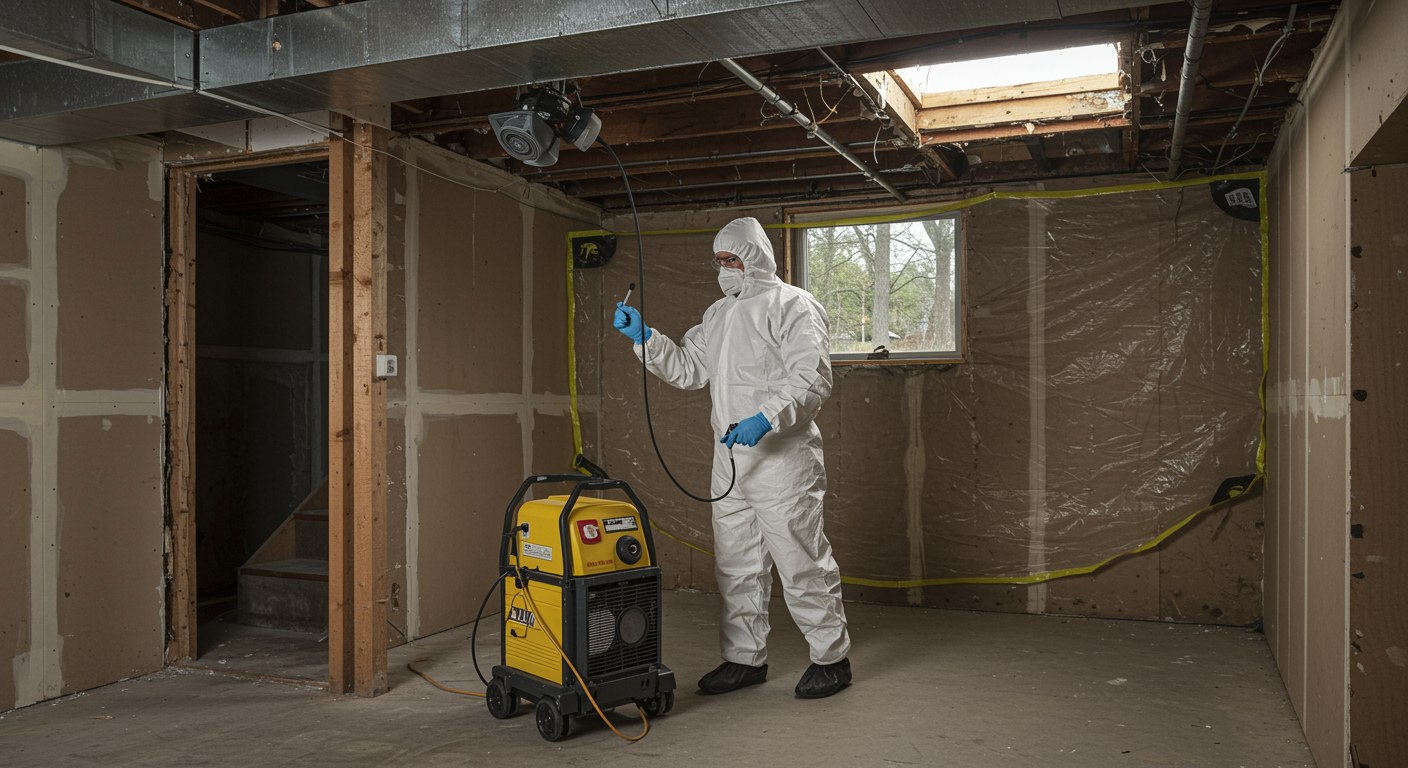
Assessment using moisture meters and thermal imaging identifies the extent of contamination without full destructive access. Remediation follows IICRC S520: containment, negative air pressure, HEPA filtration, removal of contaminated materials, disinfection, and clearance testing. For Golden Valley’s older homes, remediation often reveals the need for attic air sealing and insulation upgrades, basement wall drainage plane installation, and whole-home dehumidification — addressing the underlying moisture pathways rather than just the visible contamination. Partners Restoration provides full documentation for insurance and real estate purposes.
Mold concern in your Golden Valley home? Contact Partners Restoration for a moisture assessment and mold inspection. Call 952.500.2426.
Also see: Mold remediation services in Golden Valley | All restoration and remodeling services in Golden Valley, MN | Water damage restoration in Golden Valley
Leave A Comment