
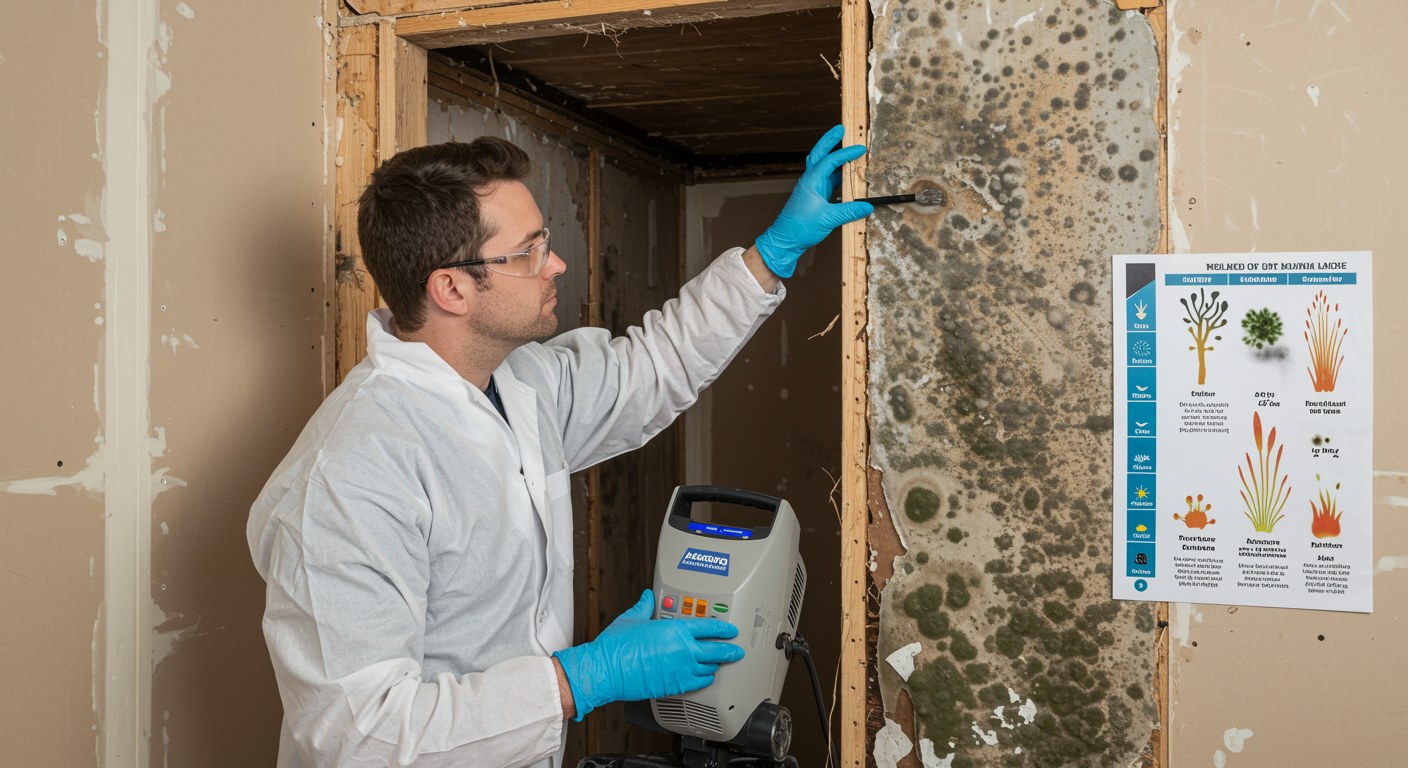
Every water damage event in a Minnesota home carries a secondary risk that’s easy to underestimate: mold. The connection between water damage and mold growth isn’t theoretical — it’s a predictable biological process that happens on a known timeline. Understanding that timeline, and what grows where, is the difference between a water damage cleanup and a mold remediation project.
The Mold Clock: What Happens in the Hours and Days After Water Damage
| Timeframe | What’s Happening | Risk Level |
|---|---|---|
| 0–2 hours | Water saturates porous materials — drywall, insulation, wood framing, carpet padding | Water damage only |
| 2–24 hours | Mold spores (always present in the environment) begin to settle and germinate on wet surfaces | Low mold risk if drying begins |
| 24–48 hours | Mold colonies begin establishing in wet drywall, insulation, and wood; musty odor may start | Elevated — professional drying essential |
| 48–72 hours | Active mold growth in wall cavities; visible mold may appear on surfaces | High — mold remediation likely needed |
| 3–7 days | Mold colonies spread; structural materials at risk; odor becomes pronounced | Severe — significant remediation scope |
| 1–3 weeks | Mold deeply embedded in framing; possible Stachybotrys growth on chronically wet materials | Critical — gut-and-rebuild may be required |
Where Mold Hides After Water Damage in Minnesota Homes
Mold doesn’t grow in places you can see — it grows in places that stay wet. In a Minnesota home after water damage, the highest-risk locations are:
Inside Wall Cavities
This is the most common hidden mold location after water damage events. When water enters a wall from a burst pipe, ice dam leak, or appliance failure, it saturates the insulation and wets the drywall paper from behind. The paper on the back of drywall is a perfect mold substrate — cellulose, moisture, and darkness. Visible mold on the room-side surface typically means the back side has been colonized for days already.
Under Flooring
Water under hardwood or laminate flooring creates a trapped moisture environment that dries extremely slowly without professional intervention. Carpet and carpet padding are particularly problematic — carpet padding can hold substantial moisture while the surface feels dry, creating ideal mold conditions that go undetected for weeks.
Attic Insulation
Ice dam leaks in Minnesota often saturate attic insulation. Wet blown-in or batt insulation dries very slowly and molds readily. Mold in attic insulation can spread to roof sheathing and rafters, significantly increasing remediation scope and cost.
Subfloor and Structural Framing
In basement floods and significant pipe bursts, water can reach the subfloor and structural framing. Wood framing that remains wet for more than 48 to 72 hours is at risk of mold growth. Once mold establishes in structural framing, the remediation approach changes from cleaning to controlled removal — a more invasive and expensive process.
The Minnesota Climate Factor
Minnesota’s cold, dry winters create an interesting dynamic with post-water-damage mold risk. Low indoor humidity during winter months can slow mold growth slightly compared to humid summer conditions. However, this effect is unreliable and shouldn’t be counted on — modern Minnesota homes with vapor barriers and tight construction can trap moisture effectively even in winter, and water-damaged materials in interior wall cavities aren’t subject to the same drying effect as surface materials.
Summer water damage events in Minnesota carry higher mold risk because ambient humidity is higher, mold spores are more active, and the warm conditions accelerate germination. A sump pump failure in July is a higher mold-risk event than the same failure in January, all else being equal.
What Professional Mold Prevention Looks Like
When Partners Restoration responds to a water damage event, mold prevention is built into the standard process — not treated as a separate add-on. The steps that prevent mold after water damage are:
- Rapid extraction. Removing standing water as fast as possible limits how long porous materials stay in contact with free water.
- Structural drying with commercial equipment. High-velocity air movers and industrial dehumidifiers dry wall cavities, subfloors, and framing at a rate that household fans cannot match. The goal is reducing material moisture content below the threshold where mold can establish — typically below 16% for wood framing.
- Moisture monitoring. We use calibrated moisture meters to track drying progress in the wall and floor assemblies — not just the visible surfaces. We don’t close a job until readings confirm the structure is dry.
- Antimicrobial treatment. After drying, affected surfaces receive EPA-registered antimicrobial treatment to address any mold spores that settled during the event, even if visible mold hasn’t appeared.
- Clearance inspection. Before any reconstruction begins, a final moisture check confirms the structure is dry and safe to close up.
What to Do If You Find Mold After Water Damage
If you discover mold after a water damage event — whether it’s been days, weeks, or months — the approach is the same: don’t disturb it, document it, and call a certified mold remediation contractor.
Disturbing mold — by scrubbing, cutting, or pulling drywall without proper containment — releases spores into the air and can spread contamination to unaffected areas. Professional remediation establishes containment barriers, uses negative air pressure to prevent cross-contamination, and removes affected materials in a controlled manner following IICRC S520 standards.
For insurance purposes: mold that results from a covered water damage event may be covered under your original claim if addressed promptly. Mold discovered weeks or months later is more likely to be disputed. Document the mold discovery and contact your insurer before any remediation work begins.
Frequently Asked Questions — Mold After Water Damage in Minnesota
How quickly does mold grow after water damage in Minnesota?
Mold can begin colonizing wet building materials within 24 to 48 hours. In Minnesota’s drier winter indoor environment you may have slightly more time, but the 48-hour window for professional drying is the industry standard for mold prevention.
What types of mold grow after water damage in Minnesota homes?
The most common species after water damage are Cladosporium, Penicillium, Aspergillus, and Stachybotrys chartarum. The specific species depends on moisture level, material type, and time elapsed. All require professional remediation when found in building materials.
Can I clean up mold myself after water damage?
Small amounts on hard, non-porous surfaces can be cleaned by homeowners. Mold in building materials — drywall, insulation, wood framing — must be professionally removed. DIY cleanup in wall cavities typically spreads spores and creates a larger problem.
Does homeowners insurance cover mold after water damage in Minnesota?
Mold from a covered water damage event (burst pipe, appliance failure) is often covered under the original claim if addressed promptly. Mold from gradual leaks or flooding is typically not covered. Prompt action and documentation are critical to preserving coverage.
How do I know if there is mold in my walls after water damage?
Visible mold, musty odors, and allergy-like symptoms are common signs. Mold in wall cavities is often not detectable without moisture meters or invasive inspection. If a water damage event wasn’t professionally dried within 48 hours, a professional mold assessment is strongly recommended.
Concerned about mold after a water damage event? Contact Partners Restoration for a moisture assessment and mold inspection. We serve Minneapolis and all western Twin Cities suburbs. Call 952.500.2426 24/7.
Also see: Mold remediation in Minneapolis | Water damage restoration in Minneapolis | Insurance claims help
Leave A Comment