For the owner of a high-end estate, the residence represents more than just a shelter; it is a meticulously curated legacy, an architectural masterpiece, and a significant financial asset. When catastrophe strikes—whether through the violent shear winds of a Minnesota storm or the devastating thermal impact of a structure fire—the primary concern shifts from aesthetics to the very skeleton of the building. Structural stabilization restoration in MN is the critical, high-stakes bridge between initial disaster and successful reconstruction. It is the science of arresting further decay and securing the load-bearing integrity of your home before a single finish nail is driven or a square foot of drywall is replaced.
As a lead structural builder, my perspective is rooted in the physics of the built environment. We do not look at a damaged wing of an estate as a “mess to be cleaned,” but as a complex system of forces—compression, tension, and shear—that have been dangerously disrupted. Understanding how to manage these forces is the hallmark of a builder-led restoration approach.
Immediate Actions: The Critical 48-Hour Window
The moments following a major event are fraught with risk. Many homeowners mistakenly believe that once the fire is out or the storm has passed, the danger has subsided. In reality, the structural integrity of the estate may be in a state of “dynamic instability.” A roof saturated with water from firefighting efforts or a wall weakened by charred studs is under immense gravitational stress. Without immediate intervention, secondary collapse is a statistically significant threat.
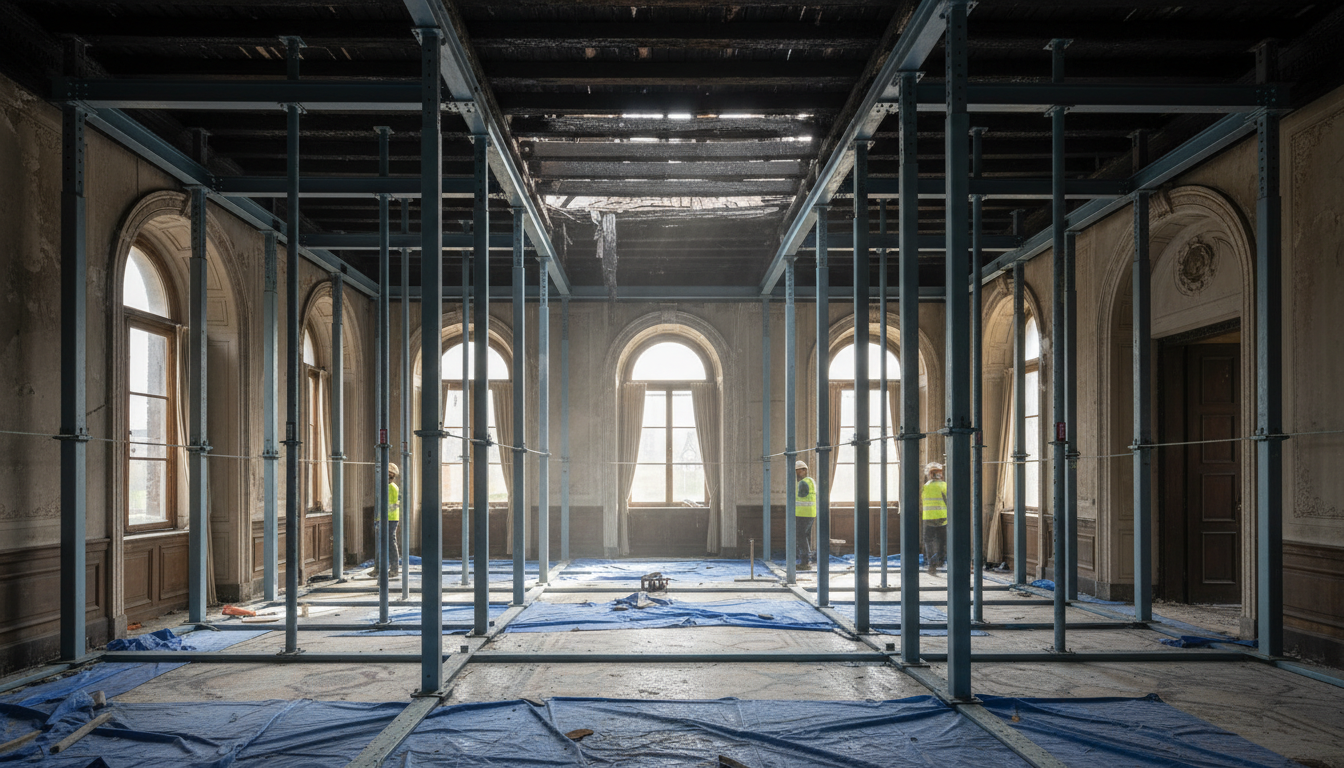
The first rule of high-end estate recovery is absolute: Never enter a compromised structure without professional shoring. Traditional restoration companies often focus on “mitigation” in the sense of drying carpets or cleaning soot. While important, these tasks are secondary. A builder-led team prioritizes the installation of temporary structural supports. This ensures that insurance adjusters, forensic architects, and your family can eventually move through the space without the risk of a floor joist failure or a roof cave-in.
During these initial hours, our team conducts a rapid structural assessment. We look for “tell-tale” signs of imminent failure: bowing of exterior masonry, deflection in the ridgeline of the roof, and hairline fractures in the foundation. By identifying these “load-path interruptions,” we can deploy targeted shoring systems that transfer the weight of the building safely to the ground, bypassing the damaged sections.
Technical Methods of Structural Stabilization
Stabilization is not a “one-size-fits-all” endeavor. It requires a bespoke engineering plan tailored to the specific architectural nuances of your estate. Whether your home features heavy timber framing, reinforced concrete, or intricate masonry, the methods used must respect the original engineering while providing temporary “muscle.”
1. Shoring and Vertical Support
When a fire guts a lower-level room, the floor above becomes a suspended hazard. We utilize heavy-duty hydraulic jacks and adjustable steel shores (often called “Post Shores”) to create a temporary skeleton. In cases of severe damage, we construct “cribbing”—interlocking timber stacks that provide massive load-bearing capacity—to support sagging rooflines or second-story balconies. This is essential for protecting the custom millwork and high-value interiors located on the upper levels.
2. Lateral Bracing and Wall Stabilization
Minnesota storms can exert incredible lateral (sideways) pressure on a home. If a storm has compromised the “diaphragm” of the house (the roof and floors that hold the walls together), the walls can begin to lean or “out-of-plumb.” We employ steel bracing and “X-bracing” techniques to lock the vertical planes of the house in place. This prevents the “domino effect,” where the failure of one wall leads to the total collapse of the surrounding structure.
3. Foundation Underpinning and Stabilization
Water is the silent enemy of architectural integrity. Heavy rains or broken water mains can wash away the soil supporting your foundation, leading to “settlement” or shifting. We utilize various underpinning methods, such as helical piers or push piers, to reach stable strata of earth and “jack” the foundation back to its original elevation. This process is delicate and requires precision to avoid cracking the very masonry we are trying to save.
| Damage Type | Stabilization Method | Goal |
|---|---|---|
| Roof Collapse / Heavy Snow Load | Temporary Shoring (Steel/Timber) | Interior Safety & Protection of Lower Levels |
| Foundation Shift / Soil Erosion | Underpinning & Piering | Leveling and Permanent Support |
| Wall Bowing / Wind Shear | Steel Lateral Bracing | Prevent Total Loss of Vertical Planes |
| Floor Joist Charring (Fire) | Sistering & Support Posts | Restoring Load-Bearing Capacity for Reconstruction |
The Builder-Led Advantage: Why Expertise Matters
There is a fundamental difference between a restoration cleaner and a restoration builder. A builder understands the “load path”—the continuous route that transfers weight from the roof, through the walls, to the foundation. When that path is broken by fire or wind, a builder knows how to redirect those forces.
Our “Builder-Led” safety protocols are designed for the complexities of storm damage and fire recovery in high-value estates. We don’t just react; we engineer. By involving structural experts early in the process, we can often save architectural elements that a standard adjuster might deem “total losses.” This preservation of the original fabric of the home is vital for maintaining the estate’s historical and market value.
Long-Term Impact: The Foundation for Reconstruction
Structural stabilization is the first phase of what we call architectural reconstruction. By stabilizing the structure correctly, we create a “clean slate” for the design team. It allows us to perform “surgical demolition”—removing only what is damaged while keeping the stable, original elements of the home intact.
Our internal data from over a decade of estate restoration shows that homes stabilized within the first 72 hours of an event have a a substantial portion lower rate of “latent defects” (such as cracking drywall or sticking doors) two years post-reconstruction. Stabilization isn’t just about safety today; it’s about the “Better-Than-Before” quality of your home tomorrow. It ensures that when the final finishes are applied, they are resting on a foundation that is as true and level as the day the home was first built—if not better.
Frequently Asked Questions
Is stabilization permanent?
Usually no. Stabilization is a critical temporary step designed to arrest movement and allow safe access for permanent reconstruction. While some methods, like foundation underpinning, may be permanent, most shoring and bracing are removed once the permanent architectural reconstruction is complete.
How quickly can a stabilization team arrive?
In the Twin Cities and greater MN area, we prioritize emergency structural assessments. Our goal is to have a lead builder on-site to evaluate the load-bearing integrity of your estate within hours of the initial call.
Will stabilization damage my home further?
Professional shoring is designed to be non-invasive where possible. We use protective padding and strategic placement to ensure that the stabilization equipment does not mar custom floors or historic finishes while it provides the necessary support.
Your estate is an investment in your family’s future and a testament to architectural excellence. Do not leave its structural fate to chance. Secure the integrity of your home with the precision and expertise that only a builder-led restoration team can provide.
Secure Your Estate’s Integrity Today
If your property has suffered from fire, heavy snow, or storm damage, contact us immediately for a professional evaluation.
Leave A Comment