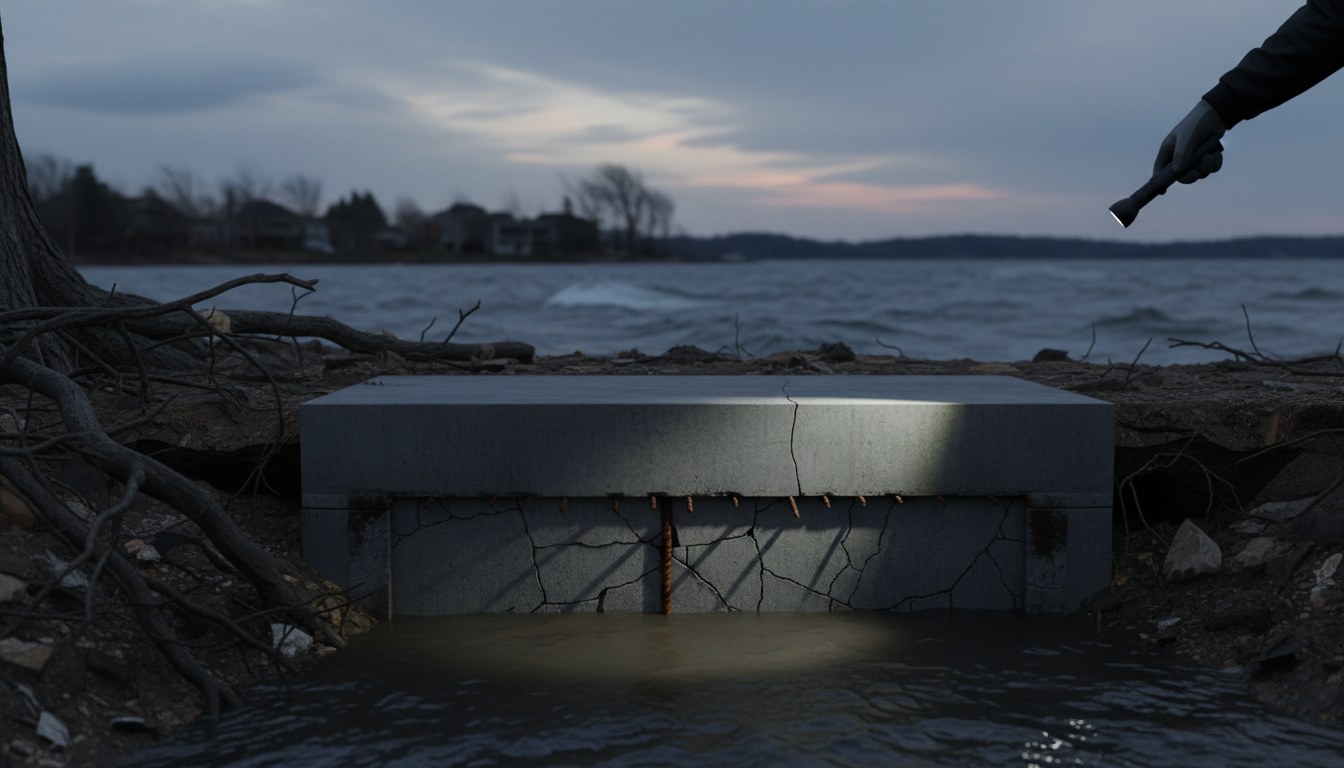
For the discerning homeowners of the West Metro—those who have curated estates in the wooded enclaves of Medina, the lakeshore of Orono, and the historic avenues of Wayzata—a residence is more than a shelter; it is a legacy asset. However, the geographic beauty of the Lake Minnetonka region carries a silent, geological risk. The severe weather patterns that sweep across the water bring more than just fallen limbs and surface-level debris; they introduce profound stressors to the very earth upon which these architectural masterpieces sit.
Following a significant Minnetonka storm, the immediate focus is often on roofing and aesthetics. Yet, the most catastrophic damage often occurs out of sight. A Structural Integrity Audit is not a mere inspection; it is a forensic deep-dive into the health of your foundation, designed to identify the subtle shifts that precede structural failure.
The Silent Mechanics of Foundation Stress
The geology of the West Metro is characterized by complex glacial till and clay-heavy soils. When a severe storm hits, the rapid influx of moisture leads to two primary phenomena: soil saturation and increased hydrostatic pressure. For a large-scale estate, these forces can exert thousands of pounds of lateral pressure against foundation walls.
As the soil expands and subsequently shrinks during the drying process, “differential settlement” can occur. This is rarely uniform. One corner of a Wayzata manor may settle while the rest remains stable, leading to torsional strain on the building’s frame. Structural repair after storm damage is often the result of ignoring these micro-shifts until they manifest as visible, high-cost failures.
Identifying the “Whispers” of Structural Failure
To the untrained eye, a home may appear resilient after a storm. However, high-net-worth properties require a more sophisticated diagnostic approach. Our forensic auditors look for the “whispers” of damage:
- Frieze Board Separation: Gaps appearing where the exterior trim meets the soffit.
- Stair-Step Cracking: Not all masonry cracks are equal; diagonal cracks following mortar lines in brickwork indicate significant footing movement.
- Window and Door Realignment: Even a millimeter of frame deflection can cause high-end custom millwork to stick or fail to latch properly.
- Hydrostatic Floor Heaving: Subtle undulations in basement flooring or lower-level wine cellars often signal upward pressure from a rising water table.
Comparative Damage Assessment
Understanding the severity of storm-related structural issues is critical for prioritizing remediation. The following table outlines common observations during our forensic audits.
| Symptom | Potential Root Cause | Risk Level | Recommended Action |
|---|---|---|---|
| Hairline vertical cracks | Natural concrete curing or minor settling | Low | Monitor and seal |
| Horizontal foundation cracks | Severe hydrostatic pressure/Soil expansion | High | Immediate structural reinforcement |
| Foundation “wall tipping” | Lateral load failure after saturation | Critical | Helical piering or wall anchors |
| Gaps in interior crown molding | Upper-frame deflection due to base shift | Moderate | Full structural integrity audit |
The Forensic Audit: Beyond the Surface
A standard home inspection is insufficient for the complex engineering of Medina or Orono estates. Our Structural Integrity Audit utilizes advanced technology to assess the “deep tissue” of the building. This includes laser leveling to detect minute floor slope variances, moisture probes to assess soil saturation levels around footings, and borescope cameras to inspect voids created by soil washout.
By identifying these issues early, homeowners can move from reactive repairs to proactive preservation. Structural repair after storm damage doesn’t always mean massive excavation; often, modern carbon fiber reinforcement or polyurethane injection can stabilize a home if the damage is caught in its nascent stages.
Key Takeaways for West Metro Homeowners
- Soil Composition Matters: The clay soils around Lake Minnetonka are particularly prone to expansion and contraction.
- Water Management is Structural Management: Faulty gutter systems on large rooflines can dump thousands of gallons of water directly onto foundation footings during a storm.
- Early Detection Saves Assets: A forensic audit costs a fraction of the price of a total foundation replacement or structural shoring.
- Professional Documentation: A certified audit provides necessary documentation for insurance claims and future property disclosures.
Expert Perspectives
About the Author
Erik V. Magnuson, P.E. is a Senior Forensic Engineer specializing in high-value residential structures in the Twin Cities. With over 20 years of experience in geotechnical engineering and structural forensic analysis, Erik has consulted on some of the most complex residential builds in Wayzata and Orono. He is a member of the American Society of Civil Engineers (ASCE) and is a frequent contributor to regional architectural preservation forums.
Frequently Asked Questions
How soon after a storm should I book an audit?
Ideally, an audit should be conducted within 14 to 30 days of a major weather event. This allows the soil to undergo its initial drying cycle, which is when the most significant settlement shifts typically occur.
Will my insurance cover structural repair after storm damage?
Coverage depends on the specific cause of the damage (e.g., hydrostatic pressure vs. flood vs. earth movement). A forensic audit provides the empirical evidence required by insurance adjusters to differentiate between pre-existing conditions and storm-induced failure.
Are modern homes in Medina or Orono less at risk?
While modern builds follow stricter codes, the sheer scale and weight of these homes can actually make them more susceptible to differential settlement if the soil preparation was not perfectly calibrated for the region’s high water table.
For more information on preserving your estate’s longevity, visit our Structural Services Hub or read our guide on Geotechnical Assessments in Hennepin County.
Leave A Comment