
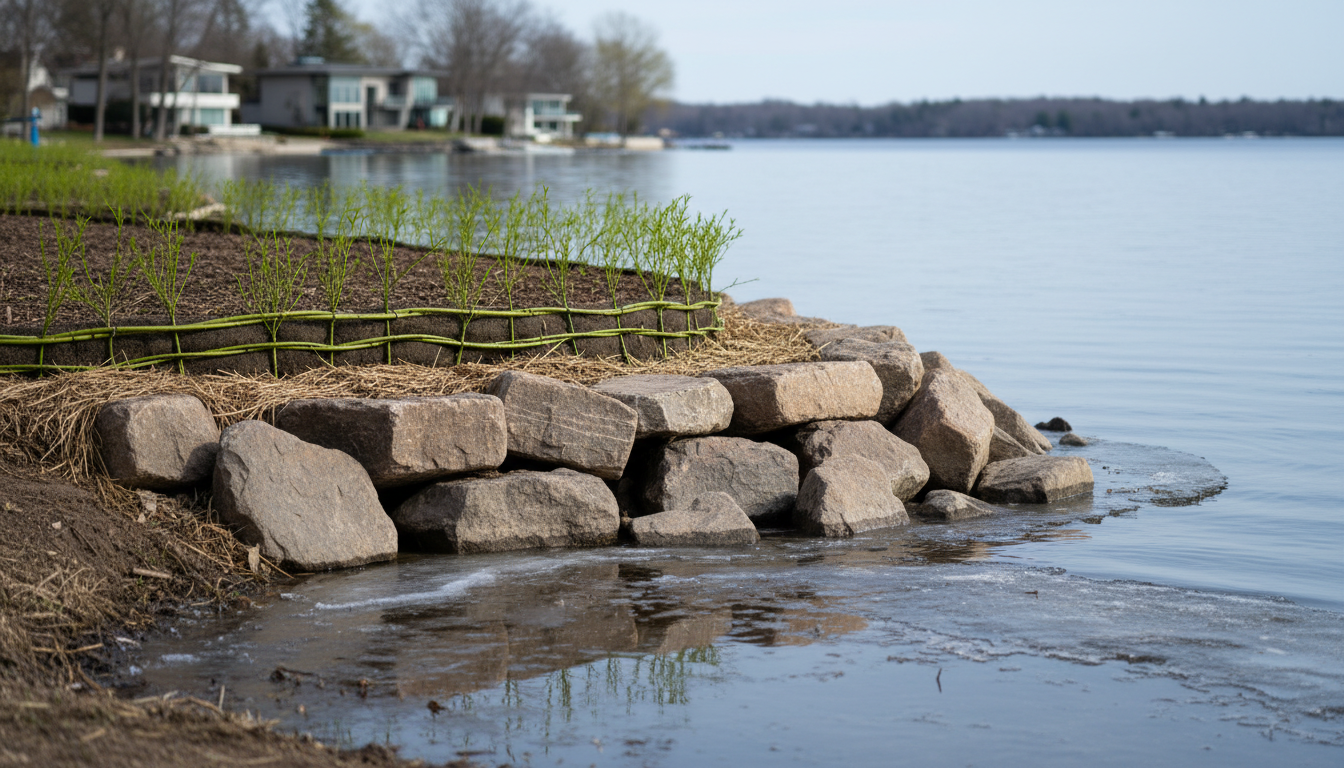
Spring Thaw and Shoreline Stability: Lessons for Lake Minnetonka Homeowners
As the sun begins to hold its warmth over the bays of Lake Minnetonka, those of us who call these shores home feel a familiar sense of renewal. From the quiet reaches of Halsted’s Bay to the bustling docks of Wayzata, the transition from winter’s grip to spring’s embrace is a spectacle of nature. However, for the discerning estate owner, this season of beauty also brings a period of profound vulnerability. The “spring thaw” is more than a change in temperature; it is a complex geological and hydrological event that tests the very foundation of our properties.
As a builder and shoreland specialist who has walked these banks for decades, I approach the spring with a mix of reverence and caution. I have seen the devastating power of “ice heave” buckle reinforced sea walls and watched as uncontrolled runoff carved deep scars into manicured lawns. Understanding Lake Minnetonka shoreline erosion restoration is not merely about aesthetics—it is about the stewardship of your legacy and the preservation of the lake’s health for generations to come.
The Seasonal Risks: When the Earth Breathes Again
The spring transition on Lake Minnetonka is uniquely aggressive. Historically, ice-out dates on the lake have varied wildly, from as early as March 11th in 2012 to as late as May 5th in 2013. This unpredictability means our shorelines must be prepared for a range of thermal stresses. When the ice begins to break up, wind-driven sheets—some nearly two feet thick—can act like a slow-motion bulldozer, a phenomenon known as ice heave. This force can displace massive boulders and compromise structural elements that seemed immovable in December.
Simultaneously, the ground beneath our feet is undergoing a radical shift. As the frost line recedes, the soil becomes hyper-saturated. When the surface thaws but the deeper layers remain frozen, water has nowhere to go. This creates hydrostatic pressure that can lead to basement seepage and foundation shifts. For those with significant elevation, such as properties overlooking the Wayzata Shoreline, this saturation can even lead to slope failure.
To help visualize these risks, consider the following table of spring risks and their corresponding mitigation strategies:
| Spring Risk | Mitigation | Goal |
|---|---|---|
| Soil Saturation | French drains / Sump pumps | Prevent basement seepage |
| Ice Heave | Riprap repair / Bioengineering | Stabilize shoreline |
| Runoff | Rain gardens / Buffers | Protect water quality |
Stabilization Techniques: Merging Architecture with Ecology
In the past, the standard response to erosion was “hard armoring”—the installation of rigid sea walls or heavy riprap. While these methods have their place, modern shoreline restoration has evolved. We now understand that shoreline protection is a multi-year investment that requires a more nuanced approach. At Partners Restoration, we advocate for a philosophy where the shoreline is treated as a living system rather than a static barrier.
The Power of Bioengineering
Modern bioengineering often outperforms traditional riprap for long-term stability. By using a combination of “soft” materials—such as coir logs (dense rolls of coconut fiber) and deep-rooted native vegetation—we create a shoreline that absorbs the energy of the waves rather than fighting against them. These systems actually grow stronger over time as root systems intertwine with the soil, creating a subterranean net that holds the bank together. For an estate owner, this provides a softer, more natural aesthetic that blends seamlessly into the landscape while providing superior protection against the seasonal thaw.
Managing Hydrostatic Pressure
Stability isn’t just about what happens at the water’s edge; it’s about how water moves across your entire property. If your estate is seeing increased moisture in the lower levels during the thaw, you are likely dealing with water damage caused by poor drainage. We implement sophisticated drainage solutions, including French drains and strategically placed rain gardens, to redirect runoff away from your foundation and toward areas where it can be naturally filtered before reaching the lake. This not only protects your home’s structural integrity but also prevents nutrient-rich runoff from fueling algae blooms in the bay.
Regulatory Rules: Navigating the MCWD Landscape
One of the most daunting aspects of Lake Minnetonka shoreline erosion restoration is the regulatory environment. The Minnehaha Creek Watershed District (MCWD) maintains strict standards for any work performed along the shoreline. These rules are not meant to be a hindrance; rather, they are designed to ensure that every modification contributes to the long-term health of the watershed.
As specialists in MCWD compliance, we understand that permitting is an architectural necessity. Whether you are repairing a riprap wall or installing a new buffer zone, the project must meet specific criteria regarding slope, material types, and vegetation density. For example, the MCWD often requires a “buffer strip” of native plants to be maintained along the shore. This isn’t just for wildlife; these buffers act as the last line of defense, filtering pollutants and stabilizing the soil where the water meets the land.
Working with a builder who understands these nuances is critical. We don’t just see a permit; we see a blueprint for a resilient shoreline. Our expertise allows us to design solutions that satisfy the most stringent environmental regulations while still achieving the high-end, polished look that Lake Minnetonka estates demand.
The Responsibility of Shoreline Stewardship
Owning a home on Lake Minnetonka is a privilege that comes with a unique set of responsibilities. We are the gatekeepers of this water. When we choose to invest in proper shoreline stabilization, we are doing more than just protecting our property value; we are participating in a larger effort to keep Minnetonka’s waters clear and its ecosystems vibrant.
The spring thaw is a reminder of the power of nature. It humbles us and challenges our structures. But with the right approach—one that combines engineering precision with environmental consciousness—we can turn these challenges into opportunities for improvement. A well-restored shoreline is a masterpiece of functional art, providing a sanctuary for your family and a stable foundation for your estate’s future.
Frequently Asked Questions
- What is ice heave?
It is the movement of ice against a shoreline during the thaw, which can cause significant structural damage to sea walls and displace large rocks. It is caused by the expansion and contraction of the ice sheet as temperatures fluctuate. - Is bioengineering as strong as stone?
In many cases, yes. While stone (riprap) provides immediate physical protection, bioengineering creates a living, self-healing barrier. As the native plants mature, their roots provide deep soil stabilization that stone alone cannot offer. - Do I need a permit for minor shoreline repairs?
Generally, any work done below the Ordinary High Water Level (OHWL) or within the shoreland zone requires a permit from the MCWD and potentially the DNR. It is always best to consult with a specialist before beginning work.
At Partners Restoration, we specialize in the delicate balance of lakefront living. From managing the complexities of the spring thaw to ensuring your estate meets the highest standards of MCWD compliance, we are here to guide you through every season.
Secure Your Estate Today
Don’t wait for the ice to move. Ensure your shoreline is resilient enough to handle the pressures of spring. Contact us today for a professional evaluation of your property’s stability.
Leave A Comment