Preserving the “Tonka Life”: A Guide to Shoreline Stabilization and Restoration on Lake Minnetonka
Living on Lake Minnetonka isn’t just about owning a piece of real estate; it’s about a lifestyle. Whether you are watching the sunset over Wayzata Bay, navigating the channels of the Upper Lake, or anchoring near Big Island, the water is the heart of our community. However, as any long-term resident knows, the very water we love is also a powerful force of nature. Over time, heavy boat traffic, ice heaves, and seasonal runoff can eat away at our property, causing significant erosion that threatens both the aesthetic beauty and the financial value of our homes.
For those of us who call this lake home, Lake Minnetonka shoreline restoration is more than a landscaping project—it is a necessary investment in stewardship. Protecting our shoreline ensures that the lake remains healthy for the next generation while securing the structural integrity of our docks, lawns, and lakeside structures.
Why Shoreline Erosion is a Growing Concern
Lake Minnetonka is one of the most heavily used lakes in Minnesota. While the “Tonka life” is vibrant, the increased frequency of large wakes from wakeboarding and high-performance boats creates constant energy that hits our banks. Coupled with the natural phenomenon of “ice jacking”—where the expanding ice sheet pushes against the shore during the winter—our shorelines are under constant siege.
Left unchecked, erosion does more than just shrink your backyard. It introduces excess phosphorus and sediment into the water, fueling algae blooms and degrading the water clarity we all enjoy. Effective stabilization stops this cycle, turning a crumbling bank into a resilient, beautiful transition between land and water.
The MCWD Factor: Navigating Regulations
On Lake Minnetonka, you cannot simply dump a truckload of rocks into the water and call it a day. The Minnehaha Creek Watershed District (MCWD) has strict regulations in place to ensure that any shoreline work protects the ecological health of the basin. These rules, specifically “Rule B: Shoreline and Streambank Stabilization,” prioritize biological methods (like native plantings) over purely structural ones (like vertical retaining walls).
Successful Lake Minnetonka shoreline restoration requires a design that is “MCWD-compliant.” This typically means incorporating a buffer zone of native vegetation that filters runoff and provides habitat, even if you are also using structural elements like riprap. Navigating these permits can be complex, which is why working with a local specialist who understands the District’s nuances is essential for a smooth project approval.
Restoration Methods: Finding the Right Fit
There is no one-size-fits-all solution for a lake as diverse as Minnetonka. A quiet bay requires a different approach than a high-energy point exposed to the wind. Generally, we look at three main tiers of stabilization:
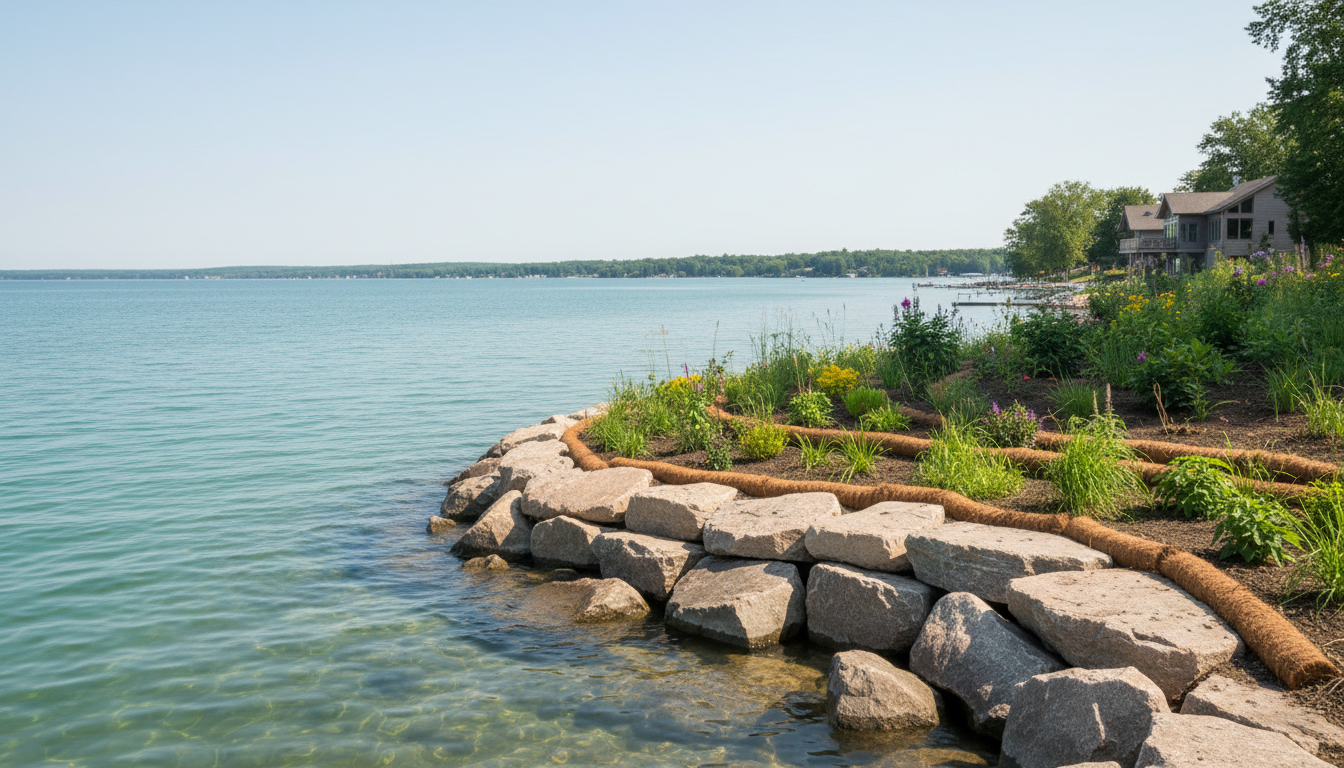
- Natural Buffers & Bioengineering: Ideal for lower-energy areas. This involves using “coir logs” (coconut fiber) and deep-rooted native plants like Blue Flag Iris or Swamp Milkweed to knit the soil together.
- Riprap Stabilization: The gold standard for high-energy shorelines. This involves placing a layer of fieldstone or limestone over a geotextile fabric. It breaks the energy of incoming waves and prevents the soil beneath from washing away.
- Integrated Solutions: Most modern restorations use a combination of both. We might use riprap at the water’s edge to handle the waves, topped with a lush, native buffer that provides a beautiful, “up-north” aesthetic.
Comparing Shoreline Stabilization Methods
To help you decide which approach fits your property and budget, we have outlined the most common methods used on Lake Minnetonka below:
| Method | Energy Level | Maintenance Level | Ecological Impact | Average Longevity |
|---|---|---|---|---|
| Native Buffer Strips | Low | Moderate (Weeding) | High Benefit | Permanent (Self-Sustaining) |
| Bioengineering (Coir Logs) | Low to Moderate | Low | High Benefit | 10-15 Years |
| Riprap (Fieldstone) | High | Low | Moderate Benefit | 30+ Years |
| Integrated Riprap & Buffer | Moderate to High | Moderate | High Benefit | 30+ Years |
The Process: From Assessment to Installation
Restoring a shoreline is a multi-step process that begins long before the first stone is placed. As residents, we want the work done right the first time to avoid the cost of repairs a few years down the line.
1. Site Assessment
We analyze the slope, the soil type, and the “fetch”—the distance the wind travels over the water before it hits your shore. This determines the size of the rock needed or the type of plants that will survive.
2. Design and Permitting
We create a plan that meets your aesthetic goals while satisfying the MCWD and the DNR (Department of Natural Resources). This includes cross-section drawings and plant lists that prove the project will improve, rather than harm, the lake’s ecosystem.
3. Construction
Timing is everything. Most restoration work is done during “drawdown” periods or late fall/winter to minimize disruption to the lake bed and avoid the spawning seasons of local fish. Professional installers use low-impact equipment to ensure your lawn isn’t destroyed in the process.
4. Establishing the Buffer
Once the structure is in place, the “restoration” part begins. Planting native species ensures that your shoreline isn’t just a pile of rocks, but a living, breathing part of the Lake Minnetonka landscape.
Frequently Asked Questions
Does the MCWD allow retaining walls?
Generally, no. The MCWD and the DNR strongly discourage vertical walls because they reflect wave energy back into the lake, scouring the lake bottom and harming neighbors’ shorelines. Permits for new walls are rarely granted unless there is a severe structural necessity that cannot be solved with riprap or bioengineering.
How much does Lake Minnetonka shoreline restoration cost?
Costs vary based on the length of the shoreline and the method chosen. A simple native planting may cost a meaningful amount-a meaningful amountper linear foot, while a full riprap installation with professional grading and permitting can range from a meaningful amountto over a meaningful amountper linear foot. However, considering that erosion can cost you feet of land every year, the ROI on property value alone is significant.
Will native plants block my view of the lake?
Not necessarily. We use a variety of “low-grow” native species that stay under 2-3 feet in height. This allows you to maintain your panoramic views of the water while still enjoying the stabilization benefits of deep-rooted plants.
The Importance of a Professional Approach
As Lake Minnetonka residents, we are the guardians of this water. A crumbling shoreline isn’t just an eyesore; it’s a liability. By choosing a restoration path that combines structural strength with ecological sensitivity, we protect our investments and ensure that the lake remains a pristine destination for our families to enjoy for decades to come.
If you have noticed your lawn receding, or if the ice this past winter has pushed your current shoreline out of place, now is the time to act before the next season of heavy boat traffic begins.
Ready to Protect Your Property?
Don’t let erosion wash away your investment. Contact our local experts today for a comprehensive site evaluation and permit-ready design.
Leave A Comment