
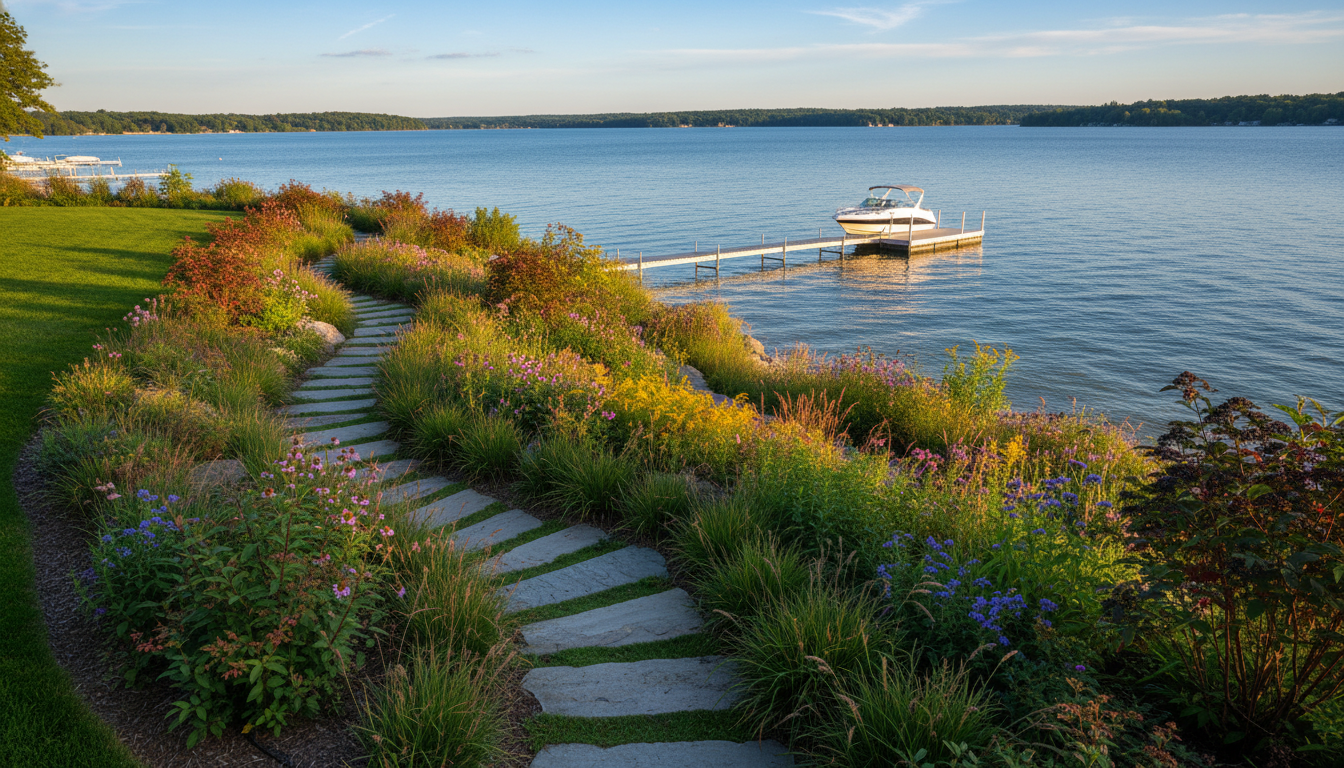
Shoreline Buffer Compliance: Native Landscaping for Lake Minnetonka Estates
For the discerning estate owner on Lake Minnetonka, the shoreline is more than a boundary; it is a legacy. Whether your property graces the quiet bays of Orono or the prestigious coastlines of Wayzata, the transition where the manicured lawn meets the water’s edge is a focal point of both aesthetic beauty and environmental responsibility. However, navigating the intersection of luxury landscaping and stringent environmental mandates requires a sophisticated touch.
The Lake Minnetonka shoreline buffer rules, governed primarily by the Minnehaha Creek Watershed District (MCWD), are often viewed by property owners as a regulatory hurdle. Yet, when approached with an artisan’s eye and a specialist’s technical knowledge, these requirements offer an opportunity to enhance the architectural integrity of your estate. A compliant native buffer is not a wild, unkempt thicket; rather, it is a curated, deep-rooted filtration system that protects your shoreline from erosion while anchoring your property’s value in the local ecosystem.
The Regulation: Navigating MCWD Mandates with Precision
Compliance begins with understanding the triggers. In the Lake Minnetonka area, any significant shoreline stabilization project—whether you are repairing a crumbling rip-rap wall or installing a new permanent dock structure—typically necessitates the implementation of a native buffer. The MCWD views these buffers as the “last line of defense” for the lake’s water quality, protecting the basin from the nutrient loading that fuels algae blooms.
The complexity of these rules lies in the specific dimensions and vegetative requirements. Unlike standard municipal zoning, watershed requirements focus on the biological function of the plants. To ensure your estate remains in good standing, it is essential to adhere to the following zonal requirements established by regional authorities:
| Buffer Zone | Mandatory Width | Allowed Vegetation |
|---|---|---|
| Zone 1 (Lakeside) | 15-25 feet (depending on slope) | the full scope Native species; deep-rooted perennials, sedges, and shrubs. |
| Zone 2 (Upland) | Variable / Transition Zone | Managed turf, ornamental beds, and curated estate gardens. |
Failure to comply with these widths during a restoration project can lead to permit denials or required retrofitting. Mastery of MCWD Permit Requirements is the first step in a seamless landscape transition. By integrating these rules into the initial design phase, we ensure that the “regulatory” aspect of the project is invisible, leaving behind only a breathtaking, functional landscape.
The Ecological Science: Invisible Engineering Below the Surface
Why are native plants mandated over the traditional Kentucky Bluegrass that characterizes many upland lawns? The answer lies in the architecture of the roots. While turf grass roots extend a mere two to three inches into the soil, native species such as Asclepias incarnata (Swamp Milkweed) or Panicum virgatum (Switchgrass) can reach depths of ten to fifteen feet.
This deep-rooting behavior provides two critical benefits for the Lake Minnetonka estate:
- Structural Stabilization: These roots act as biological rebar, knitting the soil together and preventing the “slumping” of banks often seen after heavy spring rains or high-wake activity.
- Nutrient Filtration: Supporting data indicates that well-designed shoreline buffers can trap up to a large majority of suspended solids and a significant portion of phosphorus in storm runoff. By filtering these pollutants before they reach the lake, your buffer directly contributes to the clarity and health of the water surrounding your private dock.
When we design a buffer, we are not just planting flowers; we are installing a living filtration system. This is “invisible engineering”—a sophisticated method of protecting your real estate investment from the ravages of erosion while fulfilling your role as a steward of the lake.
Design Integration: Merging Compliance with Artisan Aesthetics
The most common concern for estate owners in Wayzata and Orono is the fear that a native buffer will look “messy” or obstruct the panoramic views of the water. This is where the artisan approach diverges from standard restoration. A high-end buffer should feel like a deliberate garden, not an abandoned field.
Curated Native Palettes
Instead of tall, obscuring grasses, we utilize low-growth native sedges and vibrant wildflowers that maintain a clean “sightline” to the horizon. Species like Carex pensylvanica provide a lush, lawn-like appearance but with the ecological benefits of native roots. By layering heights and colors—perhaps the deep purples of Liatris against the soft greens of native ferns—we create a tapestry that complements the formal architecture of your home.
The Art of the Path
Access to the water is paramount. Shoreline buffer rules allow for the inclusion of access paths, provided they are managed correctly within the permit. We specialize in integrating stepping stones or timber-framed pathways that meander through the buffer. This allows you to move from your upland patio to your boat lift without disturbing the integrity of the restoration. This seamless flow is a hallmark of Shoreline Restoration in Wayzata, where luxury and ecology coexist.
Blending with Ornamental Gardens
The transition between the mandated native buffer (Zone 1) and your formal estate gardens (Zone 2) should be imperceptible. We achieve this by using “bridge species”—plants that are native but possess the refined appearance of traditional ornamentals. This ensures that the buffer looks like a planned extension of your landscaping rather than a government-mandated afterthought.
Frequently Asked Questions
Will a native buffer block my view of Lake Minnetonka?
Not if designed correctly. We prioritize low-growth native sedges, short-stature grasses, and mid-height flowering perennials. This preserves your panoramic vistas while meeting the root-depth requirements mandated by the MCWD.
Can I use stepping stones or a path to get to my dock?
Yes. Pathways and lake access points are permitted within the buffer zone. However, these must be specifically detailed in your MCWD permit application to ensure the total “disturbed area” remains within allowable limits. We handle the design and permitting of these pathways to ensure they are both beautiful and compliant.
How long does it take for a buffer to look “finished”?
Native plants typically follow the “Sleep, Creep, Leap” cycle. In the first year, they establish roots; in the second, they begin to fill in; and by the third year, the buffer is a lush, self-sustaining feature. We often use native “plugs” rather than seeds to give our clients a more immediate aesthetic result.
Conclusion: The Future of Lakeside Stewardship
As Lake Minnetonka continues to face pressures from development and climate variability, the role of the shoreline buffer becomes increasingly vital. For the estate owner, compliance is no longer just about following the law—it is about preserving the very asset that makes lakeside living so desirable. By choosing a partner who understands the nuance of native landscaping, you ensure that your property remains a beacon of sophisticated design and environmental integrity.
Whether you are in the early stages of a new build or looking to restore a historic shoreline, the integration of a compliant, artisan-designed buffer is the definitive choice for the modern Lake Minnetonka estate.
Ready to Transform Your Shoreline?
Ensure your estate meets all MCWD standards while enhancing its natural beauty. Our team of landscape architects and watershed specialists is ready to design your bespoke restoration plan.
Leave A Comment