
Restoring Historic Wayzata: Specialized Structural Repair
As a steward of a historic property in Wayzata, I’ve often stood on my porch looking out toward Lake Minnetonka, feeling the weight of the decades beneath my feet. Owning a piece of Wayzata’s architectural history—whether it’s a Victorian overlooking the water or a craftsman cottage near the Depot—is more than just homeownership; it is a commitment to preservation. However, the passage of time, the shift of coastal soils, and the harsh Minnesota seasons eventually demand more than just a fresh coat of paint. They demand specialized structural intervention.
Wayzata historic home restoration is a delicate dance between honoring the past and securing the future. When a floor begins to slope or a foundation crack appears, it isn’t just a repair job; it is a surgical procedure required to save the integrity of a landmark. This guide explores the nuances of structural repair specifically tailored to the unique landscape of our historic lakeside community.
The Unique Challenges of Wayzata’s Historic Structures
Our corner of the world is beautiful, but it is also geologically and climatically demanding. The historic homes in the Wayzata Depot area and the surrounding heights were built with materials and techniques that, while robust for their time, face specific threats today.
Foundation Stability in Coastal Soils
The proximity to Lake Minnetonka means our soil profiles are often rich in clay and organic matter, leading to significant expansion and contraction. Over a century, this movement can cause historic stone foundations—often held together with lime mortar—to shift. Unlike modern poured concrete, these older foundations are “breathable” but also more susceptible to hydrostatic pressure. Restoring these requires a deep understanding of how to stabilize the perimeter without compromising the original masonry’s ability to manage moisture.
Preserving Timber Frames and Original Masonry
Many of our most treasured homes feature old-growth timber framing. These beams are denser and stronger than anything you’ll find at a modern lumber yard, yet they are vulnerable to “pockets of decay” where moisture has been trapped for decades. Structural repair in these instances isn’t about replacing the beam with a steel I-beam and calling it a day; it’s about sistering joints and reinforcing the skeleton in a way that allows the house to move as it was designed to, while providing the load-bearing support required by modern standards.
Structural Repair vs. Modern Renovation
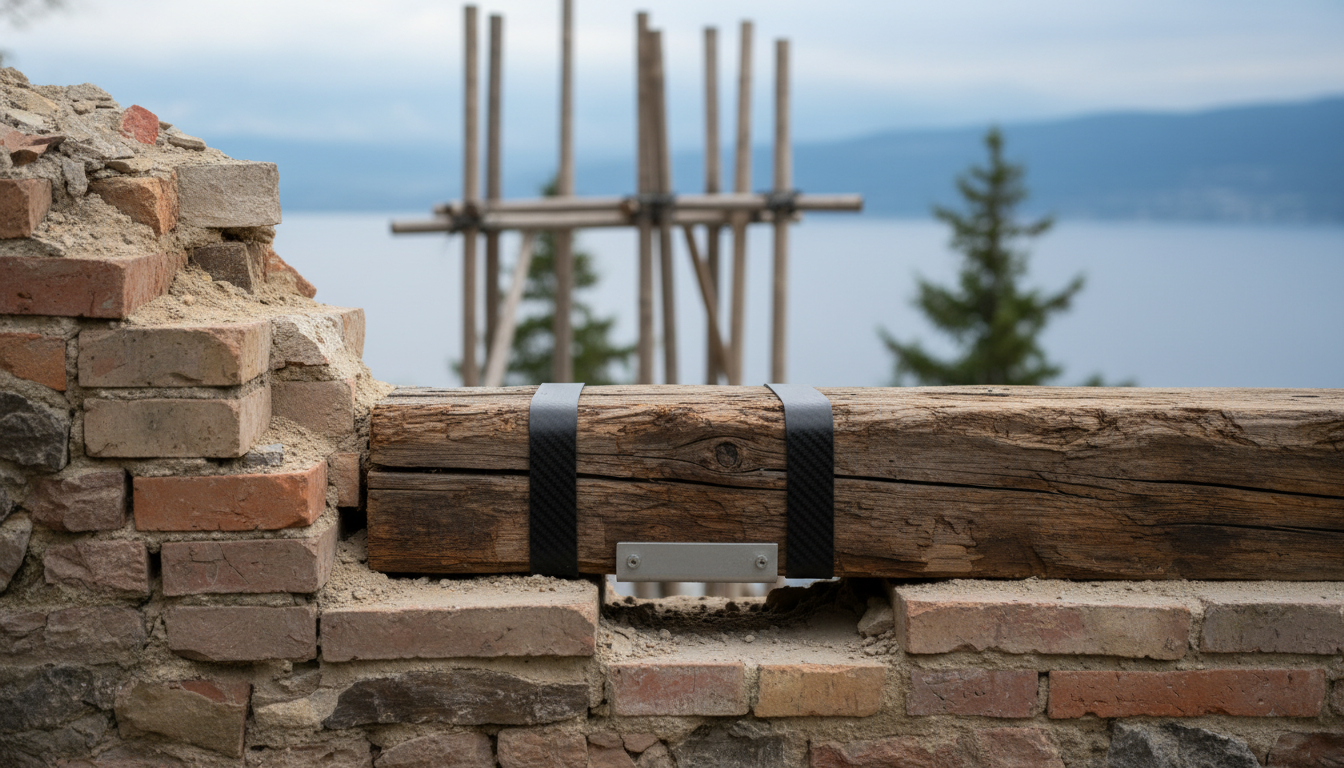
There is a fundamental difference between renovating a home and performing structural restoration. Renovation often seeks to hide the old; restoration seeks to heal it. In Wayzata, where property values are intrinsically tied to historical authenticity, an “invasive” modern repair can actually devalue a home. Specialized structural repair uses “invisible” techniques—such as carbon fiber reinforcement or helical piers—to provide 21st-century strength without altering the aesthetic profile of the 19th-century architecture.
Common Structural Issues in Wayzata Homes
Understanding what you are looking at is the first step toward preservation. Below is a summary of the common structural ailments found in our local historic inventory.
| Issue Type | Common Symptoms | Historic-Appropriate Solution |
|---|---|---|
| Foundation Settlement | Sticking doors, diagonal cracks in plaster, uneven floors. | Helical piering or low-pressure masonry grouting. |
| Timber Rot/Joist Failure | Bouncing floors, sagging ceiling lines in the parlor. | Timber “sistering” or epoxy consolidation. |
| Masonry Spalling | Flaking brick or stone in the basement or chimney. | Repointing with period-accurate lime-based mortar. |
| Roof Spread | Walls leaning outward at the top, visible gaps at the eaves. | Structural tension rods or hidden steel gussets. |
The Process of Respectful Restoration
When you decide to address the structural health of your home, the process must be methodical. We cannot treat a historic Wayzata home like a new build in the suburbs. The “builder’s touch” required here is one of patience and precision.
Phase 1: The Structural Audit
Every restoration should begin with a comprehensive structural audit. This goes beyond a standard home inspection. We look at the original blueprints (if available), the geological survey of the lot, and use non-invasive technology like thermal imaging and laser leveling to map the home’s movement. We need to understand *why* the house is moving before we can tell it to stop.
Phase 2: Shoring and Stabilization
This is often the most nerve-wracking phase for a property owner. To fix the foundation or replace a primary sill plate, the home may need to be shored up. Using hydraulic systems, we carefully distribute the weight of the house onto temporary supports. In a historic context, this must be done agonizingly slowly—sometimes over several days—to prevent the original plaster and woodwork from cracking under the sudden change in tension.
Phase 3: Integration of Modern Reinforcements
Once the house is stabilized, we integrate the repairs. Our goal is always “minimal intervention.” If we can use high-tensile carbon fiber straps to reinforce a foundation wall instead of tearing it down and rebuilding it, we preserve more of the original fabric of the home. This phase ensures that the home meets modern safety codes and can support modern amenities—like heavy stone countertops or luxury soaking tubs—that the original builders never anticipated.
Frequently Asked Questions
- Does structural repair require city permits in Wayzata? Yes. Because Wayzata values its historic character, most structural work requires permits and, in some cases, review by local heritage boards to ensure the exterior remains unchanged.
- Will these repairs change the “feel” of my old home? Done correctly, no. The goal is to eliminate the “bad” movement (sloping, cracking) while keeping the “soul” of the house intact. You want a home that feels solid, not a home that feels like a New Construction box.
- How long does a typical structural restoration take? Depending on the scope, a structural phase can take anywhere from two weeks to two months. It is the foundation upon which all other aesthetic work (flooring, cabinetry, paint) must sit.
Restoring a historic home in Wayzata is an act of love for the community. By choosing specialized structural repair, you aren’t just fixing a house; you are ensuring that Wayzata’s unique skyline and architectural heritage remain for the next hundred years.
Protect Your Legacy
Is your historic property showing signs of age? Don’t wait for a minor crack to become a major failure. Ensure your home’s structural integrity with a professional evaluation.
Leave A Comment