Navigating MCWD Compliance: Shoreline Stabilization for Lake Minnetonka Properties
Lake Minnetonka represents the pinnacle of Minnesota waterfront living. For property owners, the shoreline is more than just a boundary; it is a significant investment and a foundational element of the home’s aesthetic appeal. However, the dynamic nature of the lake—characterized by powerful ice heaves, high-energy wave action from summer boating, and fluctuating water levels—can lead to rapid erosion. Restoring and protecting your property requires more than just heavy machinery; it requires a deep understanding of the regulatory landscape governed by the Minnehaha Creek Watershed District (MCWD).
Navigating MCWD shoreline stabilization permits is a critical step for any homeowner looking to repair damage or proactively protect their estate. Ensuring compliance not only protects the lake’s water quality but also prevents costly enforcement actions and ensures your shoreline stands the test of time against the elements.
Understanding the Role of the MCWD
The Minnehaha Creek Watershed District (MCWD) is the regulatory body tasked with protecting the water resources within its jurisdiction, which includes the entirety of Lake Minnetonka. Their primary goal is to manage the impacts of development and land use on the environment. When it comes to the shoreline, the MCWD focuses on preventing sediment runoff, preserving natural habitats, and ensuring that stabilization projects do not negatively impact neighboring properties or the lake’s ecological health.
For the Lake Minnetonka homeowner, this means that any significant modification to the bank—whether it involves adding riprap, installing a retaining wall, or planting native vegetation—requires a formal permit and a design that adheres to specific technical standards.
Why Shoreline Stabilization is Essential for Lake Minnetonka
Erosion is a persistent threat to waterfront estates. Without proper stabilization, a property can lose several inches of land per year, compromising the structural integrity of docks, boathouses, and even the primary residence. There are three main drivers of erosion on Lake Minnetonka:
- Ice Heaving: The expansion and movement of lake ice during the winter can exert immense pressure, pushing soil and rock inland and creating “ice ridges.”
- Wave Action: Both natural wind-driven waves and the high-energy wakes from motorboats constantly batter the shoreline, pulling sediment into the lake.
- Fluctuating Water Levels: Significant rain events can cause the lake to rise, saturating the banks and making them prone to slumping.
The Complexity of MCWD Shoreline Stabilization Permits
Obtaining MCWD shoreline stabilization permits is a process rooted in engineering and environmental science. The District categorizes stabilization into two primary types: biological (bioengineering) and structural (riprap). The MCWD generally prefers bioengineering solutions that use native plants and natural materials, as these provide better habitat and water filtration.
However, many areas of Lake Minnetonka experience high-energy waves where bioengineering alone may not suffice. In these cases, the MCWD allows for structural stabilization, typically using fieldstone riprap. To secure a permit, your project must demonstrate:
- A clear need for stabilization based on documented erosion.
- That the proposed method is the “least impactful” effective solution.
- Compliance with specific slope requirements (generally a 3:1 ratio or flatter).
- Integration of a transition zone with native vegetation to filter runoff.
The Permitting Timeline
For luxury property owners, timing is often of the essence. The permitting process involves a review period where MCWD staff evaluate the site plan, cross-sections, and erosion control measures. Working with a firm that understands the nuances of these applications can reduce the likelihood of “Requests for Information” (RFIs) that can delay a project by weeks or months.
Comparing Stabilization Methods and Requirements
Choosing the right stabilization method depends on your property’s location on the lake and the severity of the erosion. The following table outlines the common approaches and their typical permit considerations.
| Method | Materials Used | Energy Environment | MCWD Permit Complexity |
|---|---|---|---|
| Bioengineering | Native plants, coir logs, willow stakes | Low to Moderate | Low – Highly encouraged by District |
| Riprap | Natural fieldstone, filter fabric | High (Major Bays & Points) | Moderate – Requires specific stone sizing |
| Live Staking | Dormant woody cuttings | Low (Sheltered Channels) | Low – Often part of a larger plan |
| Retaining Walls | Stone, timber, or masonry | Any (Structural) | High – Rarely permitted unless for specific safety needs |
Merging Luxury Design with Regulatory Compliance
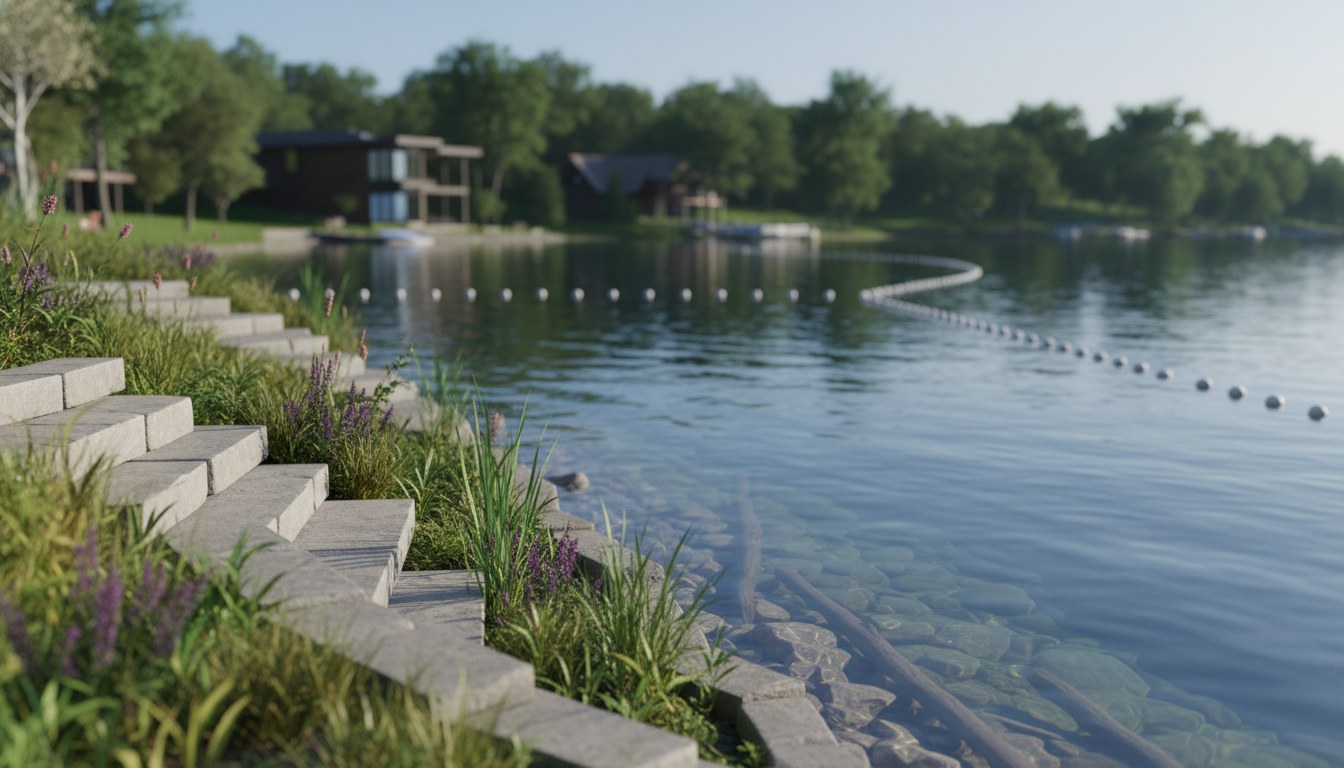
A common concern among Lake Minnetonka residents is that “regulatory compliance” leads to an industrial or “over-engineered” look. This does not have to be the case. High-end shoreline stabilization combines technical engineering with landscape architecture to create a result that is both robust and beautiful.
By using locally sourced fieldstone that matches the natural geology of the area and incorporating professional-grade native plantings, we can create a “soft” shoreline look that satisfies MCWD requirements while enhancing the property’s curb appeal from the water. These naturalistic designs often age more gracefully than rigid structures, as the vegetation roots provide deep reinforcement that stone alone cannot offer.
Frequently Asked Questions
How long does it take to get an MCWD shoreline stabilization permit?
Generally, once a complete application is submitted, the MCWD review process can take between 30 to 60 days. Complex projects or those requiring variances may take longer, which is why early planning in the winter or spring is essential.
Can I repair my existing riprap without a new permit?
Minor maintenance may be exempt, but any significant replacement of stone or changes to the shoreline footprint typically require a permit. It is always best to verify with the District or a consultant before starting work.
Are retaining walls allowed on Lake Minnetonka?
The MCWD strongly discourages the use of vertical retaining walls at the water’s edge because they cause wave reflection, which can erode the lakebed and neighboring shorelines. They are typically only permitted if there is no other viable way to stabilize the bank.
Conclusion: Professional Guidance for Your Waterfront
Maintaining a Lake Minnetonka estate requires a proactive approach to shoreline management. By understanding the importance of MCWD compliance and investing in professional stabilization, you protect your land, your property value, and the health of the lake for generations to come. Our team specializes in navigating the complex permitting landscape and delivering luxury shoreline solutions that meet the highest standards of durability and design.
Secure Your Shoreline Today
Don’t let the complexity of watershed regulations stall your property improvements. Ensure your project is compliant and built to last.
Leave A Comment