HIPAA-Compliant Restoration: Debris Security in Medical Facilities
In the wake of a localized flood, fire, or structural failure within a healthcare environment, the immediate instinct of facility management is often focused on structural stabilization and water extraction. However, for a Medical Compliance Officer, the priority shifts toward a much more volatile risk: the exposure of Protected Health Information (PHI). When walls are torn down and flooring is ripped up, the debris is no longer just construction waste; it is a potential repository for sensitive data. In the state of Minnesota, where healthcare regulations are stringent, failing to secure a site during recovery is not just a logistical error—it is a federal liability.
Professional HIPAA Compliant Restoration MN requires a paradigm shift from traditional construction mindsets. We are no longer dealing with a simple renovation; we are managing a high-stakes security perimeter. Every piece of saturated drywall, every tangled mess of server cables, and every discarded file folder must be treated as a controlled substance. The Department of Health and Human Services (HHS) does not grant leniency for natural disasters. If PHI is discovered in an unsecured dumpster or a public landfill following a restoration project, the resulting fines can bankrupt a practice.
The PHI Risk in Construction: More Than Just Paperwork
The assumption that PHI is limited to paper charts in a filing cabinet is a dangerous misconception that frequently leads to massive security breaches. During a restoration event, PHI can be found in the most unlikely places. Consider the “splatter” of data: a burst pipe in a billing office can wash physical records into the wall cavities. When restoration crews arrive to perform “demolition and out-take,” those records become embedded in the wet construction debris. Without a HIPAA Compliant Restoration MN specialist, those records are tossed into an open-top roll-off dumpster, visible to any passerby.
Furthermore, digital PHI is often housed in hardware that is easily overlooked during a crisis. Damaged hard drives, discarded thumb drives, or even the internal memory of a smart medical device can be inadvertently discarded during the “muck-out” phase. The “Security Rule” of HIPAA requires physical safeguards for all systems containing PHI. This includes the disposal phase. If your restoration contractor is not auditing the debris for electronic media, your facility is in direct violation of federal law.
Finally, we must consider acoustic and visual privacy. During a restoration, the removal of sound-dampening insulation and the installation of temporary barriers can create “leakage” of verbal PHI. If a contractor is working in Wing A while patients are being treated in Wing B, the lack of professional-grade, sound-attenuating containment can lead to incidental disclosures. This is why specialized medical restoration is a prerequisite for any clinical environment.
Containment Protocols: Why Opaque Barriers are Mandatory
In a standard commercial restoration, clear poly-sheeting is used to prevent the spread of dust. In a healthcare environment, clear plastic is a liability. Our protocols for HIPAA Compliant Restoration MN dictate the use of reinforced, opaque fire-rated polyethylene or temporary hard-wall systems. The reasoning is simple: visual privacy is a component of patient dignity and data security. If a technician is working on a saturated ceiling in a diagnostic imaging suite, any patient or unauthorized staff member walking past should not be able to see the equipment or the work area.
Beyond visual containment, we implement rigorous “Red Zone” access controls. Every individual entering the restoration site must be logged, and their presence must be justified by the scope of work. This mimics the “Minimum Necessary” standard of HIPAA—only those who absolutely need to be in the space should be granted access. We utilize HEPA-filtered negative air machines not just for mold spores, but to ensure that the air—and the information—remains contained within the designated work zone.
Hard-Wall Containment vs. Soft-Wall Containment
- Hard-Wall (Polycarbonate or PVC): Best for long-term projects and high-traffic areas. These provide superior sound dampening and can be locked to prevent unauthorized entry.
- Soft-Wall (Opaque Poly): Best for rapid response and short-term isolation. While faster to deploy, they must be monitored closely to ensure the seal remains intact.
Chain of Custody for Debris: From Site to Incinerator
The most critical failure point in medical restoration is the transition of debris from the facility to the disposal site. General contractors often sub-contract hauling to third-party waste management firms who have no training in PHI handling. This creates a “black hole” in your documentation. If the Office for Civil Rights (OCR) audits your facility following a leak, you must be able to produce a documented chain of custody for every cubic yard of waste removed from the “at-risk” zone.
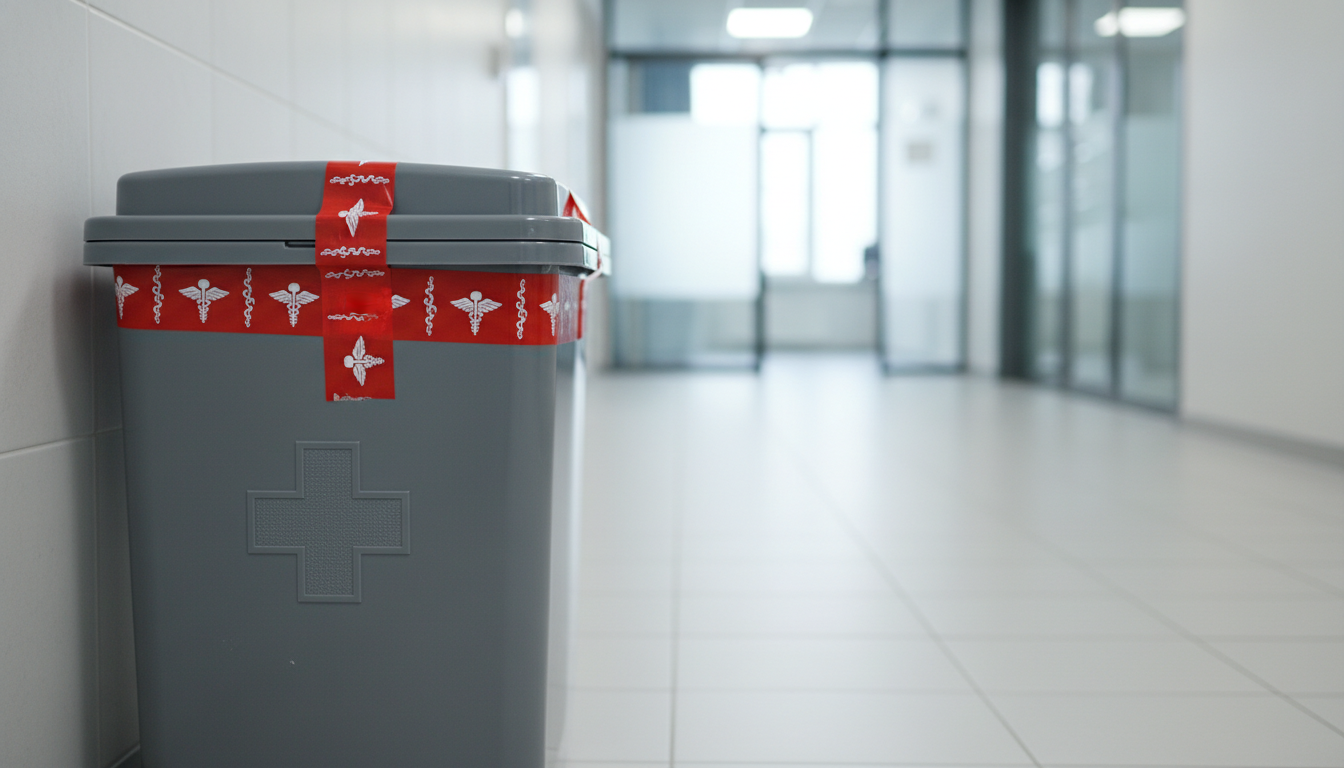
Our brand USP is centered on a protocol-driven debris chain of custody. We do not use open dumpsters. Instead, we utilize locked, GPS-tracked containers for all debris originating from areas where PHI was present. This debris is not sent to a standard landfill; it is transported to a secure, monitored facility for destruction or incineration. Every load is signed off by a Certified Healthcare Restoration Specialist, ensuring that the facility remains in compliance from the moment the first piece of drywall is removed until the final disposal certificate is issued.
| Violation Tier | Description | Potential Fine (Per Record/Incident) |
|---|---|---|
| Tier 1: No Knowledge | The entity was unaware and could not have realistically avoided the breach. | a meaningful amount- a considerable sum |
| Tier 2: Reasonable Cause | The entity knew or should have known, but did not act with willful neglect. | a notable cost- a considerable sum |
| Tier 3: Willful Neglect (Corrected) | The entity acted with neglect but corrected the issue within 30 days. | a meaningful expense- a considerable sum |
| Tier 4: Willful Neglect (Uncorrected) | The entity acted with neglect and failed to correct the issue. | a considerable sumMinimum |
Document Recovery and Digital Sanitization
What happens when the debris is actually the data? In cases of major water intrusion, thousands of physical medical records may become saturated. To the untrained eye, these are “trash.” To a Compliance Officer, these are a recovery priority. We utilize advanced Vacuum Freeze Drying techniques to stabilize and dry paper records, preventing mold growth and further degradation. This process allows the records to be scanned and digitized, after which the physical copies are destroyed via NAID-certified shredding.
Digital hardware recovery follows a similar path. If a server room is compromised, we do not simply “dry out” the hardware. We follow strict forensic cleaning protocols to ensure that data can be recovered where possible, or that the drives are physically destroyed (degaussed and shredded) if the hardware is beyond repair. This level of detail is what separates a standard restoration company from a true HIPAA Compliant Restoration MN partner. We understand that in healthcare, “clean” isn’t enough; the site must be “compliant.”
Internal Linking and Resource Integration
Managing a disaster in a medical setting is vastly different from a retail or residential loss. For more information on how we handle these complexities, visit our section on High-Stakes Commercial and Medical Facility Recovery. Understanding the intersection of property insurance and HIPAA liability is essential for any risk management team.
The Cost of Ignorance: HHS Fines and Reputational Damage
The financial data is staggering: HHS fines for PHI exposure during renovations or restoration projects can exceed a considerable sumper record. If a single box of files is lost during a flood cleanup, the fine could easily reach into the millions. Beyond the federal penalties, there is the irreparable damage to the “Trust Equity” of your institution. Patients choose providers based on the perceived security of their most intimate information. A public headline regarding medical records found in a local park is a death knell for a clinic’s reputation.
Our approach to HIPAA Compliant Restoration MN is designed to provide you with a “defensible position.” Should an auditor ever question your recovery process, you will have a comprehensive binder containing training certifications, containment logs, air pressure readings, and disposal certificates. We take the burden of proof off your shoulders and place it squarely on our documented protocols.
Frequently Asked Questions
How do you secure patient data during a flood?
We deploy immediate opaque barriers to prevent visual access and use locked, tracked debris bins for all removed materials. If physical documents are wet, they are placed in secure, refrigerated containers to prevent mold while awaiting professional freeze-drying and recovery.
Are your workers HIPAA trained?
Yes. Every technician entering a medical facility must undergo mandatory HIPAA compliance certification. We ensure they understand the definitions of PHI, the importance of the “Minimum Necessary” rule, and the specific protocols for debris chain of custody.
Protect Your Facility’s Future
Don’t let a property loss turn into a regulatory disaster. Ensure your restoration is handled by specialists who prioritize patient privacy as much as structural integrity.
Leave A Comment