
In the affluent suburban landscapes of Plymouth, Minnesota, homeowners often invest significant capital into finishing their basements—transforming them into high-end media rooms, guest suites, and home offices. However, beneath the luxury finishes lies a geological reality that many standard builders overlook. Plymouth is characterized by pockets of high-clay soil and a fluctuating water table that can turn a finished basement into a liability overnight. Effective Plymouth MN basement flood prevention requires moving beyond the “builder-grade” mindset and adopting commercial-grade sump systems designed for longevity and redundancy.
The Plymouth Hydrology Problem: Clay, Thaw, and Hydrostatic Pressure
Understanding why basements in Plymouth fail begins with the soil. Unlike sandy regions where water permeates quickly into the deep earth, Plymouth features heavy clay deposits. Clay is highly expansive and non-porous. During a rapid Minnesota spring thaw or a heavy Midwestern downpour, this clay becomes saturated, holding water against your foundation walls like a heavy, wet sponge.
This saturation creates immense hydrostatic pressure. As the water table rises, the pressure forces water through the smallest fissures in the floor-to-wall joint (the cove joint) or up through cracks in the slab. A standard sump pump, often installed as a mere compliance measure during original construction, is frequently overwhelmed by the sheer volume of water generated during these peak events. For discerning homeowners, the goal is not just to “pump water” but to manage a complex hydraulic load while maintaining structural integrity. Without a commercial-grade solution, the foundation faces a “revolving door” of water damage, where minor leaks eventually lead to major structural compromises.
Equipment Deep-Dive: Why Commercial-Grade Matters
Most hardware store sump pumps are constructed with thermoplastic housings and light-duty motors. While these may suffice for occasional use, they are not designed for the heavy-duty cycles required in high-clay environments. Partners Restoration (BC794459) advocates for a builder-led drainage engineering approach that treats the sump system as a critical piece of mechanical infrastructure.
The Power of Dual-Pump Redundancy
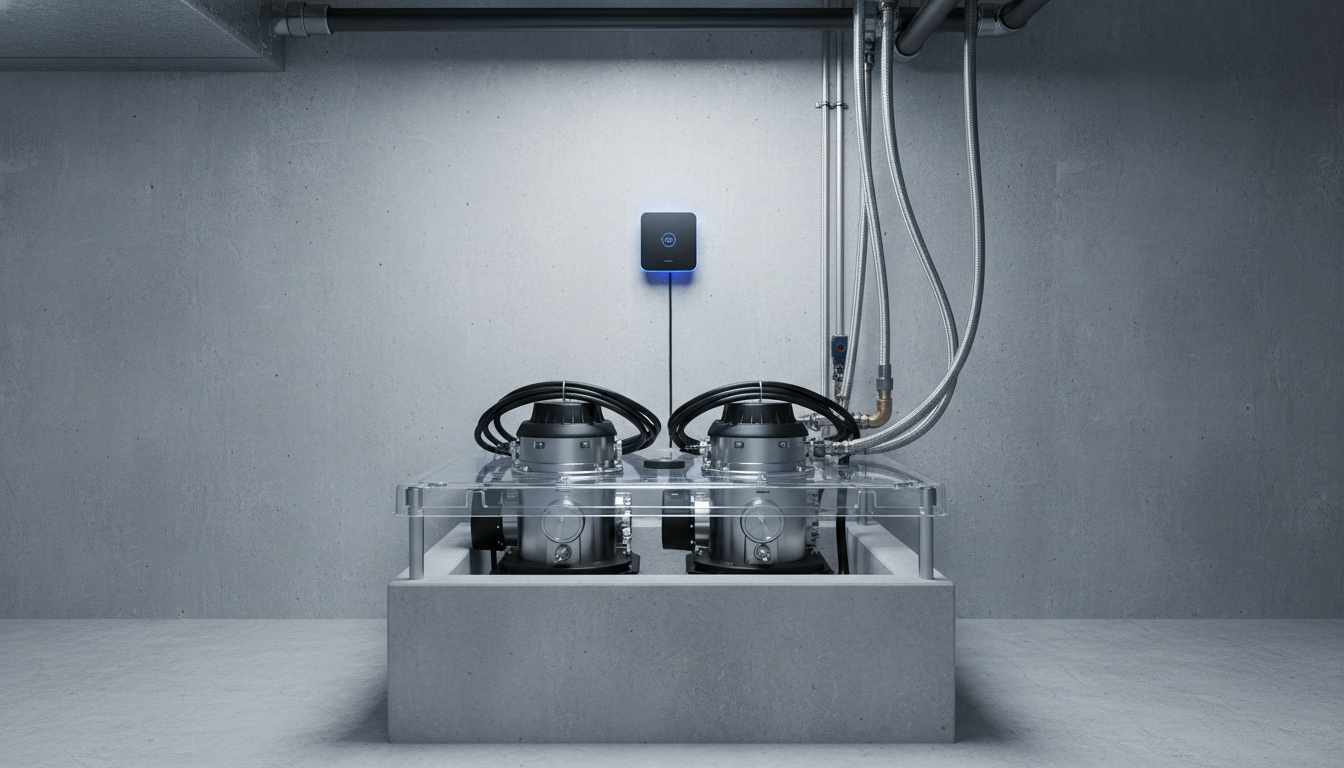
The primary failure point in most Plymouth MN basement flood prevention strategies is a single-point-of-failure system. If one pump fails due to mechanical wear or a clogged impeller, the basement floods. A commercial-grade installation utilizes a dual-pump configuration. These systems use an alternating controller that cycles between two 1/2 HP cast-iron pumps. This ensures that neither pump is overtaxed and, more importantly, provides an immediate fail-safe. If Pump A fails, Pump B automatically engages, sending an alert to the homeowner while continuing to keep the basement dry.
High-Capacity Discharge Engineering
The efficiency of a pump is limited by the diameter of its discharge line. Standard residential installs often use 1.25-inch or 1.5-inch PVC. In high-volume scenarios, this creates significant friction loss, forcing the pump to work harder and move less water. We implement 2.0-inch high-capacity discharge lines, which significantly increase the Gallons Per Hour (GPH) the system can evacuate, ensuring that even during a “100-year storm,” the water level in the pit remains under control.
| System Component | Standard Quality | Partners Elite Standard |
|---|---|---|
| Sump Pump | Plastic 1/3 HP | Cast-Iron 1/2 HP Dual System |
| Backup Power | Marine Battery | Whole-home Generator Tie-in |
| Discharge Line | 1.25 inch | 2.0 inch High-Capacity |
| Check Valves | Plastic Flap | Quiet-Close Commercial Grade |
Power Failure: The Silent Threat
Statistically, the #1 cause of basement flooding in suburban neighborhoods is power failure. Severe storms that bring the most rain are also the most likely to knock out the electrical grid. A standard sump pump is useless the moment the lights go out. While many homeowners rely on a simple marine battery backup, these systems have limited run times—often only 6 to 12 hours of intermittent pumping.
For true Plymouth MN basement flood prevention, we recommend integrating the sump system into a whole-home standby generator or utilizing sophisticated DC-to-AC inverters with deep-cycle AGM battery banks. This ensures that your drainage system remains operational for days, not hours, during a prolonged utility outage. Furthermore, modern commercial systems include smart monitoring that alerts your smartphone the moment the system switches to backup power, allowing for proactive intervention before a crisis occurs.
The Professional Prevention Checklist
Effective flood prevention extends beyond the sump pit. A holistic approach involves managing water before it ever reaches the foundation. As a licensed Master Plumber and Building Consultant, I recommend the following checklist for any Plymouth property owner:
- Verify Grade: Ensure the soil around the perimeter slopes away from the foundation at a minimum of 6 inches over the first 10 feet.
- Gutter Integration: Downspouts should not dump water at the corners of the house. They should be piped underground into a solid 4-inch PVC line that exits at least 20 feet from the structure.
- Annual Pump Stress Test: Don’t wait for rain. Fill the pit with a garden hose to ensure the float switch engages and the check valve is preventing backflow.
- Foundation Crack Injection: If you see seepage, utilize high-pressure urethane injection to seal cracks from the inside out, maintaining the structural bond.
- Discharge Line Insulation: In Minnesota, frozen discharge lines are a common winter failure. Ensure the exit point is “air-gapped” to prevent ice blockages from backing up into the pump.
Focusing on Structural Longevity
At Partners Restoration, our philosophy is rooted in “suburban rehab” and Water Damage Mitigation that lasts for the life of the home. We see too many “temporary fixes” where a new pump is dropped into a crumbling pit. Our builder-led approach focuses on the structural longevity of the foundation. By reducing the hydrostatic pressure through superior drainage, we protect the concrete from the freeze-thaw cycles that lead to spalling and cracking. This is particularly vital in the context of a Plymouth Suburban Rehab, where older homes require modern engineering to meet today’s climate challenges.
Frequently Asked Questions
Why did my sump pump fail?
Standard residential pumps typically have a 5-7 year lifespan due to heat buildup in the plastic motor housing. Our dual-alternating systems utilize cast-iron housings for superior heat dissipation, which effectively doubles the lifespan and provides fail-safe alerts to prevent unexpected failure.
Is an egress window part of flood prevention?
No, an egress window is a safety and code requirement for habitable spaces. However, if an egress window is improperly installed without a dedicated drain tied to your interior drainage tile, it can actually become a source of flooding during heavy rain. If you are changing your basement layout, ensure the egress well is integrated into your flood prevention plan.
Conclusion: Investing in Peace of Mind
A flooded basement is more than a financial burden; it is a disruption to your lifestyle and a threat to your home’s equity. In Plymouth, the environmental factors are stacked against the standard residential drainage setup. Transitioning to a commercial-grade sump system—complete with dual-pump redundancy, high-capacity lines, and robust power backups—is the only way to ensure your basement remains dry regardless of the weather. Don’t wait for the next rapid thaw to discover the limitations of your current system.
Ready to protect your home?
Schedule a Basement Drainage Audit with Partners Restoration today. our expert team will evaluate your current system and provide a comprehensive plan for commercial-grade protection.
Leave A Comment