
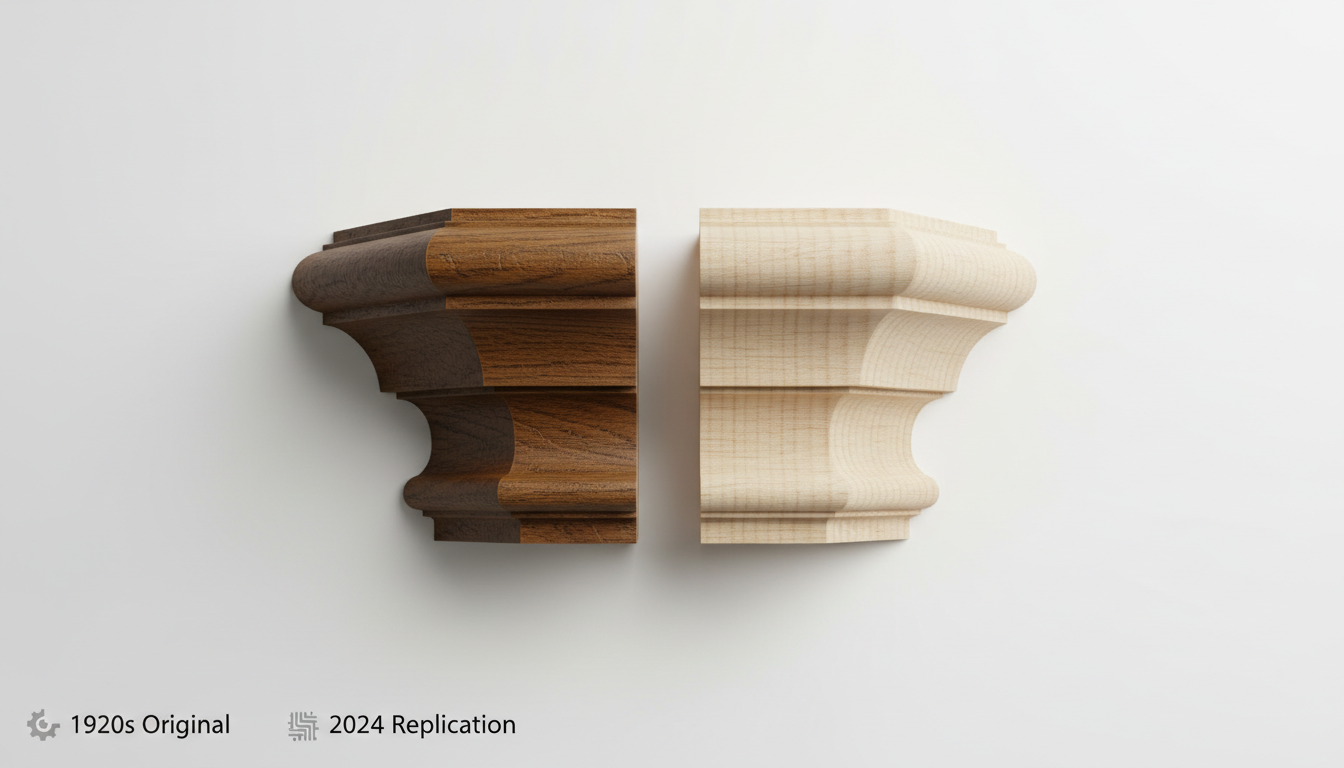
In the exclusive enclaves of Orono and Wayzata, the architecture is more than just a residence; it is a repository of history and a significant financial asset. For the estate steward, the preservation of a property’s provenance is the singular most important metric of success. When a historic estate suffers a loss—be it from the intrusive nature of water infiltration or the catastrophic impact of fire—the restoration of the interior envelope requires more than standard carpentry. It requires historic millwork restoration in Orono that adheres to the exacting standards of the original craftsmen.
Architectural continuity is the invisible thread that maintains the value of high-net-worth (HNW) properties. The moment a stock, off-the-shelf molding is introduced into a room featuring 19th-century hand-carved profiles, the historical integrity of the entire wing is compromised. As a master carpenter and licensed MN builder, I have seen how “close enough” repairs can result in a significant devaluation of a property. True restoration is an exercise in forensic engineering and precision milling.
The Value of Provenance: Why Accuracy Dictates Equity
In the context of luxury real estate, provenance refers to the pedigree of the home—its original design intent, the materials used, and the level of craftsmanship present at its inception. In Orono, many of the most significant estates feature millwork profiles that were custom-designed for the specific site, often utilizing wood species and geometric complexities that have long since been phased out of commercial production.
Maintaining this provenance is not merely a matter of aesthetics; it is a strategic financial decision. Data suggests that custom-milled reproduction trim adds 5-a portion more to a home’s resale value compared to properties where stock repairs were utilized. When a prospective buyer or an architectural appraiser walks through a home, the continuity of the crown molding, baseboards, and casing serves as a signal of the home’s overall health and the quality of its stewardship. Stock trim in a luxury estate is more than a mismatch—it is a liability that suggests a lack of investment in the property’s fundamental structure.
Challenges of Historical Timber and Profile Degradation
One of the primary challenges in historic millwork restoration in Orono is the evolution of the timber itself. The “oak” or “pine” found in a home built in 1890 is biologically distinct from the plantation-grown lumber available today. Old-growth timber features a much higher ring density, providing a level of stability and grain tightness that modern materials cannot replicate. When we are tasked with replicating a profile, we must first source species-matched lumber that mirrors the density and cellular structure of the original material.
Furthermore, we must account for “profile degradation.” Over a century, layers of paint or aggressive sanding can soften the crisp edges of an original crown profile. Our role is to find a “pristine” section—perhaps behind a built-in cabinet or inside a closet—to use as the archetype. Replicating a degraded profile only serves to institutionalize the damage; we aim to return the millwork to its original, intended geometry.
This level of detail is why we emphasize Custom Millwork solutions over standard replacements. We aren’t just looking for wood that looks similar; we are looking for a molecular match that will react to Minnesota’s seasonal humidity shifts in the exact same manner as the surrounding historical elements.
The Replication Process: From 3D Mapping to Knife Grinding
Our restoration process begins with a technical audit. We utilize 3D profile mapping (photogrammetry and laser scanning) to capture the exact coordinates of the existing molding. This digital “fingerprint” allows us to identify the subtle nuances—the depth of a cove, the radius of a bead, and the specific angle of a fillet—that define the architectural period.
1. CAD Drafting and Tooling
Once the 3D data is captured, it is translated into a CAD (Computer-Aided Design) drawing. This drawing is used to create a template for our in-house knife grinding. Unlike standard shops that rely on a library of pre-existing cutters, we grind custom steel knives for every historical project. This ensures that the new molding is not just a “close match” but a geometric twin to the original.
2. Species Selection and Acclimation
As mentioned, matching the species is critical. If we are working on a Exotic Hardwood Restoration project, we may need to source reclaimed timber or specific cuts of quarter-sawn white oak to ensure the grain pattern aligns. Once the timber is sourced, it must be vernalized and acclimated to the specific micro-climate of the Orono estate to prevent future warping or shrinkage.
3. Precision Milling
Using our custom-ground knives, we run the timber through high-speed molders. The result is a profile that possesses the same crispness and “shadow lines” as the 100-year-old originals. These shadow lines are what give historical rooms their depth and character; they are the hallmark of high-end architectural design.
Milling Costs: The Investment in Quality
Understanding the cost-benefit analysis of custom milling is essential for property managers and estate owners. The following table outlines the divergence between standard stock materials and the custom solutions required for historical accuracy.
| Feature | Stock Trim (Finger-jointed) | Custom Reproduction (Species-matched) |
|---|---|---|
| Material Integrity | Low (Composite/Softwood) | High (Old-growth/Hardwood) |
| Geometric Accuracy | Approximate / Generic | 1:1 Precise Replication |
| Value Impact | Neutral to Negative | Positive (5-a portion Resale Premium) |
| Longevity | Short-term (Prone to failure) | Heritage Grade (100+ Years) |
| Cost per Linear Foot | a meaningful amount- a meaningful amount | a meaningful amount- a meaningful amount+ (Milling setup dependent) |
Invisible Restoration: The Art of the Finish
The final stage of achieving architectural continuity is the “invisible restoration.” This refers to the seamless integration of new material with the old. Even the most perfectly milled piece of crown molding will fail the eye if the finish does not match. In Orono estates, we often encounter finishes that have patinated over eighty or one hundred years. The ambering of the varnish and the deep oxidation of the wood cannot be replicated with a simple off-the-shelf stain.
Our team employs master finishers who specialize in layering pigments and glazes to mimic a century of aging. We perform “feathering” techniques at the joints, ensuring that the transition between the 1920s original and the 2024 reproduction is undetectable to the naked eye. This is the standard of excellence required when managing properties of this caliber.
Summary of the Restoration Ethos
- Stewardship: Our primary goal is the long-term preservation of the estate’s architectural narrative.
- Precision: We utilize modern 3D technology to replicate ancient craftsmanship.
- Materiality: We never compromise on wood species or grain orientation.
- Integration: Restoration should be felt through the value of the home, but never seen through the seams of the trim.
Frequently Asked Questions
Can you match 100-year-old oak trim?
Yes. Through custom knife grinding and sourcing of specific timber grades (such as quarter-sawn or rift-sawn old-growth oak), we can create an exact match for any historical profile.
Why not use stock molding?
Stock molding is designed for modern, mass-market construction. It lacks the scale, depth, and specific geometric curves found in historical Orono estates. Utilizing stock trim devalues the historic integrity and resale potential of an elite property.
What is the lead time for custom milling?
Because we handle knife grinding and milling in-house, our lead times are significantly shorter than third-party mills, typically ranging from 2 to 4 weeks depending on species availability.
For estate managers and owners who demand an uncompromising level of detail, our builder-led team provides the technical expertise necessary to restore and maintain the crown jewels of Lake Minnetonka’s architectural history. We do not just repair homes; we curate their legacy.
Preserve Your Estate’s Legacy
Ensure your property maintains its historical valuation and architectural continuity. Contact our master carpentry team today to schedule a comprehensive evaluation of your home’s millwork.
Leave A Comment