Smoke odor removal requires neutralizing odor-causing compounds — polycyclic aromatic hydrocarbons, aldehydes, and volatile organic compounds — that have penetrated porous building materials, wall cavities, and HVAC systems. Masking with deodorants or air fresheners does not constitute smoke odor removal. The compounds must be chemically oxidized or physically removed from the materials that absorbed them.
Partners Restoration provides smoke odor elimination as part of full-scope fire damage restoration Minneapolis across the western suburbs. A home that smells like smoke after a restoration was not adequately remediated — our odor elimination protocol addresses smoke penetration at every level of the structure.
Why Smoke Odor Is So Difficult to Eliminate
Smoke odor compounds are carried by fine particulate matter small enough to penetrate porous materials — drywall, wood framing, insulation, carpet, upholstered furniture, clothing, and books. Once inside porous materials, the compounds continue to off-gas slowly for months or years if not neutralized. This is why a home that has been painted over still smells like smoke — the paint film does not prevent off-gassing from the material beneath.
Three variables determine how difficult smoke odor is to eliminate: the smoke type (protein smoke from cooking fires is the most penetrating; wet smoke from plastics is the most pungent on hard surfaces; dry smoke from paper and wood is the easiest to address), the duration of smoke exposure, and the type of materials affected (open-cell porous materials like drywall and wood absorb more deeply than closed-cell materials like glass and metal).
Professional Smoke Odor Elimination Methods
Thermal fogging
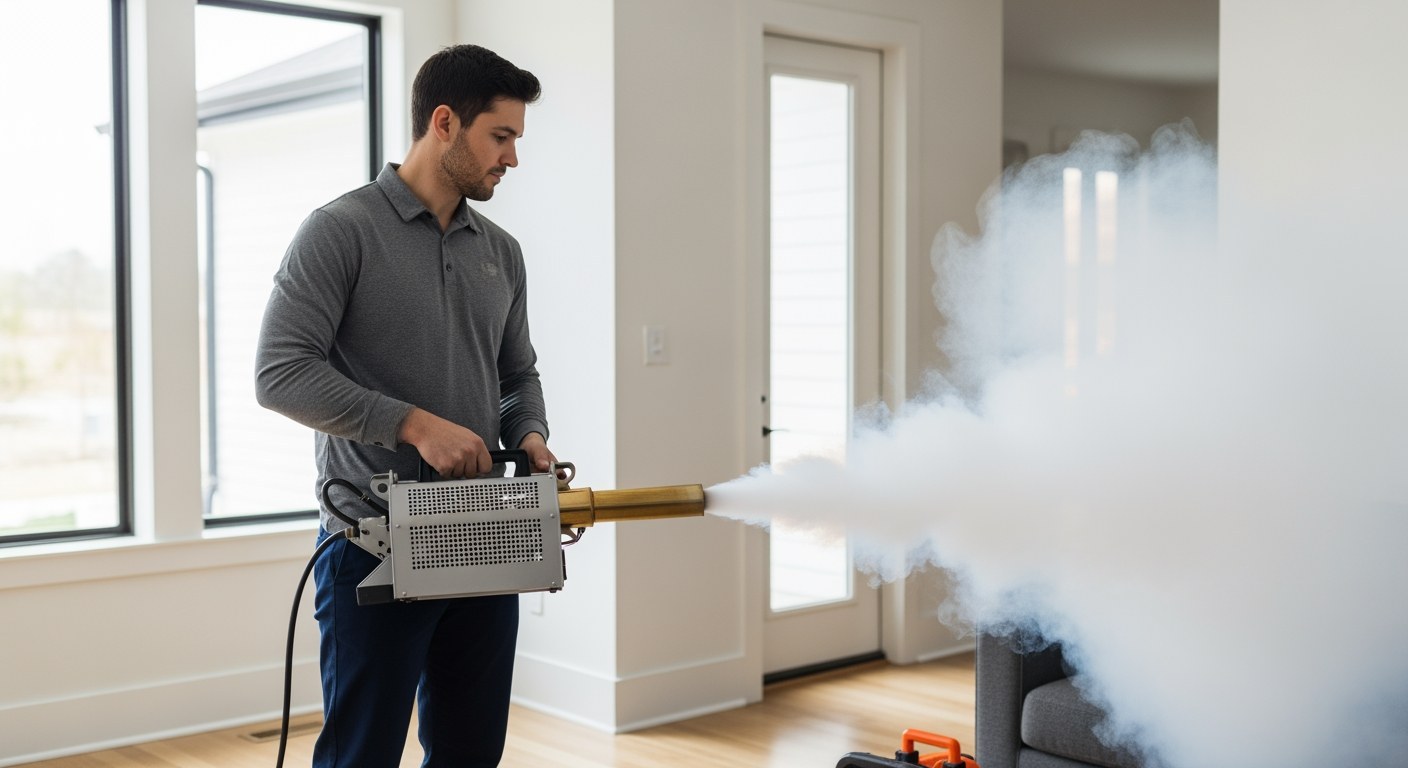
Thermal fogging uses a petroleum-based deodorant converted to a fine fog that penetrates the same pathways smoke traveled — wall cavities, ceiling voids, HVAC systems, cabinet interiors, and behind trim. The deodorant molecules pair with odor-causing compounds and neutralize them at the molecular level. Thermal fogging is performed in an unoccupied, sealed structure and requires ventilation and drying time before re-occupancy. It is one of the most effective methods for penetrating odor in wall assemblies and is standard practice for significant fire losses.
Hydroxyl generation
Hydroxyl generators produce hydroxyl radicals — the same reactive molecules produced naturally by UV light reacting with water vapor in the atmosphere — that oxidize odor compounds on contact. Unlike ozone, hydroxyl treatment can be performed in occupied spaces because hydroxyl radicals are safe at the concentrations produced by commercial generators. Hydroxyl generation is slower than ozone but safe for use while workers are on site, making it practical for extended odor treatment during the restoration process.
Ozone treatment
High-concentration ozone (O3) is a powerful oxidizer that neutralizes odor compounds throughout the structure. Ozone treatment requires full evacuation of the structure — including all occupants, pets, and plants — and is performed at concentrations that would be harmful to breathe. After treatment, the structure is ventilated to allow ozone to dissipate (typically 2–4 hours) before re-entry. Ozone is highly effective for smoke odor in hard-to-reach areas but cannot be used while reconstruction work is ongoing.
HEPA air scrubbing
HEPA air scrubbers with activated carbon filters capture smoke particulate and adsorb odor compounds from the air continuously during the restoration process. Air scrubbing reduces the ongoing odor load from disturbed smoke residue during cleaning and demolition and improves air quality for workers. It is a supporting method rather than a primary odor elimination technique.
Odor-blocking sealers
Shellac-based and specialized odor-blocking primers (Zinsser BIN, Kilz Restoration) applied to structural framing, subfloor, and wall surfaces before reconstruction drywall installation seal in residual odor compounds that have penetrated the wood substrate. These sealers are a necessary component of smoke odor remediation in reconstruction — painting standard latex primer over smoke-affected framing does not prevent future odor off-gassing through the finished wall surface.
Contents and Soft Goods Odor Treatment
Clothing, bedding, upholstered furniture, curtains, and other soft goods that absorbed smoke odor require specialized treatment beyond standard laundering. Ozone treatment in a contents cleaning facility, ultrasonic cleaning for hard-surface items, and dry cleaning with ozone injection for garments are standard approaches. Items with penetrating smoke odor in the padding, fill, or substrate — typically upholstered furniture after a significant fire — may be non-restorable regardless of treatment.
Frequently Asked Questions
Why does my house still smell like smoke after painting?
Standard latex paint is a semi-permeable film that does not prevent odor compounds from off-gassing through the wall surface from affected materials beneath. Painting over smoke-affected surfaces without prior professional cleaning and odor-blocking sealer application is one of the most common mistakes in DIY or inadequate fire restoration. The solution is to strip the affected surface, apply odor-blocking shellac-based primer (not standard primer), and then paint.
How long does smoke odor last without professional treatment?
Untreated smoke odor compounds in porous building materials can off-gas for months to years. Humidity activates off-gassing — a home that seems odor-free in dry winter conditions may smell strongly of smoke during humid summer months as the moisture reactivates volatile compounds in affected materials. Professional neutralization — not masking — is the only reliable solution.
Can smoke odor affect my home’s resale value?
Yes significantly. Detectable smoke odor is among the top reasons buyers withdraw from real estate transactions. Minnesota disclosure law requires sellers to disclose known material defects including fire damage history. Professionally documented smoke remediation — with clearance verification — is the appropriate way to address disclosure obligations and protect resale value after a fire loss.
Leave A Comment