
Mold in high-value homes presents unique challenges because the same architectural features and custom materials that define luxury construction also create hidden mold risk zones and complicate remediation. Wine cellars, indoor pools, extensive finished lower levels, complex roof geometries, and rare wood species require specialized mold assessment and a remediation approach that does not damage irreplaceable materials in the process of treating them.
Partners Restoration provides mold remediation for high-value homes across Wayzata, Orono, Minnetonka, Deephaven, Edina, and the Lake Minnetonka corridor — serving the western Minneapolis suburbs with the expertise these properties require. Our full mold remediation Minneapolis service covers all property types and scales.
Hidden Mold Risk Zones in Custom Construction
Wine cellars and climate-controlled rooms
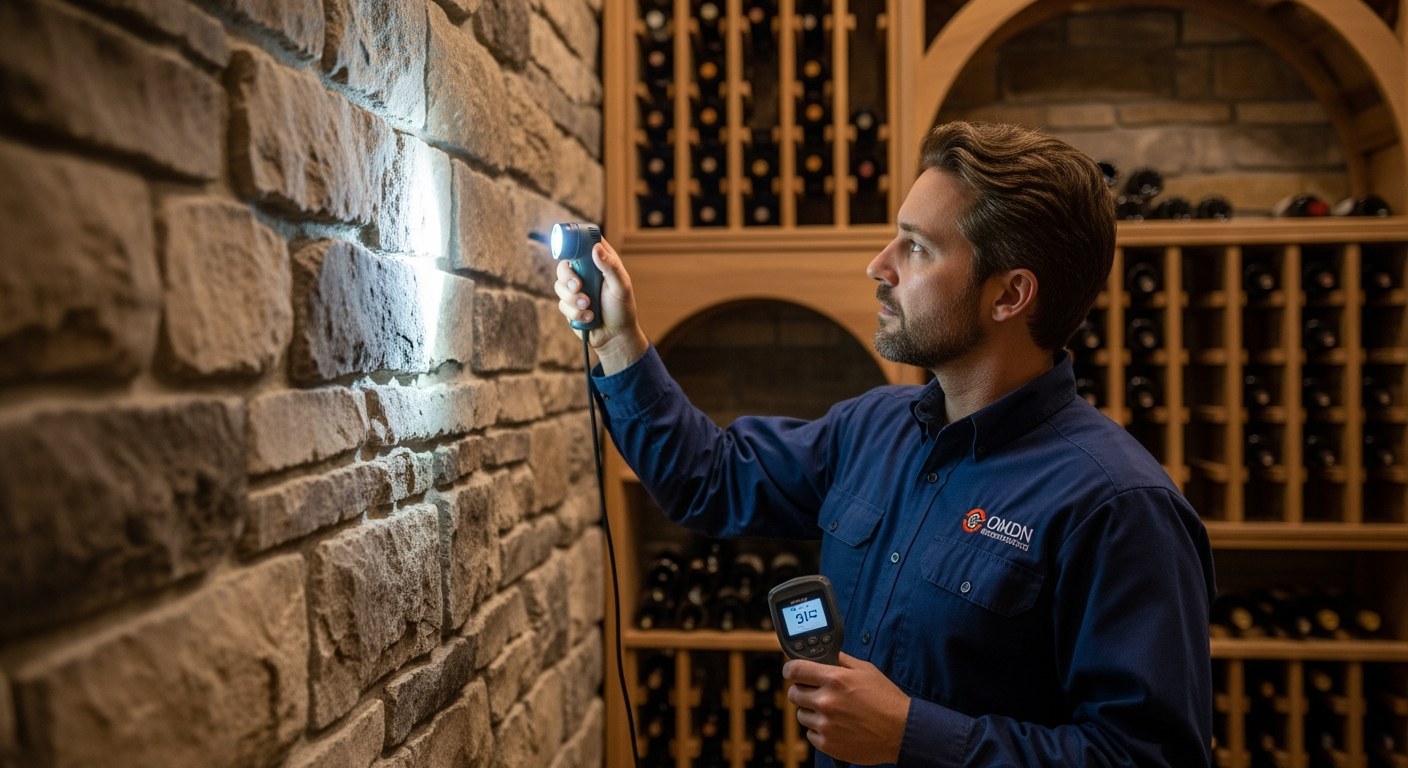
Wine cellars require cool, humid conditions — typically 55–58°F and 60–70% relative humidity — that are simultaneously ideal for mold growth. Cellar walls and ceilings must be constructed with vapor barriers oriented correctly for the specific temperature differential in the Minnesota climate; incorrectly designed cellars develop condensation on the warm side of the wall assembly that sustains chronic mold growth. A wine cellar that shows musty odor or surface mold requires both remediation and a reassessment of the thermal and vapor barrier design.
Indoor pools and spa rooms
Natatoriums — rooms enclosing indoor pools — operate at elevated temperature and humidity year-round. The structural envelope of a natatorium is a specialized engineering challenge; inadequate vapor barriers, improper ventilation design, or construction defects allow warm, humid air to migrate into wall and roof assemblies where it condenses. Mold in natatorium assemblies is typically extensive by the time it becomes apparent and involves remediation of wall assemblies, roof structure, and HVAC systems simultaneously.
Extensive finished lower levels
High-value homes in the western suburbs frequently have fully-finished lower levels — home theaters, gyms, wet bars, guest suites — that represent $200,000 to $500,000 in finish value. These spaces sit at or below grade in Minnesota’s high water table soils, and any moisture intrusion event — sump pump failure, window well overflow, plumbing leak — that is not addressed with professional drying creates mold conditions behind finished walls and below finished floors that may not become apparent for months. A lower level that was “cleaned up” after a water event without professional drying is a mold event waiting to manifest.
Complex rooflines and dormers
Custom homes in Wayzata and Orono frequently have architectural rooflines — multiple intersecting planes, dormers, shed dormers, turrets — that create ice dam accumulation points and complex drainage paths. Ice dam infiltration into wall assemblies at these complex intersections often goes undetected until mold growth becomes visible in spring. Post-ice-dam mold in complex roofline assemblies may require investigation at multiple locations throughout the attic and wall structure.
Remediation Without Damaging Irreplaceable Materials
Standard mold remediation protocol — HEPA vacuuming, wire brushing affected wood framing, biocide treatment, encapsulation — applies regardless of property value. What changes in high-value properties is the care taken to protect adjacent materials during remediation and the decision-making process around what is removed versus treated in place.
In a wine cellar with hand-laid stone veneer walls, the stone itself does not support mold growth — but the mortar joints and the wood or metal framing behind the stone may. Remediation requires carefully assessing whether the stone can remain in place while the framing behind it is treated, or whether the stone must be carefully removed, catalogued, and stored for reinstallation after framing treatment. This decision requires a mason who understands the original installation to be present during the assessment.
Frequently Asked Questions
Can mold grow in a home that is well-maintained?
Yes. Mold grows wherever moisture, temperature, and organic food sources align — regardless of how well-maintained a home is overall. A single ice dam event, a pinhole plumbing leak, or an HVAC condensate issue can create the conditions for mold growth in a well-maintained home. High-value homes are not immune; in some ways their complexity creates more potential mold risk zones than simpler construction.
How do I know if my wine cellar has a mold problem?
Surface mold in a wine cellar may appear on wine labels, cork surfaces, or wood racking before it becomes visible on walls or ceiling. Musty odor that is strongest in the cellar and less noticeable in adjacent spaces is a reliable indicator of active mold growth. A professional inspection with moisture mapping and potentially air sampling is the appropriate diagnostic when mold is suspected in a wine cellar environment.
Leave A Comment