
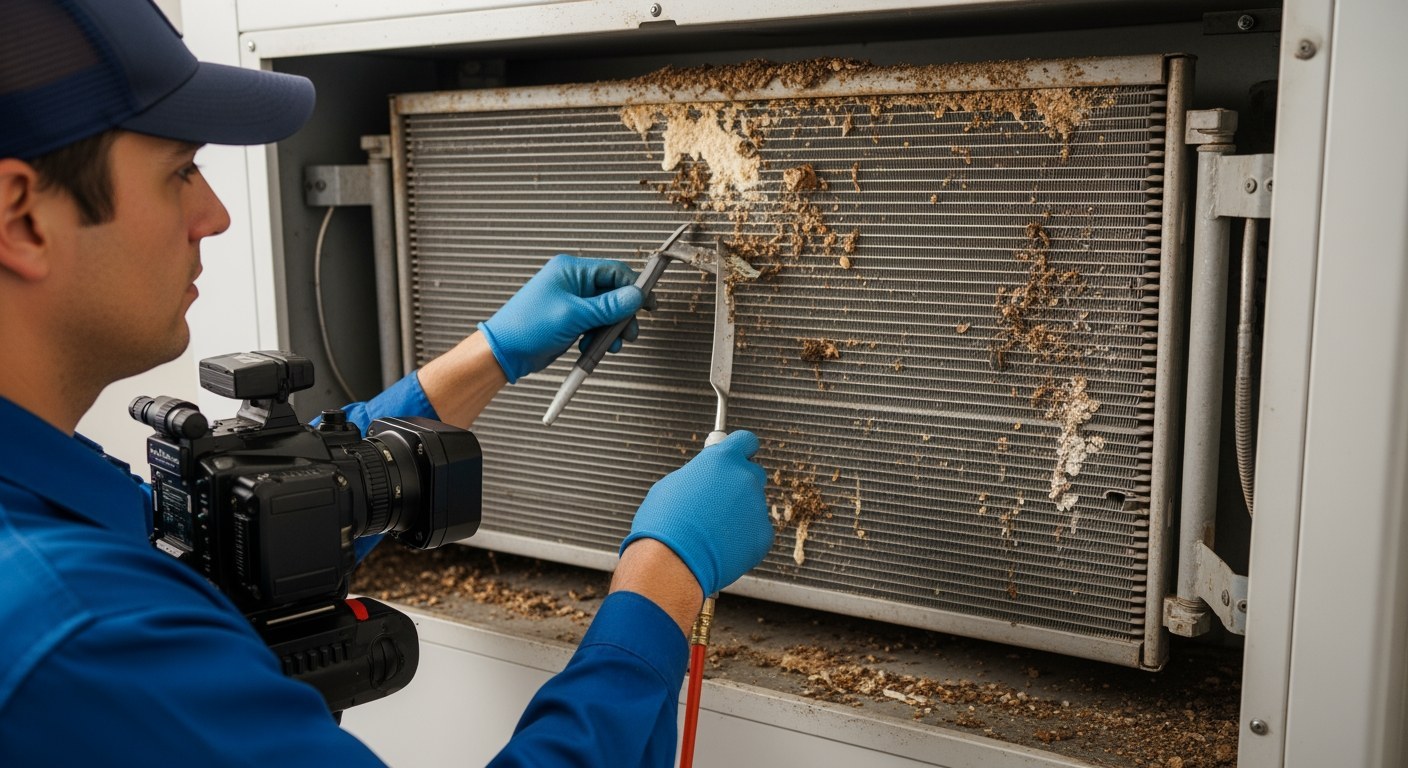
HVAC mold remediation is the professional cleaning and treatment of mold growth in air handling units, evaporator coils, drain pans, ductwork, and supply registers. Because the HVAC system continuously circulates air throughout a home, mold in any part of the system distributes spores to every room during every heating and cooling cycle — making HVAC mold one of the highest-impact indoor air quality problems a homeowner can face.
Partners Restoration provides HVAC mold remediation across the Minneapolis western suburbs as part of our full mold remediation Minneapolis service. We assess all system components, coordinate professional duct cleaning, treat the air handler and coil, and verify remediation with post-clearance testing.
Where Mold Grows in HVAC Systems
Mold requires moisture, an organic food source, and temperatures above 40°F. HVAC systems create these conditions in several locations.
Evaporator coil: The evaporator coil (the indoor cooling coil in a central air system) operates at temperatures below the dew point of indoor air, causing condensation to form on coil surfaces during every cooling cycle. A clean coil sheds this condensation efficiently into the drain pan. A dirty coil — coated with dust and debris — retains moisture and provides an organic food source. Mold colonizes dirty evaporator coils readily and releases spores into the airstream with every fan cycle.
Drain pan: The condensate drain pan collects moisture from the evaporator coil. A pan with standing water — from a clogged condensate drain line — is a primary mold growth site. Slime mold and biological growth in standing condensate water is common and often the first point of HVAC mold colonization.
Air handler interior: Dust accumulation on the interior walls of the air handler, on the blower wheel, and on interior surfaces creates an organic substrate that mold colonizes when humidity conditions allow. Fiberglass duct liner inside the air handler is particularly susceptible — once mold penetrates the fiberglass fibers, the material must be replaced rather than cleaned.
Ductwork: Mold inside supply and return ducts is less common than coil/pan mold but occurs in systems with significant dust accumulation, leaky ducts in unconditioned spaces (crawl spaces, attics), or systems that have experienced moisture intrusion. Supply registers — the visible grilles at floor or ceiling level — sometimes show visible surface mold growth when the duct behind them has a moisture problem.
Signs of Mold in Your HVAC System
- Musty odor that is strongest when the HVAC system is running — the odor disappears when the system is off and returns when it cycles on
- Visible dark staining or fuzzy growth on supply registers or return air grilles
- Allergy or respiratory symptoms that worsen in the home and improve when you leave
- A history of visible mold anywhere in the home — mold in one location often indicates conditions that affect the HVAC system as well
- High indoor humidity (above 60% RH) that the HVAC system is not adequately controlling — often a sign of a drainage or refrigerant issue that creates sustained wet conditions at the coil
The HVAC Mold Remediation Process
Assessment
Our inspector examines the air handler interior, evaporator coil condition, drain pan, condensate line, and accessible ductwork. We also review the system’s maintenance history — a coil that has never been professionally cleaned in a 10-year-old system is virtually certain to have mold colonization. Air sampling at the supply register and in the return air stream can quantify spore concentrations and identify species present.
Drain line clearing and pan treatment
The condensate drain line is cleared of any obstruction and flushed. The drain pan is cleaned, treated with EPA-registered biocide, and inspected for cracks or corrosion. Condensate drain tablets (slow-release algaecide) are placed in the pan as ongoing maintenance. This step eliminates the standing water that sustains mold growth.
Evaporator coil cleaning
The evaporator coil is cleaned using coil cleaning solution — applied as foam to loosen debris and biological growth — and rinsed. Severely colonized coils may require professional cleaning by an HVAC technician using coil brightener and specialized equipment. After cleaning, the coil is treated with EPA-registered coil coating or antimicrobial spray that inhibits future biological growth.
Air handler interior treatment
Interior surfaces of the air handler are HEPA-vacuumed and wiped with EPA-registered antimicrobial solution. Fiberglass duct liner that shows mold growth is removed and replaced — it cannot be effectively cleaned. The blower wheel and motor housing are cleaned if accessible without full system disassembly.
Duct cleaning coordination
When ductwork shows visible mold growth or significant biological debris, professional duct cleaning using NADCA (National Air Duct Cleaners Association) standards — negative pressure with source removal — is required before the system is returned to service. Partners coordinates with NADCA-certified duct cleaning contractors as part of the remediation scope. Note: duct cleaning without addressing the source of mold growth (the coil/pan) will result in recontamination of the cleaned ducts within months.
Post-Remediation and Ongoing Prevention
After remediation, a MERV-13 or higher air filter significantly reduces the biological load entering the air handler. UV-C germicidal light systems installed at the evaporator coil continuously irradiate coil surfaces and inhibit mold and bacterial growth between professional cleanings — a cost-effective long-term prevention measure for high-value homes in humid climates.
Annual professional coil cleaning and drain line inspection is the maintenance schedule that prevents HVAC mold from recurring. Most HVAC contractors can include this in an annual maintenance agreement.
Frequently Asked Questions
Can HVAC mold make you sick?
Yes. Mold spores circulated by an HVAC system are inhaled continuously by occupants. Common health effects include allergic rhinitis, exacerbation of asthma, eye and throat irritation, and fatigue. Immunocompromised individuals, infants, and the elderly are at higher risk. Mycotoxin-producing species (such as Stachybotrys, commonly called black mold) present additional health concerns at high concentrations.
How much does HVAC mold remediation cost?
HVAC mold remediation scope varies significantly. Drain pan treatment, coil cleaning, and air handler interior treatment for a single system typically runs $500–$1,500 depending on system size and accessibility. Adding professional duct cleaning increases the total. Systems requiring coil replacement or significant duct liner replacement have higher costs. HVAC mold resulting from a covered water damage event is sometimes covered under a homeowner policy — document the causal relationship.
How long does HVAC mold remediation take?
Most HVAC mold remediation is completed in a single day. Duct cleaning, if required, may add a second day. The system should not be operated until remediation is complete — plan for a period without heating or cooling, which in Minnesota’s climate may require temporary heating during cold months.
Leave A Comment