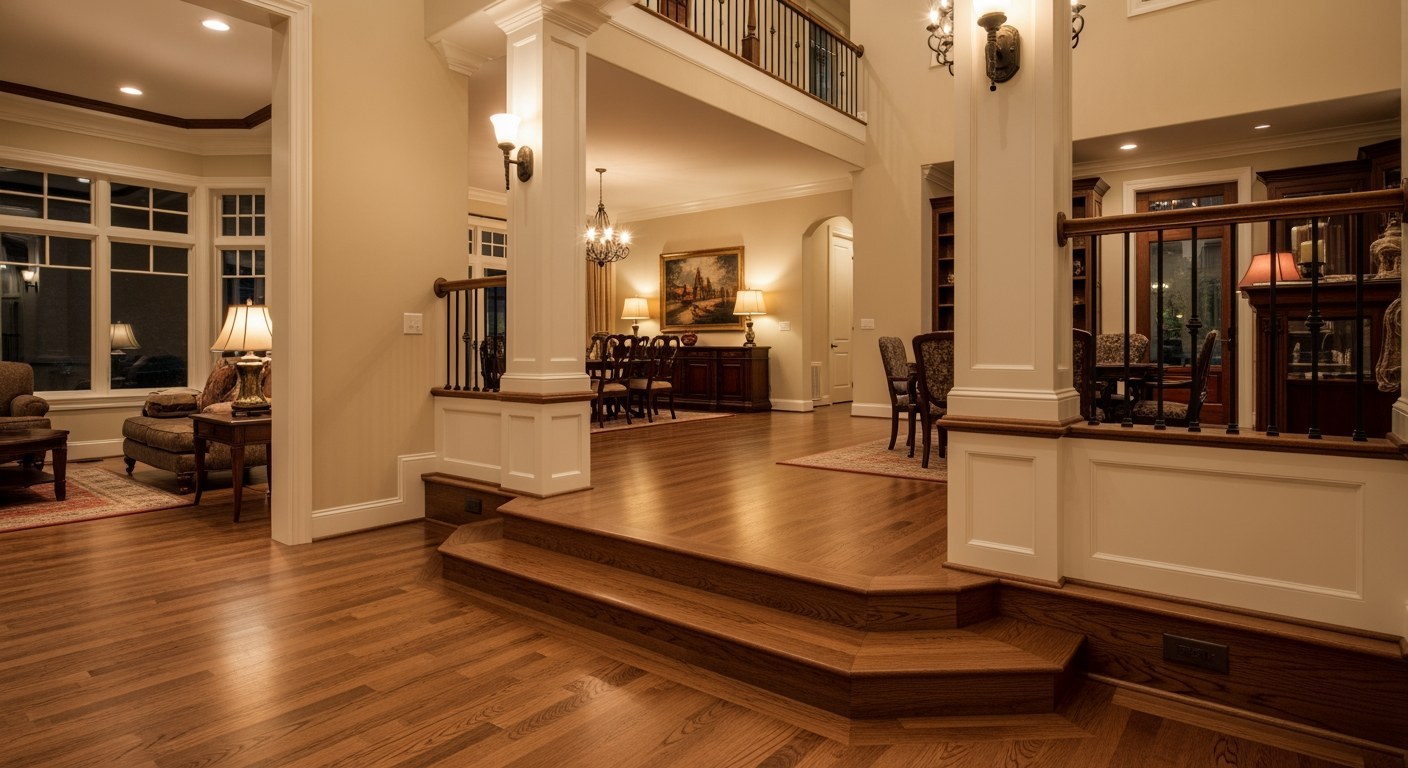
Water damage restoration in high-value homes requires a materially different approach than production-line mitigation. Custom hardwood floors, imported stone, handcrafted millwork, specialty plaster finishes, and integrated technology systems are not interchangeable commodities — each requires assessment by someone who understands the material’s properties, sourcing requirements, and restoration versus replacement threshold.
Partners Restoration was built specifically to serve the western Minneapolis suburbs — Wayzata, Orono, Minnetonka, Deephaven, Medina, Edina — where the homes we restore regularly feature custom finishes and material specifications that demand a restoration partner who works at this level routinely. This page describes our approach for high-value properties. For our full water damage restoration Minneapolis service, visit our main page.
What Is Different About High-Value Home Restoration
The technical requirements of water damage restoration — extraction, moisture mapping, structural drying, antimicrobial treatment — are the same regardless of the property’s value. What differs is the scope of what must be preserved, the precision required to preserve it, and the consequences of getting it wrong.
In a production home, water-damaged drywall is removed and replaced with standard materials. In a home with hand-applied venetian plaster, the decision to remove versus restore the plaster finish — which may have taken a skilled plasterer weeks to apply — is a $15,000 to $40,000 scope decision that requires consultation with a master plasterer, your interior designer, and the insurance adjuster before any work begins. In a production home, water-damaged base molding is replaced with off-the-shelf profiles. In a home with custom milled 5-inch solid oak base, the match requires finding a mill that can replicate the profile in the same species and finish — a weeks-long process that must be planned before demolition begins.
Our High-Value Property Protocol
Pre-work documentation
Before any work begins — including protective measures — our team photographs and documents all finishes in and adjacent to the work area. This documentation serves three purposes: it establishes the pre-loss standard to which we are restoring, it provides the insurance carrier with evidence of the materials and finishes that require replacement, and it becomes the reference for our craftsmen during reconstruction.
Material consultation before demolition
For any material in the work scope that requires expertise beyond standard contractor knowledge — plaster finishes, custom millwork, specialty flooring, integrated lighting, stone, architectural metalwork — we consult with the appropriate specialist before any demolition proceeds. This consultation may add a day to the start of demolition; it prevents scope decisions that cannot be undone.
Hardwood floor assessment
We retain a certified flooring inspector for assessment of all water-affected hardwood floors in high-value properties. The inspection includes species identification, installation method verification, moisture content mapping, and a detailed written report with specific recommendations. This report protects both the homeowner (ensuring the right decision is made) and the insurance claim (documenting the basis for replacement when replacement is warranted). See our detailed hardwood floor water damage article for more on this assessment process.
Coordination with your design team
If you have an interior designer or architect you work with, we involve them in scope decisions affecting visible finishes and material specifications. The restoration should maintain the design intent of your home — not substitute a contractor’s judgment for your designer’s. We have existing relationships with the design firms serving the Wayzata and Lake Minnetonka market and understand how to work within a designer-led restoration process.
Contents and Valuables
High-value homes contain high-value contents. Art, sculpture, antiques, wine collections, custom furniture, and luxury personal property require handling protocols that standard pack-out crews are not equipped to provide. Partners coordinates specialty handling for high-value contents — including art handlers, climate-controlled transport, and specialized storage facilities — as part of the contents scope. All high-value items are documented individually with photographs before leaving the property.
Frequently Asked Questions
Can insurance pay for custom replacement materials?
Yes. Replacement cost value coverage requires like-kind-and-quality replacement — if the damaged material was custom, the replacement must be custom. The key is documentation: photographs, original supplier invoices if available, manufacturer specifications, and a detailed scope from a contractor who understands what the material cost to install originally. Partners provides this documentation as standard practice for high-value property claims.
How do I choose a restoration contractor for my high-value home?
Ask three questions: Have they restored comparable properties — custom finishes, specialty materials, similar value? Do they have direct relationships with the trades needed — plasterers, custom millwork fabricators, certified flooring inspectors, stone fabricators? And will the person you meet during the bid be the person managing your project, or will it be handed to a production crew? The gap between what is promised in the sales process and what is delivered in production is where most high-value restoration disappointments occur.
Leave A Comment