
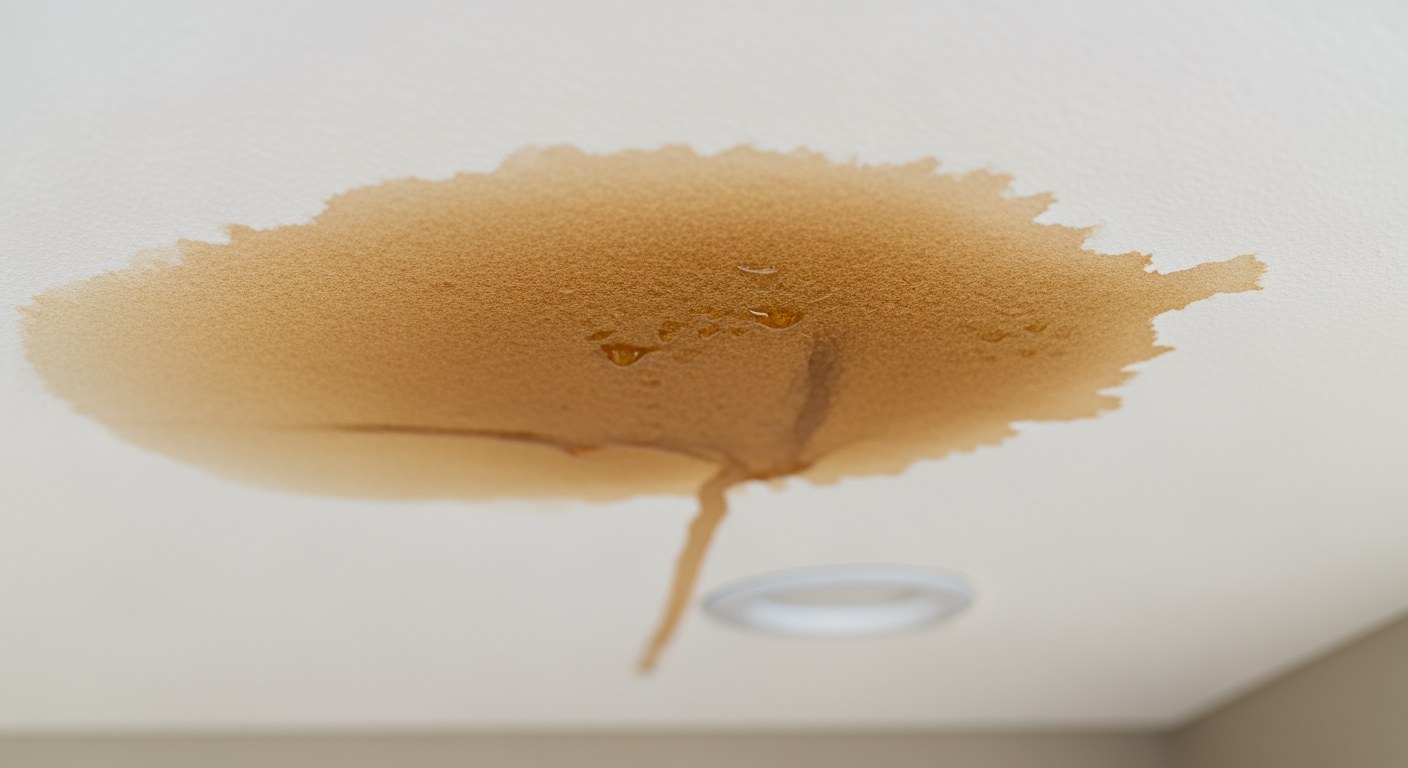
Ceiling water damage occurs when water infiltrates from above — through a roof leak, plumbing failure in the floor above, ice dam infiltration, or HVAC condensate overflow — saturating the ceiling assembly including drywall, insulation, and structural framing. The visible stain is almost always smaller than the actual damage behind it.
Partners Restoration handles ceiling water damage repair across the Minneapolis western suburbs — Medina, Wayzata, Minnetonka, Orono, Plymouth, Eden Prairie, and Edina. We identify the source, dry the assembly to documented moisture content, and repair or replace damaged materials. Every project is documented for your insurance carrier. For the full scope of our water damage restoration Minneapolis services, visit our main service page.
What Causes Ceiling Water Damage in Minnesota Homes?
The five most common sources of ceiling water damage in Minnesota are roof leaks, ice dam infiltration, upstairs plumbing failures, HVAC condensate overflow, and — in homes with fire suppression systems — accidental sprinkler discharge. Before any ceiling repair begins, the source must be identified and corrected. Repairing a ceiling without fixing the source guarantees a repeat loss.
Roof leaks are the leading cause. Damaged shingles, failed chimney flashing, and deteriorated valley material allow water entry that travels along rafters before appearing as a ceiling stain far from the actual entry point. Ice dam infiltration is a distinctly Minnesota problem: meltwater backed up behind eave ice forces under shingles into the roof assembly, and ceiling stains often appear weeks after the ice dam formed. Upstairs plumbing failures — toilet supply lines, slow drain leaks under second-floor bathrooms, washing machine overflows — saturate the subfloor and appear below. The visible ceiling stain represents overflow of the subfloor’s absorption capacity, meaning the structural assembly between floors is likely more saturated than the ceiling suggests.
Can the Ceiling Drywall Be Saved?
Drywall that was wet for less than 24–48 hours, has not lost structural integrity, and tests at acceptable moisture content after professional drying may be salvageable without replacement. However, the insulation above saturated drywall almost always requires replacement — batt insulation retains moisture long after the drywall beneath has dried and does not dry effectively in place.
Once drywall has sagged, delaminated, or shows visible mold growth, it must be replaced. The paper facing — the component mold colonizes — becomes a growth medium within 24–48 hours of sustained moisture exposure. Our technicians use both pin-type moisture meters and non-invasive thermal imaging to assess ceiling assemblies before recommending removal versus drying in place. This determination follows IICRC S500 standards — it is not a visual judgment call.
The Repair Process Step by Step
- Source identification and temporary mitigation. Active roof leaks are emergency-tarped. Active plumbing failures are isolated. No drying is effective while the source remains active.
- Moisture mapping. Pin-type and pinless meters map the full extent of saturation — ceiling surface, wall assemblies where water tracked down, and the floor below if water migrated through the structural assembly. The true scope is often significantly larger than the visible stain.
- Controlled opening and insulation removal. Ceiling drywall is cut to the nearest framing member. Saturated insulation is removed and disposed of. Framing above is inspected and treated with antimicrobial solution if indicated.
- Structural drying. Air movers and LGR dehumidifiers are deployed. Drying typically requires 3–5 days with daily moisture readings documented in a drying log that satisfies IICRC S500 and carrier requirements.
- Reconstruction. New insulation to matching R-value. New drywall hung, taped, and finished. Texture matched to surrounding ceiling — critical in homes with skip trowel, knockdown, or smooth plaster. Painting to the nearest architectural break point.
Ceiling Repair in High-Value Homes
Coffered ceilings, hand-applied plaster, custom millwork at ceiling transitions, and specialty paint finishes in Wayzata, Orono, and Minnetonka homes require craftsmen who can match existing work — not production-line drywall crews. Partners works with finish plasterers, custom millwork fabricators, and licensed electricians to restore ceiling assemblies to pre-loss condition.
Frequently Asked Questions
Why is the water stain larger than the wet area?
Water migrates horizontally along framing and the top face of drywall before accumulating enough to drip. The stain marks where water finally penetrated through the drywall face — the saturated area above may extend 2–4 feet beyond the stain in any direction. Professional moisture mapping determines the true scope.
Is ceiling water damage covered by insurance?
Ceiling damage from sudden and accidental sources — storm roof damage, plumbing failure, ice dam infiltration — is covered under standard homeowner policies. Damage from a slow, ongoing leak that was not reported promptly may be contested as a maintenance issue. Document all damage and report promptly.
How do I know if there is mold above my ceiling?
Musty odor in the room below is the most reliable indicator of hidden mold growth. If more than 48–72 hours passed between water intrusion and professional drying, assume mold growth has begun and plan for remediation as part of the repair scope.
How long does ceiling water damage repair take?
Drying to IICRC standard takes 3–5 days. Reconstruction of a single affected ceiling — drywall, insulation, texture, and paint — typically takes 1–2 days after drying is complete. Larger projects with custom finishes may take 1–2 weeks for reconstruction.
Leave A Comment