
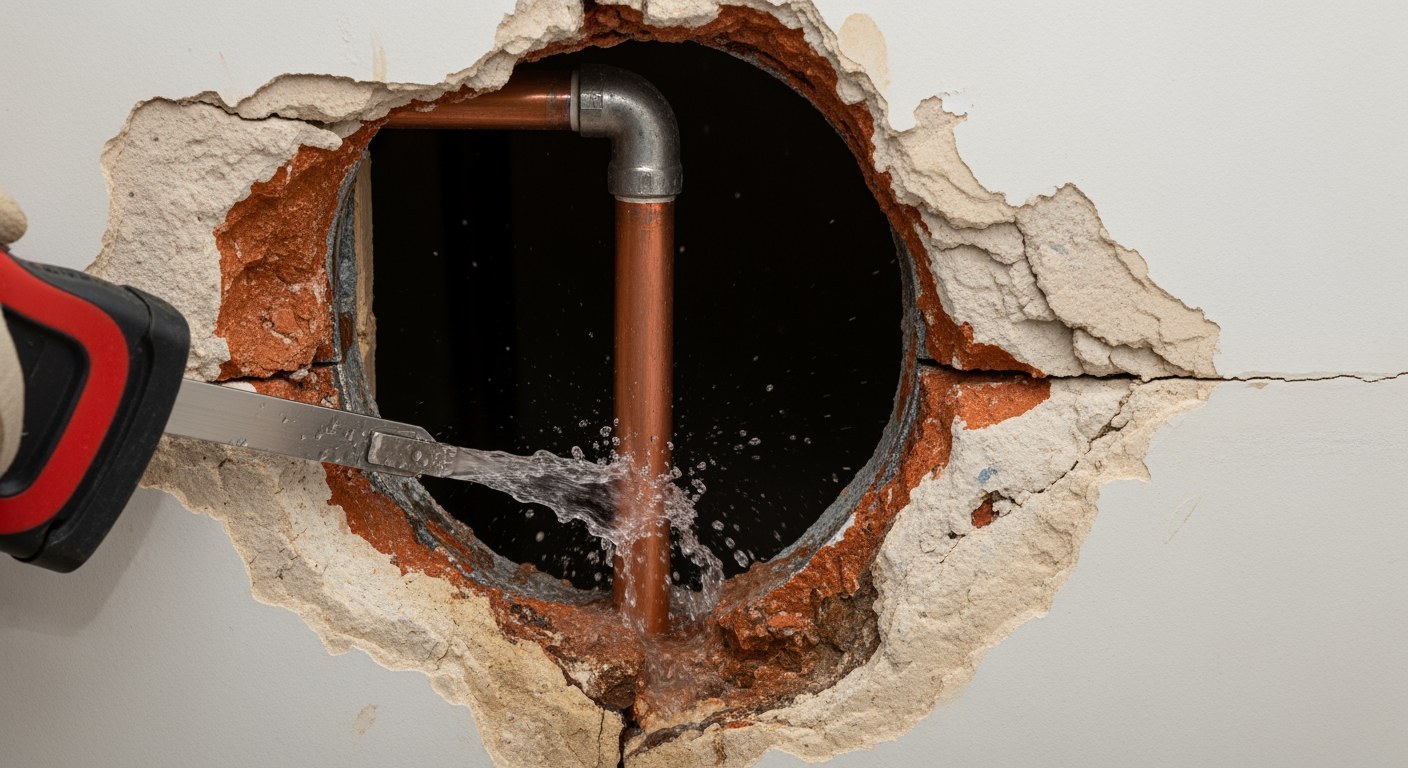
Burst pipe water damage occurs when water supply lines or drain pipes fail under pressure or freeze-expand, releasing water at a rate that can reach 250 gallons per hour from a single 1/2-inch supply line. In Minnesota’s climate, frozen pipe failures are a regular winter occurrence — but supply line failures from corrosion, water hammer, and improper installation occur year-round and often in locations that go undetected for hours before discovery.
Partners Restoration responds 24/7 to burst pipe water damage across the Minneapolis western suburbs. As part of our water damage restoration Minneapolis service, we deploy immediately after plumbing repair, perform extraction and full structural drying, and manage the insurance documentation from start to finish.
Why Pipes Burst in Minnesota Homes
Frozen pipes are the leading cause of burst pipe claims in Minnesota. When water inside a pipe freezes, it expands with approximately 2,000 psi of pressure — enough to split copper, split PVC, and separate fittings. The failure typically occurs not at the frozen section but at a weak point downstream where pressure relief is blocked. Pipes in exterior walls with inadequate insulation, pipes in unheated garages and crawl spaces, and pipes in vacation or vacant homes are the highest-risk locations. The Twin Cities metro averages 35 days per year below 0°F — each of those days creates frozen pipe risk for inadequately protected plumbing.
Supply line failures under sinks, behind toilets, and at washing machine connections are among the most damaging water losses in residential properties because they often fail during extended absences — weekends, vacations, or workdays — and run undetected for hours. A standard 1/2-inch braided stainless supply line under pressure discharges approximately 2–8 gallons per minute depending on pressure, meaning even a 4-hour undetected failure can release thousands of gallons. Braided supply lines have a recommended replacement interval of 5–8 years; most homeowners never replace them.
Water heater failures — both tank ruptures and supply line failures at the water heater — are high-volume losses because water heaters are often in areas where the discharge is not immediately visible. A standard 50-gallon tank that fails catastrophically plus the continuous supply line feeding it can discharge the full tank plus continuous flow until the supply is shut off.
Scope of Damage From a Burst Pipe
The scope of water damage from a burst pipe depends on three variables: the volume of water released, the location of the failure, and the time elapsed before discovery and mitigation. A small supply line failure discovered within minutes may affect only a cabinet interior. A frozen pipe that fails overnight in a two-story home may saturate walls, ceilings, subfloors, and finished lower levels across multiple rooms.
Water from pipe failures is Category 1 (clean water) at the point of release but degrades toward Category 2 (gray water) as it contacts building materials, soils, and standing conditions over time. A failure discovered after 24–48 hours should be treated as Category 2 regardless of the source.
Immediate Response Steps
- Shut off the water supply. Know the location of your main shutoff valve before an emergency. In most Minnesota homes, the main shutoff is in the mechanical room near where the water service enters. Turning off the supply stops additional water from entering the structure.
- Document before cleanup. Photograph all affected areas before any water is moved or wiped up. This documentation is your insurance claim evidence.
- Call your restoration contractor and insurer simultaneously. Your restoration contractor can begin extraction and drying. Your insurer needs prompt notification per your policy terms.
- Do not use electrical systems in affected areas. Water and electrical systems in the same space create electrocution risk. Do not turn on lights or use outlets in rooms with standing water until the electrical system is evaluated.
Restoration After a Burst Pipe
After the plumber has completed the pipe repair, Partners handles all restoration work. Extraction removes standing water from flooring, cavities, and below-grade areas. Thermal imaging and moisture meters map the full extent of saturation — through walls, under floors, and into subfloor assemblies where water migrated by gravity. LGR dehumidifiers and air movers are positioned following IICRC S500 psychrometric principles for 3–5 days of documented drying.
Selective demolition — removing saturated drywall, insulation, and flooring that cannot be dried in place — is performed under controlled conditions. For high-value homes in Wayzata, Minnetonka, and Orono, we assess hardwood floors, custom cabinetry, and finished surfaces individually before any material is removed.
Burst Pipe Claims: What Minnesota Homeowners Should Know
Burst pipe water damage is covered under virtually all standard homeowner policies as a sudden and accidental loss. The pipe repair itself is typically not covered — only the resulting water damage to the structure and contents. Most policies do not require a specific deductible for water claims beyond the standard deductible, though some carriers have introduced separate water damage deductibles in high-claim markets. Review your declarations page before a loss occurs.
Frequently Asked Questions
At what temperature do pipes freeze?
Water inside pipes begins to freeze when pipe temperature drops to 32°F, but freezing and pressure buildup sufficient to cause a pipe failure typically occurs when pipes are exposed to sustained temperatures below 20°F. Pipes in exterior walls without adequate insulation, pipes in unheated spaces, and pipes near exterior penetrations are at risk whenever overnight lows are forecast below 20°F in Minnesota.
How much water damage can a burst pipe cause?
A 1/2-inch supply line under typical residential pressure (60–80 psi) discharges approximately 2–8 gallons per minute. An 8-hour undiscovered failure releases 960–3,840 gallons. This volume can saturate walls, floors, and ceiling assemblies throughout a multi-story structure. The most severe burst pipe losses we handle involve multi-day undetected failures in vacation properties during extended absences.
Does insurance cover burst pipe damage from frozen pipes?
Yes — frozen pipe damage is covered as a sudden and accidental loss under standard homeowner policies. The carrier may ask about steps taken to prevent freezing (maintaining heat during absence, winterization). A home that was left unheated and froze pipes as a result of owner neglect may face a coverage dispute. Maintain at least 55°F in all spaces containing plumbing when the home is unoccupied in winter.
Leave A Comment